


As a lifestyle writer, I cover research on things like the best time to drink coffee and how many steps we should actually take a day
But I’ll confess that knowing better doesn’t always translate to actually living by my own advice
For instance, washing your hair once or twice a week could actually harm its health if your hair type gets greasier sooner. Yet here I sit with slightly limp tresses, because frankly, I’m a bit lazy
Still, some stories had such an impact on me that they actually changed my established routine for good
1) Strength training
I’ve been running for years, which we know is great for cardiovascular health. But it doesn’t build much muscle– so when I first learned about sarcopenia while covering its possible link to dementia, I realised I needed to add more resistance training into my routine
Sarcopenia, or age-related muscle loss, can leave usfrail and at greater risk of falls. Muscle mass begins to wane as early as 30
Thankfully, strength training has been linked to up to four years of extra life. It could also slow down bone loss (and even build bone), and reduce your risk of injury
And the Mayo Clinic said strength training “could slow and, in many cases, reverse the changes in muscle fibres associated with ageing”
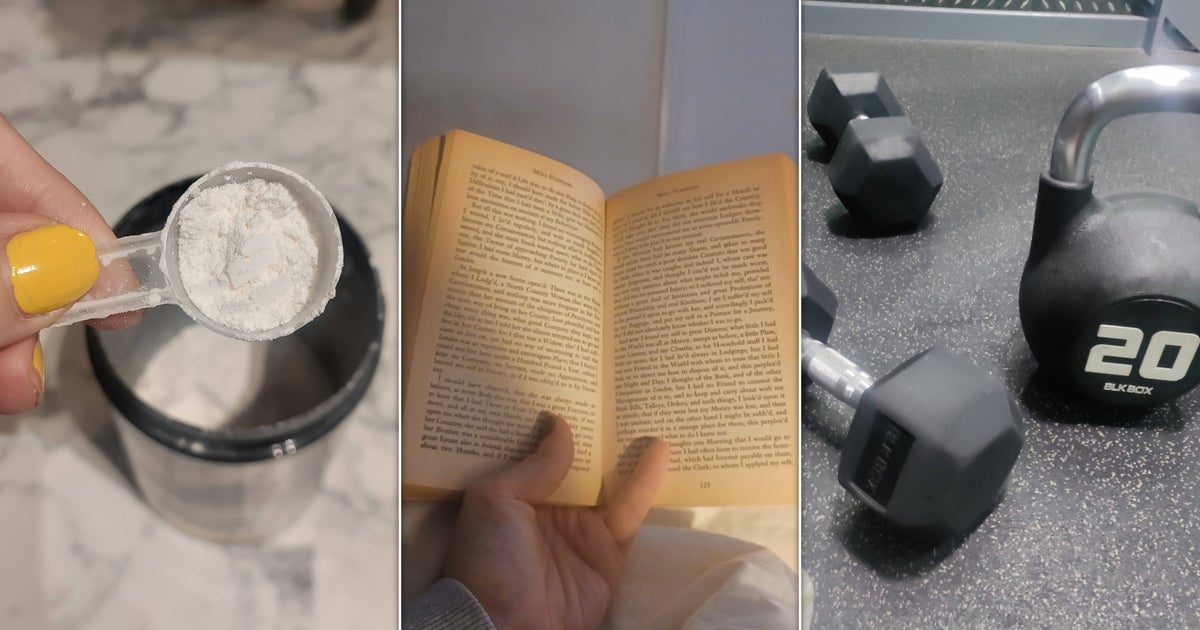
Now, I aim for three strength training sessions a week (incidentally, that’s been great for my runs too)
2) Taking creatine
I’m a bit of a supplement sceptic. But creatine, the naturally-ocurring compound that increases our cells’ energy supply, is one of the most-researched supplements going
It’s been linked to better ageing, an easier menopause, improved strength and even an increased cognitive ability. Some research suggests it could help us to stay sharp after a terrible night’s sleep, too
Meanwhile, study after study has debunked the one-man case that suggested creatine may cause kidney issues when consumed by healthy people at normal doses
Since starting the supplement, I’ve performed better in the gym, and I do feel more energised too
3) Reading before bed
There are two reasons I’ve taken to this habit. Firstly, I have insomnia, and a 2021 paper found that reading before bed improved both sleep quality and participants’ ability to stay asleep throughout the night
I struggle with sleep maintenance insomnia, which means my problem isn’t so much falling asleep as it is waking up at 3am and not being able to return to the land of nod. I have found that reading has helped
And, since I always like to kill two birds with one stone, I use this time to reap the brain-boosting rewards of reading, too. A 14-year longitudinal study found “a reduced risk of cognitive decline” among people who read more frequently
Meanwhile, a 2024 article published in Frontiers in Paediatrics cited research which found that readers lived nearly two years longer than non-readers. It also claims: “Adults who read for more than 3.5 hours a week were 20% less likely to die over the 12-year study follow-up than those who didn’t read books”
You don’t need to tell me twice
4) Keeping a positive attitude about ageing
Lots of us associate ageing with various forms of decline – think sarcopenia, frailty, cognitive decline and bone loss, to name a few. I know I used to think about ageing mainly in terms of what I’d lose rather than what i could expect to gain
It can be easy to forget, however, that improvement is still possible after 65. In fact, some research found it’s common
A 12-year study tracking over 11,000 over-65s showed that 45% of participants improved either their physical or mental health during the research period. And in general, people who had internalised more positive beliefs about ageing were more likely to see those benefits
Meanwhile, optimism in general, as well as thinking positively about ageing in particular, has been linked to a longer life
5) Eating prunes
Prunes don’t exactly have the sexiest image – we all know they’re great for, er, unblocking the pipes, and I don’t think many of us think anything else about the dried plums
However, not only do their gut health benefits extend far beyond their (remarkable) constipation-relieving powers, but they’ve been linked to more great health outcomes than I realised
Prunes seem to help preserve bone density, especially important as we age. They could help to boost our cognitive and heart health, too
I’ve gone to thinking they were a bit gross to eating about 50g of prunes a day, and I don’t think I’ll look back
