



A new piece of legislation is seeking to ensure funding will be sustained for the National Institutes of Health’s (NIH) Implementing a Maternal health and PRegnancy Outcomes Vision for Everyone (IMPROVE) initiative, which supports research to tackle preventable maternal deaths and advance health for women before, during and after pregnancy
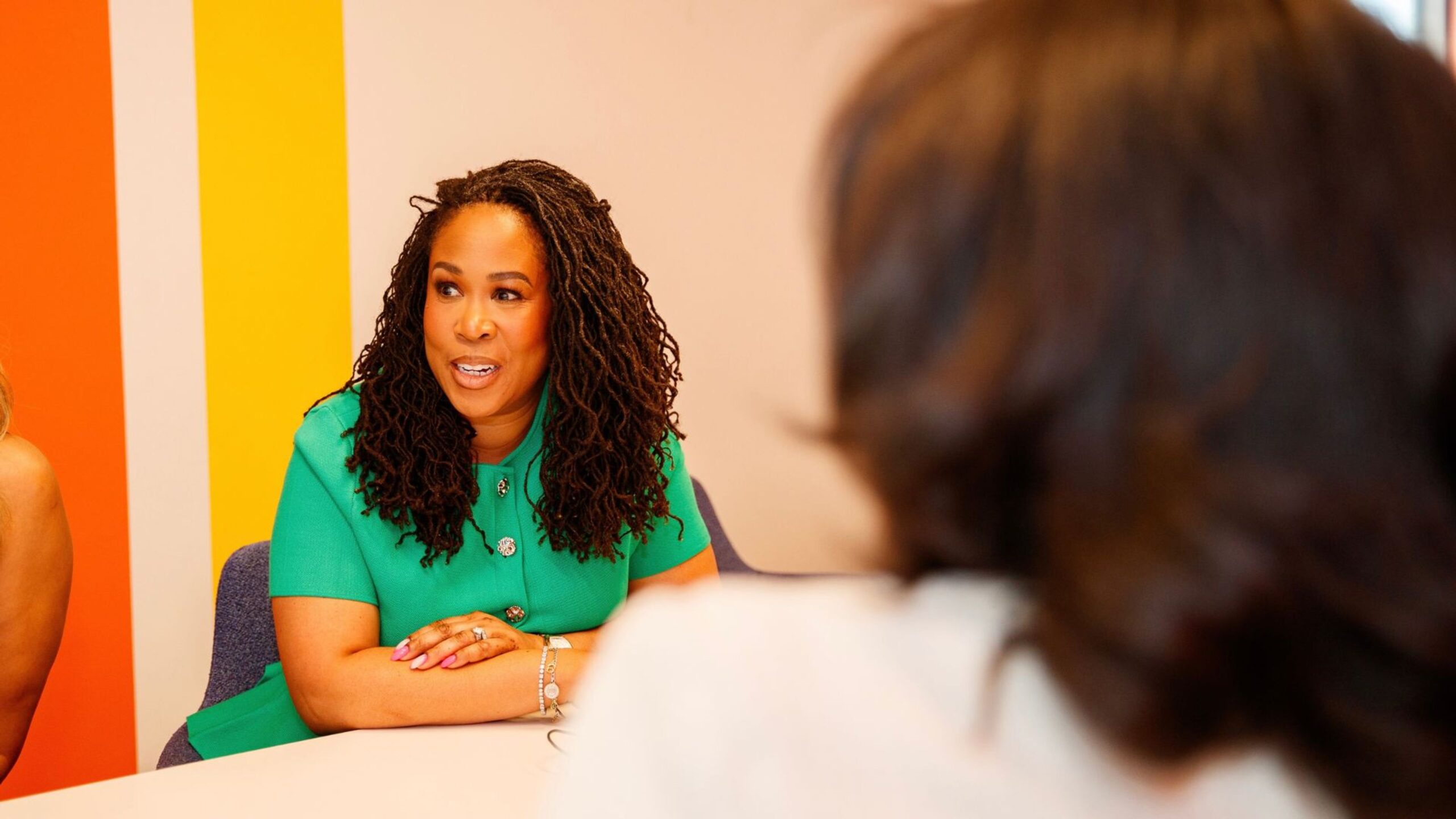
Rep. Lauren Underwood (D-IL-District 14) leads a roundtable discussion on maternal health equity with Baltimore mothers.Gabriel Espinal
Introduced by Rep. Lauren Underwood (D-IL-District 14), the NIH IMPROVE Act unanimously passed the House on July 20 and now awaits action in the Senate, where advocates say passage would provide long-term stability for maternal health research. It would authorize $73.4 million for the initiative annually over six years
“Since 2019, IMPROVE has invested more than $200 million in life-saving research that will help end our nation’s maternal health crisis,” said Underwood. “Our bipartisan NIH IMPROVE Act will advance maternal health research by permanently authorizing funding for IMPROVE, making sure that NIH can continue this critical work.”
The law represents one piece of legislation in a broader package of 14 bills known as the Momnibus Act, first introduced by Underwood and Rep. Alma Adams (D-N.C.-District 12) in 2020. The set of laws includes provisions that would extend the Women, Infant and Children (WIC) Program during postpartum and breastfeeding periods; expand and diversify the perinatal workforce; promote maternal vaccinations; invest in grassroots initiatives to reduce exposure to climate change-related risks for mothers and babies; and more.
The comprehensive act is a product of the Black Maternal Health Caucus, which was founded by Adams and Underwood in 2019. In addition to pushing for the passage of every Momnibus bill, the caucus is continuing to secure federal appropriations to fund targeted maternal health programs and reduce longstanding racial disparities in maternal health outcomes across the country
“Black maternal health is not a future issue. It is a crisis happening now, which is why the Black Maternal Health Caucus remains focused on advancing the Momnibus Act, building bipartisan support for maternal health legislation and securing the federal investments needed to improve maternal health outcomes,” said Underwood. “While the House has made important progress, including the recent unanimous passage of bipartisan maternal health legislation, we must continue that momentum in the Senate so every mother has access to the safe, high-quality care she deserves.”
AFRO’s Free e-Blast!Join over 40,000+ other readers who choose to get their coverage on Black communities from the media company who has been doing it right for over 134 years, the AFRO American Newspapers!
In May, Underwood traveled to West Baltimore to talk to mothers about these persistent disparities, childbirth, maternal mental health and navigating the healthcare system. During the conversation, held at Baltimore Unity Hall, Northwest Baltimore resident Iyonna Woods spoke on her own experiences
Iyonna Woods, a Northwest Baltimore mother, participates in a discussion led by Rep. Lauren Underwood (D-IL-District 14) about maternal health equity in Baltimore.Gabriel Espinal
“My husband and I are both healthcare professionals, yet even with our knowledge and access to care, we experienced firsthand many of the challenges that can arise during childbirth,” said Woods. “It was a reminder that no one is exempt from the realities women face.”
According to theCenters for Disease Control and Prevention(CDC), Black women are three times more likely to die from a pregnancy-related cause compared to White women, despite 80 percent of pregnancy-related deaths being preventable
From 2020 to 2024, Maryland’s maternal mortality rate was 20.5 deaths per 100,000 live births overall, compared with 31.3 deaths per 100,000 live births among Black women
Those disparities made Baltimore an appropriate setting for the discussion a board member of Lifting Up All Families (LUAF), a nonprofit founded by Underwood to advance maternal health equity through advocacy, policy and community partnerships
“Baltimore was the right place to have this conversation because we are home to some of the nation’s leading hospitals and medical schools, yet Black mothers continue to experience disproportionately poor maternal health outcomes,” said Cager. “Bringing Congresswoman Underwood to Baltimore connected the experiences shared around that table to the national conversation happening in Congress.”
Megan SaylesAFRO Staff Writer
Email Megan atmsayles@afro.com
