


By
- Kristine de Leon | The Oregonian/OregonLive
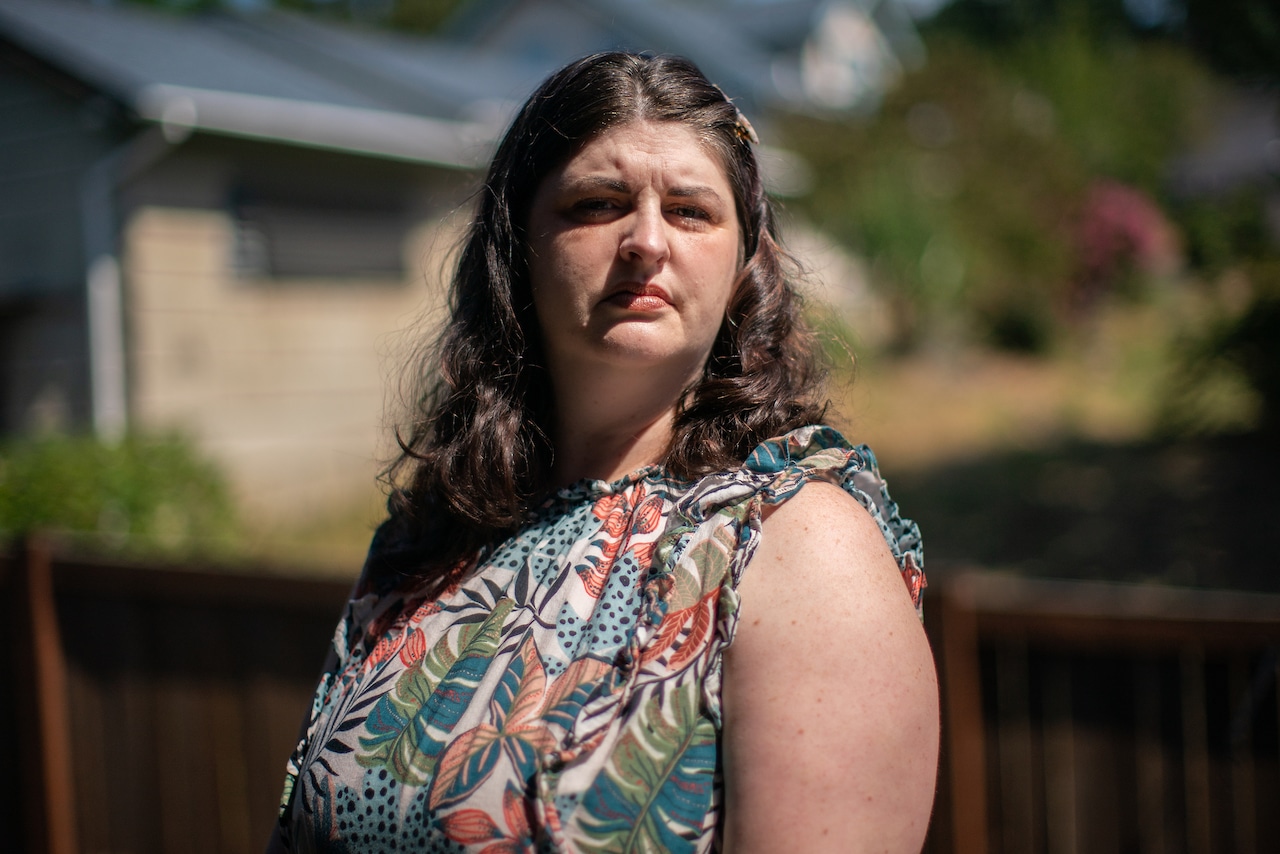
Shannon Hughes had heard that big changes were coming to Medicaid. She just didn’t realize they could affect her
The 45-year-old Gladstone resident gets her health insurance through the Oregon Health Plan. She hadn’t connected the federal Medicaid changes to OHP or realized that people like her could soon have to work, enroll in school or volunteer to keep their coverage
Hughes said she generally relies on the state to tell her when she needs to act. But she says OHP eligibility rules aren’t always easy to decipher. When she was due for a renewal in June, Hughes said she spent hours on the phone and submitting documents to reverse a coverage denial after the state incorrectly counted her income
“It’s really hard to figure out, even if you’re trying your best and you speak English and you have good internet,” she said. “Let alone so many people that aren’t even in that situation.”
More than 1.4 million Oregonians are enrolled in the Oregon Health Plan, the state’s Medicaid program for people with low incomes or certain disabilities. Starting next year, the state estimates up to 600,000 could face new federal requirements to work, attend school or volunteer for at least 80 hours a month to keep their health coverage, part of a Trump administration-backed overhaul approved by Congress
For OHP members, that creates a basic but consequential question: Do these rules apply to me?
Hughes said she doesn’t know yet
“I would hope they would tell us in advance so we could figure something out,” she said
Oregon is now racing to meet a federal September deadline to notify the roughly 600,000 Oregon Health Plan members affected by the new rules. Detailed notices have yet to go out. Meanwhile, the Oregon Health Authority is locked in a blame game with federal authorities over what the agency says was late and confusing guidance
State officials say up to 200,000 Oregonians could lose insurance coverage altogether. And because of the sprawling tangle of bureaucracy and regulation that delivers the healthcare benefits, many of them might not see it coming
Medicaid by another name
The requirements come from the sweeping tax and spending law known as the “One Big Beautiful Bill Act” that President Donald Trump signed last year. They largely apply to low-income adults who became eligible for Medicaid when Oregon expanded the program through the Affordable Care Act, though many people will qualify for exemptions
Getting the word out is only part of the challenge. Medicaid goes by different names in different states, and many people know their coverage by the name of their health plan rather than Medicaid itself
Medicaid is jointly funded by states and the federal government, but states have broad latitude to shape their programs within federal rules
That’s why Medicaid goes by different names across the country. In Oregon, it’s the Oregon Health Plan. In Washington, it’s Apple Health. In Connecticut, it’s HUSKY Health
Leo Cuello, a research professor at Georgetown University’s Center for Children and Families, said states use their own Medicaid brands to simplify enrollment, reduce stigma and reflect differences among their programs. But those names can also make it harder for people to realize they have Medicaid, he said
The patchwork can trip up even lawmakers and health officials. During his confirmation hearing last year, Health Secretary Robert F. Kennedy Jr. misstated basic facts about Medicaid and appeared to confuse it with Medicare
Then there’s another layer: the health plan itself. Nearly all states contract with managed care organizations to run at least some of their Medicaid programs, Cuello said, meaning enrollees may carry an insurance card with the name of a health plan rather than Medicaid
In Oregon, most Oregon Health Plan members get their benefits through coordinated care organizations and may be more familiar with names such as CareOregon, Trillium or PacificSource
“Someone could be told they have Medicaid, the Oregon Health Plan or coverage through a CCO, without realizing those are all connected,” Cuello said
Vincent Seadler, 35, knows they’re on OHP but still gets tangled in its alphabet soup. Asked which health plan they had, the Portland resident first named Health Share of Oregon, a CCO, but said they weren’t sure if that was their health plan
“I couldn’t tell you right now. I’d have to look that up,” Seadler said. “I think it’s CareOregon.”
Dr. Daniel Nelson, an Oregon Health & Science University primary care physician and researcher, sees similar confusion among his patients. Some know they have the Oregon Health Plan but don’t realize it’s Medicaid
“Medicaid’s structure is confusing even for people who are experts,” Nelson said. “It becomes extraordinarily challenging for people to understand exactly what coverage they’ve got.”
In a study published earlier this year, he and fellow researchers found that about 1 in 9 Medicaid enrollees surveyed during the pandemic said they didn’t have Medicaid even though they did. Some thought they were uninsured; others reported having different insurance
Researchers couldn’t pinpoint why, but cited possible factors including state-specific Medicaid names, managed care plans, language barriers and complicated enrollment rules
“They don’t have time to sit down and read about different insurance programs and how they’re set up,” Nelson said. “They just need to get healthcare.”
He worries the new work requirements could turn that confusion into lost coverage
“So many of the people who are not aware that their coverage is Medicaid don’t ever make it into the doctor,” Nelson said. “I’m afraid that those are the people who especially will lose coverage with the reporting requirements.”
Seadler pays attention to notices about their OHP coverage but still doesn’t know whether the new rules apply to them
“They tell you changes are coming,” Seadler said. “There’s nothing saying what you have to do or what’s going to happen if you don’t.”
Even figuring out who has to comply can be complicated. People who are pregnant, have disabilities or are considered medically frail, among others, are exempt. State officials say they’re still working out how to verify those exemptions. They said some will be flagged automatically, while others will have to provide proof
Seadler has Type 1 diabetes and is still recovering from a shattered femur. They’re back at work and trying to get more hours to pay rent, but don’t know whether their health problems are limiting enough to qualify for an exemption
That uncertainty can cut both ways, Cuello said
“There are people who are going to be subject to this work requirement … and they don’t understand that that’s them,” he said. “It also means that there are people who are not impacted who don’t understand that they’re not impacted.”
Nebraska offers an early test
Nebraska began enforcing Medicaid work requirements in May, eight months ahead of the federal deadline
Sara Maresh, healthcare access program director at the nonprofit Nebraska Appleseed, said many enrollees struggle to tell whether the rules apply to them
“People can’t find out whether they have Medicaid expansion coverage or another form of Medicaid,” Maresh said. “It’s not on their Medicaid cards, their notices or their online portal.”
Some call the state to find out, sometimes waiting a long time only to get conflicting information, she said
Maresh pointed to the case of a blind woman who relied on an implanted port for medication. After a state caseworker incorrectly told the woman she would lose Medicaid coverage, she became so worried she couldn’t safely maintain the device without insurance that she scheduled an appointment to remove it
“It took her over an hour on the phone with multiple caseworkers to learn that the new reporting requirements didn’t apply to her,” Maresh said
Enrollees have also struggled to determine whether they qualify for exemptions and what proof they need, Maresh said. She worries about rural patients who travel hours for treatments such as chemotherapy and whether the rules will account for those demands on their time
That issue is already part of a legal fight: Oregon and two dozen other states are challenging federal rules that require people considered medically frail to also show that their health needs significantly limit their ability to meet the work requirements
The confusion has affected people’s coverage decisions, too. Some Nebraskans stopped renewing Medicaid before the rules even took effect because they mistakenly thought they would no longer qualify, said Colleen Woodward, a pediatric nurse practitioner in Omaha
Woodward said she regularly treats patients who have gone without medications for chronic conditions such as diabetes or asthma after losing insurance, sometimes until they need intensive care
“Anytime you put up another roadblock, some people are just going to give up and say, never mind,” she said. “It doesn’t make their illness go away.”
As of early August, Nebraska has dropped roughly 200 people from Medicaid under the new rules
Oregon prepares for a complicated rollout
Oregon may have more time than some states to work through the kinks
The work requirements take effect for new OHP applicants in January. For existing members, they generally won’t apply until their next renewal, said Oregon Health Authority spokesperson Amy Bacher
Because Oregon currently gives many members two years between renewals, the work requirements will reach existing members gradually rather than all at once, Bacher said
That changes in September 2027, when people subject to the rules will have their eligibility checked every six months
The rules will also reach Healthier Oregon, the state-funded program that covers people regardless of immigration status. The state estimates about 57,600 Healthier Oregon members could be subject to them
Oregon has estimated that the work requirements and more frequent eligibility checks could eventually cause up to 200,000 people to lose Medicaid coverage
Supporters of the new requirements say the rules encourage work and help lift people out of poverty. Critics counter that many Medicaid recipients already work or qualify for exemptions and could instead lose coverage over paperwork
Seadler worries about getting caught in that bureaucracy
They renewed their OHP coverage in July, a process Seadler called “very tedious” and “way more personal” than before. Weeks later, Seadler said they received a text directing them back to their benefits account, where they found another request to verify information they thought they had already submitted
“I don’t know if I actually had to do it or not,” Seadler said. “I’m worried about how much more confusing this is going to get.”
Cuello said states are scrambling because key federal guidance arrived months after they had begun preparing
“The state is being set up to fail here,” Cuello said. “We’re talking about trying to make sure that we have airbags and seat belts to try and minimize the harm.”
Oregon is trying to limit how much paperwork falls on members. Bacher said OHA plans to use wage records and other data to verify qualifying activities when possible, as well as application and medical claims data to automatically identify some medical exemptions
But the agency has not said which health conditions will trigger automatic exemptions or whether those members will still have to provide proof. Bacher said OHA is still awaiting more federal guidance on screening and verification. The agency has trained more than 1,200 people to help OHP members navigate the changes
Even then, who has to comply can change over time. Nelson said shifts in income or other factors can move people between Medicaid eligibility groups, potentially changing whether the rules apply
“I think Medicaid is already a confusing enough program,” Nelson said, “and this just layers on several other ways that beneficiaries can be confused about whether they’re eligible for coverage or not.”
