


August 24, 2026
ByJulie Corliss,
Executive Editor, Harvard Heart Letter
- Reviewed byRobert H. Shmerling, MD,
Senior Faculty Editor, Harvard Health Publishing; Editorial Advisory Board Member, Harvard Health Publishing
Share
Print This Page
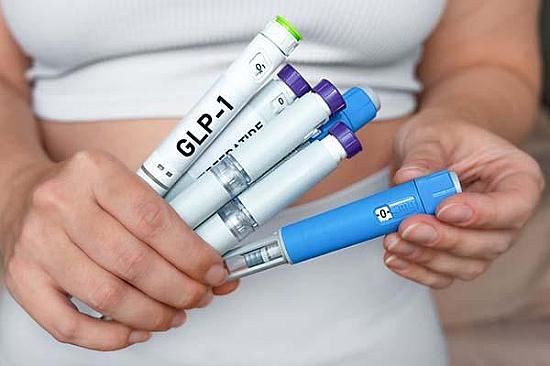
The injectable diabetes drugs known as GLP-1s don’t just lead to dramatic <a href="https://healthylife7.com/ozempic-and-mounjaro-are-not-easy-shortcuts-for-weight-loss-doctor-says-why/” title=”Ozempic and Mounjaro are not easy shortcuts for weight loss: Doctor says why”>weight loss; they also lower the risk of heart problems. A new study suggests that the GLP-1 drug tirzepatide (Mounjaro, Zepbound) not only lowers the risk of heart attack but also reduces the risk of death from any cause — including from severe infections — compared to an older, non-GLP-1 diabetes pill
The study, published in the Aug. 8, 2026, issue of The BMJ, was based on health insurance claims data from May 2022 to May 2025 for nearly 53,000 people ages 40 and older. All had excess weight (a body mass index of 25 or higher), type 2 diabetes, and heart disease. About 35,000 were taking tirzepatide and the rest were taking sitagliptin (Januvia)
After one year, the risk of heart attack, stroke, or death was 4.4% among those taking sitagliptin versus 2.9% among those taking tirzepatide — a reduction of nearly a third. The tirzepatide group also had a lower risk of severe bacterial infections, which cut their need for hospitalization by about a third and their risk of infection-related death by as much as 60%. The authors calculated that for every 70 patients starting tirzepatide, one case of heart attack, stroke, or death would be prevented. One infection-related hospital admission for every 48 patients would be prevented, and there would be one less death from any cause for every 122 patients.
As the authors of an editorial accompanying the study note, the findings strengthen the evidence for the cardiovascular benefits and safety of GLP-1 medications. But they caution that this observational study cannot prove the drugs themselves improved survival. In addition, tirzepatide and other GLP-1 medications come with challenges, including cost, side effects, accessibility, and supply, all of which may prevent sustained treatment
Image: © Kateryna Borodina/Getty Images
About the Author
Julie Corliss,
Executive Editor, Harvard Heart Letter
Julie Corliss has been the executive editor of the Harvard Heart Letter since 2013. She also writes for the Harvard Health Letter, Harvard Women’s Health Watch, and Harvard Men’s Health Watch, as well as for Harvard …
See Full Bio
View all posts by Julie Corliss
About the Reviewer
Robert H. Shmerling, MD,
Senior Faculty Editor, Harvard Health Publishing; Editorial Advisory Board Member, Harvard Health Publishing
Dr. Robert H. Shmerling is the former clinical chief of the division of rheumatology at Beth Israel Deaconess Medical Center (BIDMC), and is a current member of the corresponding faculty in medicine at Harvard Medical School. …
See Full Bio
View all posts by Robert H. Shmerling, MD
Share
Print This Page
Disclaimer:
As a service to our readers, Harvard Health Publishing provides access to our library of archived content. Please note the date of last review or update on all articles
No content on this site, regardless of date, should ever be used as a substitute for direct medical advice from your doctor or other qualified clinician
