


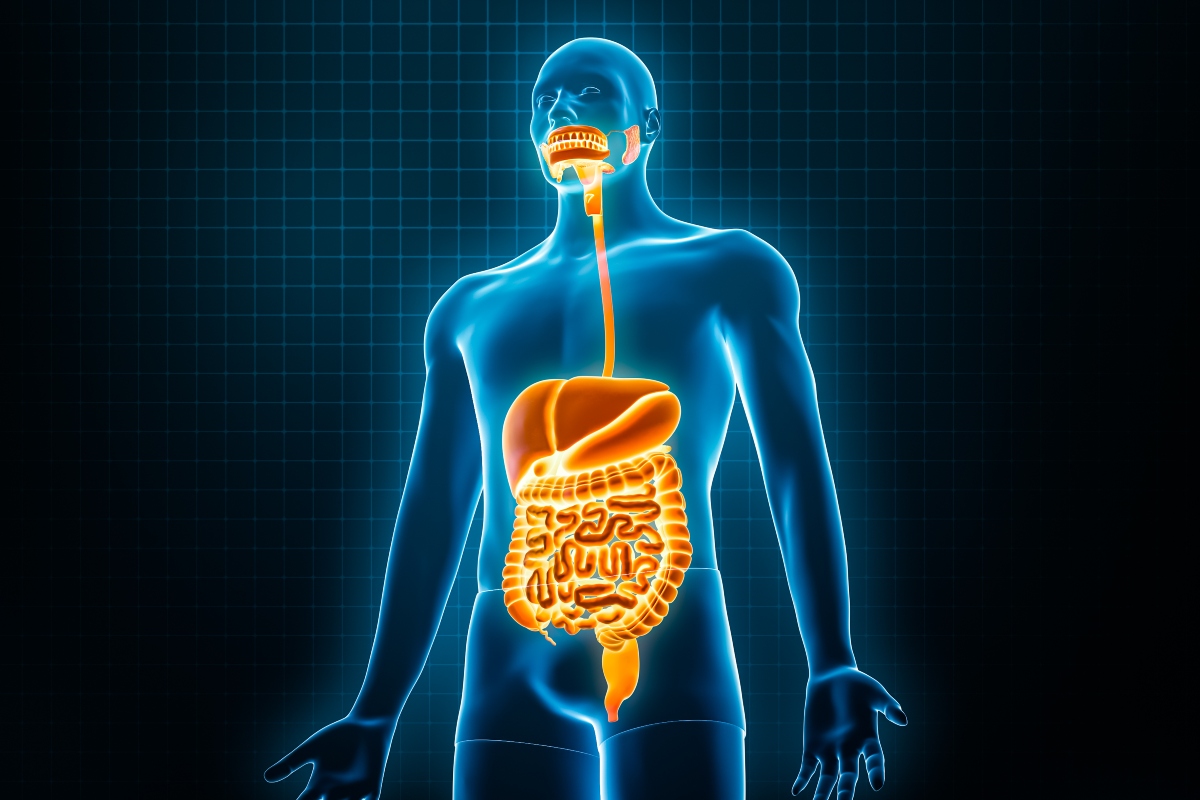
A recent study has revealed how specific oral bacteria can colonise the gut, impair its barrier and contribute to liver injury in advanced chronic liver disease. Dr Vishal C Patel, one of its lead researchers, shares insights into these findings and what they could mean for understanding, diagnosing and treating this condition
Advanced chronic liver disease (ACLD), in which the liver becomes severely scarred or cirrhotic, causes more than two million deaths worldwide each year. Mortality among people with ACLD in England has increased by 400% since 1970, and in people under the age of 65 this has risen almost five-fold
The earliest stage of the disease is compensated ACLD, in which the liver continues to function normally, and patients are usually asymptomatic. As the disease progresses, patients may develop acutely decompensated ACLD, driven by worsening portal hypertension and characterised by loss of the liver’s normal synthetic function
The most severe stage is acute-on-chronic liver failure, which is characterised by systemic inflammation, multi-organ failure and high short-term mortality
Current treatments largely focus on treating complications once they occur, and there are no widely available therapies that reliably slow or prevent disease progression. Liver transplantation is necessary for those who are suitable and able to access this life-saving treatment
Influence of the gut in liver disease
For many years, we have known that the gut plays an important role in driving ACLD. As the disease progresses, the gut barrier becomes damaged, allowing bacteria and their inflammatory molecules to leak into the bloodstream, where they can drive infection risk, further liver scarring and, ultimately, failure of the liver and other vital organs
What we do not fully understand is why this happens, or whether we were even looking in the right places for the answers
Most previous research has focused on the gut microbiome alone. However, we began to suspect the story was more complex
Previous research has identified increased abundance of bacteria typically found in the oral cavity, including Veillonella, Streptococcus and Prevotella species, in the faeces of patients with ACLD
Similar findings have been reported in ulcerative colitis, colorectal cancer, rheumatoid arthritis, type 1 diabetes and hypertension, suggesting that oral-to-gut microbiome translocation may have an important role in these diseases
Enhancing mechanistic understanding
So, do these oral bacteria also contribute to the progression of ACLD?
Our findings, which build on earlier work published in 2025, suggest that they do. Rather than viewing the mouth and gut as separate ecosystems – even though, in simple terms, they represent one long ‘tube’ – we now think they are much more closely connected
The study was co-led by King’s College London (KCL), King’s College Hospital NHS Foundation Trust and the Technical University of Munich, Germany, in collaboration with the Quadram Institute in Norwich, UK. The results were published in the journal Nature Microbiology
We analysed saliva and stool samples from 86 patients with ACLD treated at King’s College Hospital, using advanced genomic techniques to track individual bacterial strains as they moved from the mouth into the gut. This oral-to-gut translocation became increasingly common with increasing disease severity
We identified a specific collagenase-encoding gene carried by many of the oral bacteria that translocated to the gut. Known as prtC, it enables bacteria to weaken the gut barrier, creating conditions that worsen gut inflammation and liver injury, which we discovered
Importantly, higher levels of prtC were also linked to more severe disease, strengthening the evidence that these bacteria actively contribute to disease progression rather than merely being present alongside it
We also validated these findings in other ACLD cohorts and compared them with other diseases, confirming that this was a cirrhosis-specific signature
Joining the dots in liver disease
Until recently, we have had only a partial understanding of why the gut barrier breaks down in patients with ACLD. In part, this was due to the challenges of studying this process in people and the complexity of gut barrier function
Our study identifies a plausible mechanism involving the prtC gene. Oral bacteria harbouring this gene produce collagenase, which degrades collagen, a key structural component that helps maintain the integrity of the gut lining
Once that barrier is weakened, bacteria and bacterial products can pass into the bloodstream more easily. They can then reach the liver, driving inflammation, fibrosis and many of the serious complications seen in patients with cirrhosis, including more distant organ failures
What makes this particularly exciting is that it connects the pieces of the puzzle, helping to explain how changes in the microbiome translate into physical damage to the gut barrier and, ultimately, worsened liver disease
Perhaps more importantly, it represents a new target for developing novel therapies and for diagnosing and treating patients before irreversible damage occurs
Implications for ACLD risk stratification and therapy
One of the biggest challenges in hepatology is understanding why some patients remain relatively stable for years, while others deteriorate rapidly and develop life-threatening complications in an often unpredictable – and for patients and their caregivers – frightening manner
Our findings suggest that oral-to-gut translocation may be one of the factors influencing that transition. We found that these bacteria became increasingly common as ACLD progressed and were particularly enriched in patients with more advanced disease
That raises an important possibility. Rather than viewing cirrhosis as a condition that suddenly worsens, we may be able to identify biological changes that begin much earlier and signal which patients are at greatest risk
If future studies confirm this, clinicians could intervene sooner, monitor patients more closely and potentially prevent complications before they occur. Ultimately, that is where we want to get to: moving from reacting to ACLD towards anticipating and preventing it
One of the biggest opportunities is that microbial biomarkers such as prtCcould help us to identify patients at risk much earlier than we can today. ACLD often develops silently, and many patients are not diagnosed until they have already developed serious complications. If we can detect biological changes before that point, there is a real opportunity to intervene sooner
That said, we are still at an early stage. Before any new biomarker becomes part of routine clinical practice, it must be validated in much larger and more diverse patient populations. We also need to understand how it performs alongside existing clinical tests and whether measuring it changes patient outcomes
I am optimistic, though. The microbiome is becoming an increasingly richsuch as prtC have the potential to form part of a more personalised approach to monitoring and managing chronic liver disease, where there remains considerable unmet need
We know that we cannot ‘transplant our way out’ of this epidemic and must find alternative approaches, with a much greater focus on prevention
If oral bacteria actively contribute to liver injury, this could open new avenues for earlier intervention. These could include developing therapies that protect the gut barrier, targeting specific bacterial functions such as collagenase activity, and finding ways to modify the oral or gut microbiome before irreversible liver damage occurs
It is also a reminder that oral health is far more important in patients with ACLD than we have previously appreciated. Much more research is needed before clinical practice changes, and we are excited to be a part of the journey, but our more recent review, published in the Journal of Hepatologyearlier this year, suggest that the mouth may become an important part of how we think about preventing complications, rather than simply treating them once they have developed
Translating complex science through clinical collaboration
This study simply would not have been possible without bringing together people with very different expertise and complementary skill sets. Hepatologists, microbiologists, bioinformaticians, computational biologists, clinician academics and basic scientists worked alongside one another, with our collaborators at King’s and in Munich and Norwich
Increasingly, this is how modern biomedical research works: the important questions are often too complex for any one discipline to answer alone, and we must work together to solve them
Embedded within this ethos is the need to train the next generation of clinical researchers and basic scientists. To that end, I could not be prouder of the PhD students and early-career researchers who played an important role in this collaborative effort
For me, that is one of the real strengths of the Roger Williams Institute of Liver Studies at KCL, which has always promoted a ‘bench-to-bedside’ approach. Because scientists and clinicians work so closely together, we can move seamlessly from questions arising in the clinic to discoveries in the laboratory and, ultimately, back towards improving patient care
Where next for liver disease?
We have answered an important question, but many more remain. We now need to understand exactly when oral-to-gut translocation begins and whether stopping this process using existing treatments, or by developing novel therapeutics that target the oral–gut–liver axis, can genuinely alter the course of ACLD
A major priority will be validating these findings in larger international studies and incorporating them into prospective clinical trials. At the same time, we are exploring whether microbial biomarkers, such as prtC, could help to identify patients at greatest risk and whether therapies targeting the oral microbiome or protecting the gut barrier can improve outcomes
More broadly, I think we are entering a new chapter in microbiome research. We are moving beyond simply cataloguing which microbes are present towards understanding what they do, how they interact with the body, and how those interactions can be modified to benefit patients
That is where the real clinical potential lies, and I am excited to be working with fantastic researchers to explore this field for the benefit of our patients
Author
Dr Vishal C Patel MB BS PhD FRCP
Consultant hepatologist at King’s College Hospital NHS Foundation Trust, adjunct reader in hepatology at King’s College London, and principal investigator at The Foundation for Liver Research, UK
Want news like this straight to your inbox?
Sign up for our bulletins
