


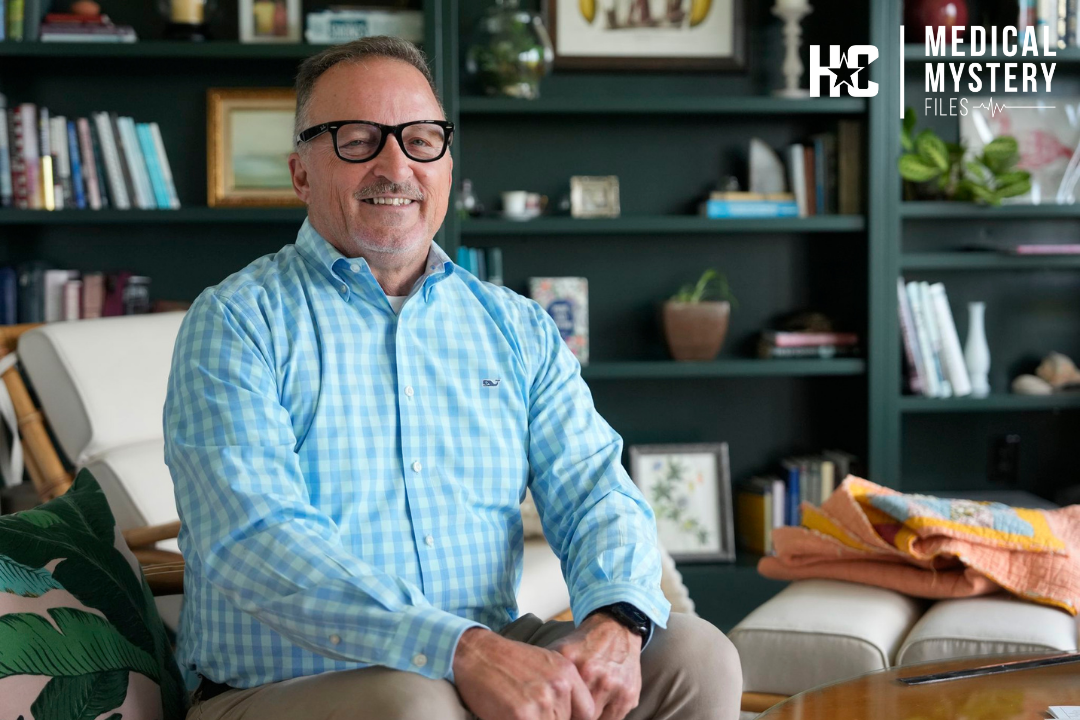
Neil Sanders felt conflicted after his doctor called him to deliver the results of his lymph node biopsy.
The good news was that he didn’t have cancer.
The bad news was that doctors still had no idea what was causing the chronic pain he’d been enduring for more than a decade.
Article continues below this ad
Sanders was diagnosed with rheumatoid arthritis in 2014, but the medication he’d been taking since then lost much of its effectiveness over the next decade. The Port Arthur resident woke up every morning with crippling discomfort throughout his body, especially in his joints
Make us a Preferred Source on Google to see more of us when you search.
Add Preferred Source
Doctors at Memorial Hermann – Texas Medical Center ordered a biopsy two years ago after Sanders developed swollen lymph nodes. The results showed that he didn’t have cancer, but his surgeon still didn’t have an explanation for his symptoms. Sanders still had no answers.
That all changed a few days later.
Article continues below this ad
The surgeon called Sanders to tell him that additional testing had revealed a diagnosis so rare that the surgeon needed to look it up before delivering the news. He referred Sanders to Dr. Luis Ostrosky, the chief of infectious diseases for UTHealth Houston and chief epidemiology officer for Memorial Hermann Health System.
Ostrosky began their first meeting by telling Sanders to buy a lottery ticket. Sanders had a rare bacterial infection that can be notoriously difficult to diagnose, but it can be treated once it’s identified.
Sanders was skeptical.
“I was so beat up at that point, just physically and mentally,” Sanders said. “It was good news, but I didn’t get overly excited. I still had some doubt after dealing with (pain) for all that time.”
First signs of pain
Sanders, now 61, first experienced pain in his shoulder around 2012. An orthopedic clinic diagnosed him with frozen shoulder, a condition characterized by stiffness and pain in the joint, and recommended physical therapy. The exercises didn’t work. He soon developed similar swelling in both wrists.
Article continues below this ad
“At that point, it wasn’t a full-body pain,” he said. “It was just specific joints that were hurting to the point where I couldn’t use them.”
CONTACT US: Tell us about a medical condition that was difficult to diagnose
Doctors at the orthopedic clinic told Sanders that his exams, medical imaging and blood tests indicated he likely had rheumatoid arthritis, a chronic autoimmune condition where the immune system mistakenly attacks the tissue that lines the joints. The doctors prescribed prednisone to reduce the inflammation.
The medication helped at first but became less effective over time. He’d sometimes take a higher dose in the morning if he needed to get through a day without any discomfort. But the pain began to affect his life in various ways. His wife and daughter had to carry his luggage when his family went on vacations.
“You just never really knew. Some days he’d be very active, and other days he couldn’t walk,” said his wife, Julie Sanders. “It was very strange.”
Article continues below this ad
Trying a different approach
By early 2022, the pain had become so hard to bear that Sanders retired from the real estate agency he founded. He’d also begun seeing a doctor who specialized in functional medicine, which focuses on holistic treatments for chronic illnesses, hoping a different approach could alleviate the pain.
The doctor referred him to various specialists, including an orthopedist who arranged an injection of an anesthetic and a steroid into Sanders’ shoulder. The injection was intended to relieve pain and swelling but instead led to him waking up screaming in the middle of the night.
Sanders spent the next two weeks in so much pain that he couldn’t sleep. Medication didn’t help.
Article continues below this ad
“I basically just worked from home because I couldn’t leave him,” said Julie Sanders, who is also a real estate agent and now runs the business her husband founded. “He couldn’t turn a doorknob. He couldn’t fix any food. He couldn’t do anything.”
Burning hands and PTSD
The orthopedist suggested Sanders might have carpal tunnel syndrome and proposed surgery, which he agreed to try even though his wife was skeptical it would work. The procedure never occurred, though, because Sanders developed an intense burning sensation in his hands.
“It felt like somebody was burning them with fire,” he said
MEDICAL MYSTERY FILES: She spent most of her life struggling to breathe. At 72, she finally got an answer
He went to the emergency room and was admitted to a Houston hospital. He spent 12 days being tested until a spinal tap finally revealed a diagnosis of chronic inflammatory demyelinating polyneuropathy. The rare autoimmune disorder causes tingling and pain in the nerves, but it still didn’t explain the discomfort Sanders had been experiencing in his joints.
Sanders felt demoralized because he knew he’d still be living with chronic pain. He also had a bad reaction to the antibody therapy that is commonly used to treat chronic inflammatory demyelinating polyneuropathy, so doctors could only prescribe more prednisone before sending him home.
Years of unexplained pain had taken its toll on Sanders. He refused to see another rheumatoid arthritis specialist or a neurologist. He started to experience anxiety and symptoms of post-traumatic stress disorder, so he saw a psychiatrist who prescribed an antidepressant.
“You don’t want to lose hope, because what else do you have?” Julie Sanders said. “(You think) if you do what they say to do then it’s going to help. But time after time, none of it does.”
A scare before an answer
Sanders eventually decided to try another rheumatoid arthritis specialist in Dallas who prescribed more medication. It helped to control the chronic inflammatory demyelinating polyneuropathy, but the doctor moved out of Texas after his first appointment.
Sanders’ entire body was hurting by the time he saw a UTHealth Houston doctor in the summer of 2023. The doctor proposed a combination of antibody therapy and chemotherapy, which is occasionally used in small doses to treat rheumatoid arthritis.
Doctors grew concerned six months later when tests showed Sanders’ white blood cell count was unusually high for someone who underwent chemotherapy. Medical imaging showed a pair of swollen lymph nodes in his abdomen and neck.
“At that point, I’m a little nervous,” Sanders said. “(When) you do a PET scan and you have swollen lymph nodes, everybody starts talking cancer.”
The results showed Sanders had Whipple’s disease, a bacterial infection that is so rare that his surgeon needed to look it up. The diagnosis answered all of Sanders’ unexplained symptoms, because it’s characterized by pain and swelling in the joints that typically takes years to progress to more symptoms.
The surgeon referred Sanders to Ostrosky, who said right away that he could relieve the pain Sanders had been living with for more than a decade.
“I said, ‘You need to go buy a lottery ticket, because you just won the lottery,’” Ostrosky said
Rare disease, simple treatment
Whipple’s disease hinders the small intestine’s ability to break down food and take in nutrients. Its most common symptoms include joint pain, abdominal pain and weight loss. But the disease is progressive, so over time it can lead to severe medical issues like anemia, dementia and heart murmur, according to the Cleveland Clinic.
The disease is very rare; experts estimate it affects about nine out of every 1 million people in the United States. Ostrosky has only treated one or two other patients with Whipple’s disease during his 27-year career.
“People don’t think about it, so they have a hard time making a diagnosis,” he said
READ MORE: A Houston woman suffered from mysterious health issues for decades. Then she tried to donate a kidney.
Sanders was particularly difficult to diagnose because he didn’t have some common symptoms, such as diarrhea. Many Whipple’s disease patients experience gastrointestinal problems and are diagnosed following a colonoscopy, Ostrosky said.
“We never would have thought to just biopsy his joints or any other tissue if we didn’t have a swollen lymph node to go after,” he said.
It’s unclear how Sanders acquired the infection. The bacterium that causes Whipple’s disease is found in dirt, and many people encounter it without developing any symptoms, according to experts. Sanders believes he may have gotten the disease because he used to renovate homes before selling them.
Although the infection was rare, the treatment for it was straightforward. Sanders needed two weeks of injections of an antibiotic called Bactrim, which did not cause any side effects in him. He then continued to take the same medication in pill form.
Five days later, he woke up pain-free for the first time in years.
“My whole body was different,” he said. “I didn’t have pain at all.”
“He’s back”
Ostrosky believes Whipple’s disease may be a bit more common than is currently estimated, because many doctors have never heard of it and don’t think to test for it. The Sanders agree and believe doctors should consider the diagnosis for anyone who’s been diagnosed with rheumatoid arthritis but is not benefiting from treatment.
“There could be a number of people who have Whipple’s disease and don’t even know it,” Sanders said.
He still experiences some pain from CIDP and years of his Whipple’s disease going untreated, but it’s minor compared to what he endured before being diagnosed. The infection could come back, but Sanders could take the same antibiotics if that happens, Ostrosky said.
For now, though, Julie Sanders is just grateful her husband is able to get out of the house and socialize after years of being stuck at home and suffering from chronic pain.
“I remember when I first heard him laugh, like his real laugh again. I was like, ‘Oh, he’s back,’” she said. “Because that’s his personality, and it had been gone for so long.”
