


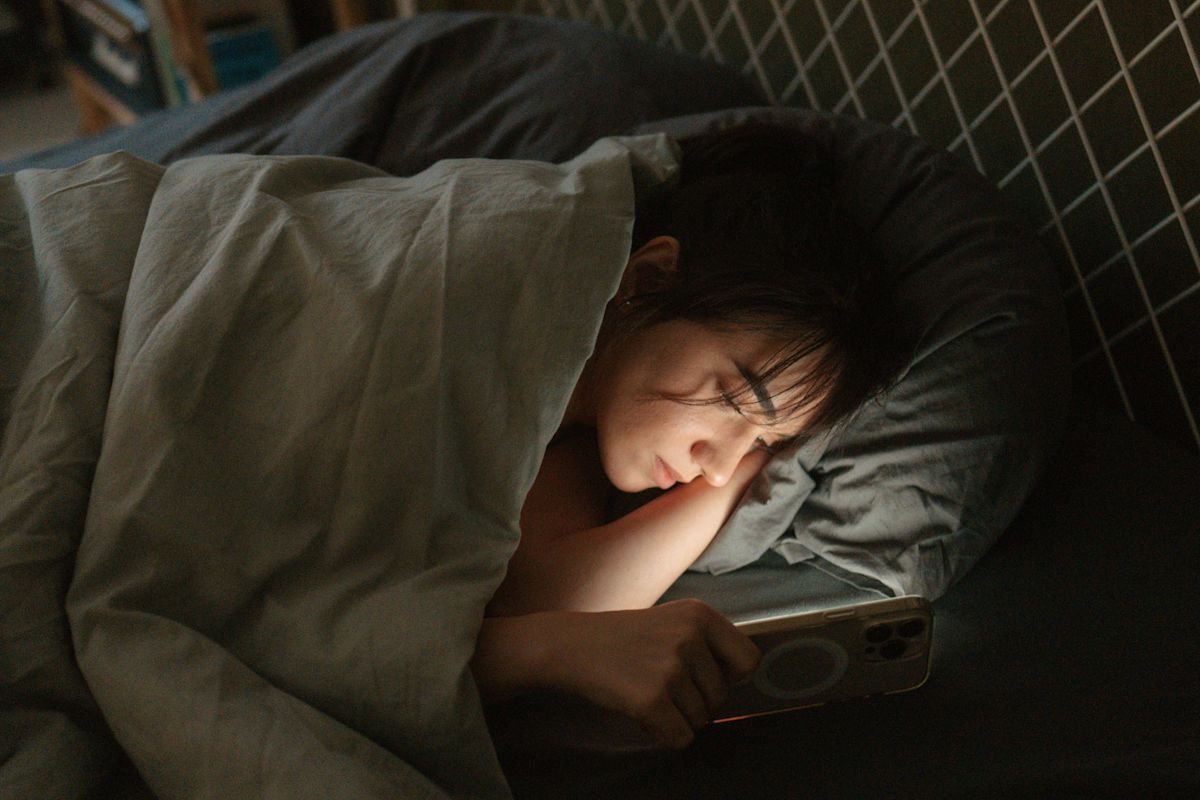
How much mindless doomscrolling through social media is too much? Science might have an answer — or at least the beginnings of one
A newly published study in the journal npj Mental Health Research set out to answer: At what point does social media use have a measurable impact on our moods? Using more than a decade of survey data from more than 180,000 U.S. adults, researchers found that adults who spent more time on social media were consistently more likely to report depression — but after a certain point
“Initially, social media was a social outlet with people you knew,” UC senior research associate and co-author Nicole Vike said in a University of Cincinnati press statement. Now, social media use has more to do with consuming content from strangers, she said
Advertisement
“It’s crazy how addictive it can be. Look at chronically online content creators. They often have to take a monthslong hiatus from being online for their mental health,” Vike said
Scrolling this long is linked to higher rates of depression, study finds
Researchers from the University of Cincinnati and Northwestern University analyzed 11 annual surveys taken by approximately 183,000 U.S. adults aged 18-70 between 2014 and 2024. The 1,318-question survey, called the Media Behaviors and Influence Study, is designed to measure several types of health, including mental health
Respondents were asked about social media use and other forms of media, such as time spent playing video games or watching TV. They were likewise asked to self-report feelings of sadness and depression. Researchers then used machine-learning models to help analyze the data and identify patterns, including which factors were associated with higher levels of depression
Up to a certain point, social media use didn’t pop as a big predictor for depressive feelings. It was only after a certain threshold, about 150 minutes or 2.5 hours of use daily, that a pattern emerged: people who reported more time on social media, specifically, were also more likely to report having depression, even after researchers adjusted for factors such as age, income, education and gender
Advertisement
Above that 2.5-hour daily threshold, heavier use was increasingly associated with negative feelings — each additional hour was linked to about 17% higher odds of self-reported depression
These findings stayed consistent over 11 years, even when controlling for or removing data from around the time of the COVID-19 pandemic entirely. While this pattern is notable, it’s important to remember that although the study established correlation, it did not establish causation, meaning it identified an association but can’t tell us for sure if one thing caused another
While this study’s findings can’t answer the cause-and-effect question, it can determine a likely link between the two. Other limitations of the study included the inability to follow the same people over a period of time to gauge changes in self-reported depression, along with the fact that “social media use” wasn’t further divided into specific actions (just scrolling versus actually engaging with others, for example). Still, the researchers behind the study called it a “wake-up call.”
“Social media is a common marker of our cultural age much like the automobile was more than a century ago,” Martin Block, co-lead author and professor emeritus at Northwestern University, said in a statement. “But social media has an important negative effect through its association with depression, much like the automobile is associated with injuries from crashes and pollution.”
This article originally appeared on USA TODAY:Scrolling social media for this long linked to depression, study finds
