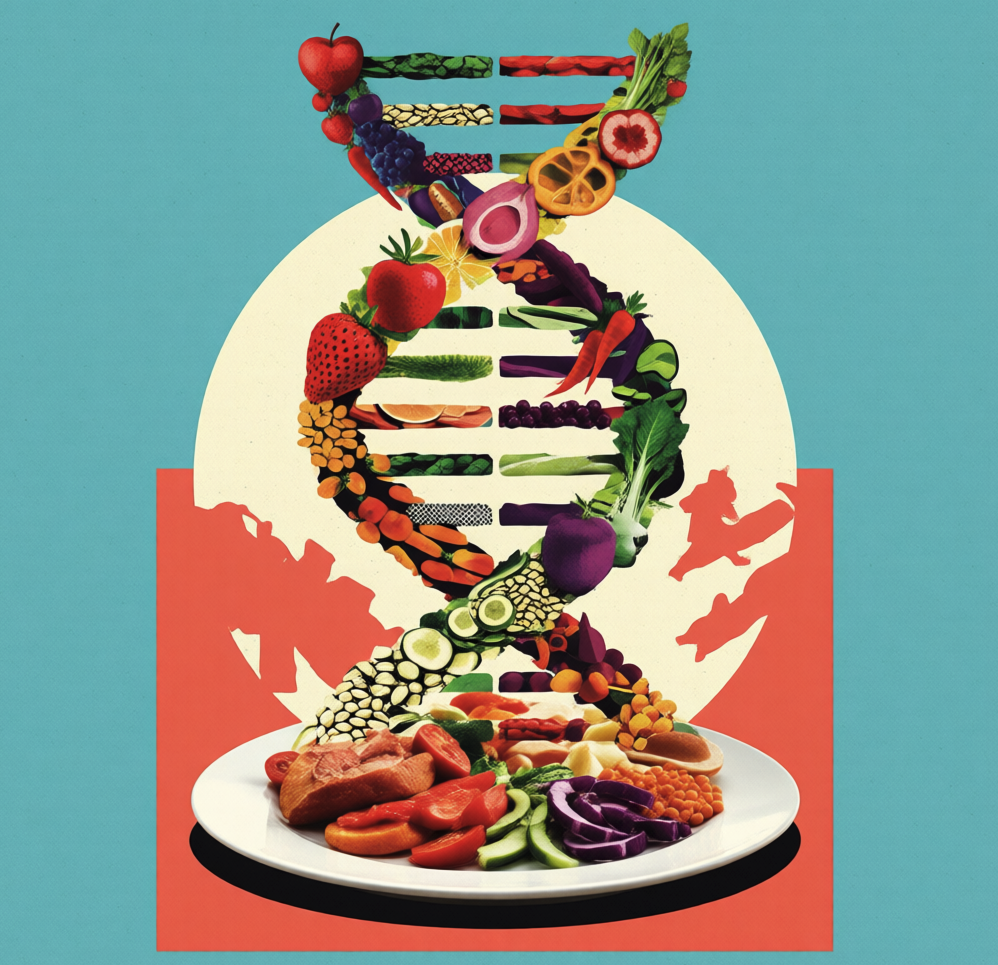
Could your genes hold the key to better energy, easier weight management and a diet that actually works for you? One writer puts a personalised DNA diet to the test
Our bodies are more or less made up of oxygen, hydrogen, nitrogen, carbon, calcium, and phosphorus, along with a dash of sulphur, potassium, sodium, chlorine, and magnesium. Yet, DNA ensures we are all individually, completely unique.
This is why personalised health care, and self-testing kits have been big business in recent years. General health advice is useful, and tells us what we ought to be doing as human beings to function well – but we live in a world of fine margins, and by analysing our specific genetic make-up, we are able to hone in on the specifics that will help us not just to be healthy, but our healthiest.
While biomarkers and personalised blood testing dominate the emerging personalised care market, some dietitians are tapping into our DNA in order to provide us with a more specific sense of how our bodies respond to foods on an individual level. I tried one of these services to see if it was genuinely helpful for my diet, and not just a high-tech novelty offering.
What is a DNA diet?
Rachel Clarkson, Nutrigenomic Dietitian and founder of The DNA Dietitian, explains in an initial consultation that in her practice she selects the genes that are genuinely important and helpful to target when looking into how our bodies react to foods – the idea being that while endless biomarkers can be tested, testing a specific set in combination offers a rounded sense of what the body actually needs.
From there, we discuss my motivations for treatment. The main goal of mine was to improve my energy levels day-to-day, and to avoid feeling sluggish after meals. From there, my plan was also to try and reduce my body fat. Finally, we reviewed my current diet, knowledge levels around nutrition, and intolerances. Then, the testing begins.
How DNA diet tests work
In this case, the DNA test looks to see which variants I have of each gene the dietitian has decided to target. For example, there’s a gene for caffeine sensitivity, and another for a higher-than-typical caffeine tolerance. There’s a gene for people who can eat all the carbohydrates in the world and feel fine, and there’s another for people who bloat and feel ill when they eat too many starchy complex carbs. By learning which variants of the specific genes I have, Rachel is able to develop a set of guidelines for how my body reacts to foods, and therefore what I should be considering within my diet at large.
We can test for thousands of genes, and personalised testing tends to market to us by saying they can test dozens, even hundreds, of “biomarkers”. But more isn’t necessarily better. Having someone who is able to synthesise the information, “to take the findings and use them to tailor-make a plan for the specific patient,” is where true results can come from.
To do the test, I simply spit into a tube. The sample is sent to a lab, and in a few weeks, Rachel emailed me the results and booked in a consultation to go through them

The results of my DNA Diet test
My PDF is 28 pages long, and the contents page separates the genes tested into everything from nutrient metabolism, food intolerances, cardiometabolic health (which is mainly things to do with blood sugars, which fats we should eat, and caffeine sensitivities), weight management tools (which exercises work best for us, and how we break down body fat best), eating habits (it turns out I have a big appetite and a sweet tooth), and finally a look into how our body responds to physical activity.
It turns out that some of my suspicions were correct. For instance, I do suit eating fewer carbohydrates than the average person, and I do have a big appetite. Other things I was less conscious of, but they made plenty of sense. For instance, my body is great when I feed it monounsaturated fats (like nut butters).
Other things I simply had no idea about, like the fact that I don’t absorb vitamin A very well and would need to make a conscious effort to eat more foods containing it. I also learned that my body responds well to exercise when it comes to weight loss, and that I’m more sensitive to caffeine than some people.
From these findings, Rachel will make a meal plan, or provide a list of foods to focus on including in your diet, if you want it to be less prescriptive, which I do. The list is comprehensive but also very varied – and allows fr a life that has flexibility, but also a clear sense of the key foods to focus on incorporating into meals. The reason I find this test especially useful is that it is a one-off test. While DNA does change during our lifetimes, this is more in efficiency than behaviour, so the diet can be followed for life.
Since doing the test and refining my diet to work with my DNA, I have found that I have more energy in the day. More than this, I have found myself less distracted when it comes to meal planning. Even in moments where I’m not eating in line with what is optimal for me, I at least have an understanding of why I might feel sluggish as a result.
Day to day, I know how to fuel my body, specifically for my body’s needs. I focus less on health trends and emerging evidence, and more on the fact that my body benefits from a specific diet that has been informed by analysing my own DNA
Strangely, though I suppose expectedly, I have found myself feeling better nourished, losing some body fat, and having more energy as a result of following this advice. My body is finally – and precisely – getting what it needs to thrive.
About
Rhys Thomas is a journalist, editor and trainee psychotherapist who writes on wellbeing, health, fitness, and nutrition