


Daylight in the morning and lunch outside – how an evolutionary anthropologist improved his sleep
Canadian academic David R Sampson – who has two kids under three – says he’s getting “some of the best sleep of his life” by focusing on his circadian rhythms
RNZ Life reporters
29 August 2026
5 min read
RNZ Life reporters
29 August 2026
5 min read
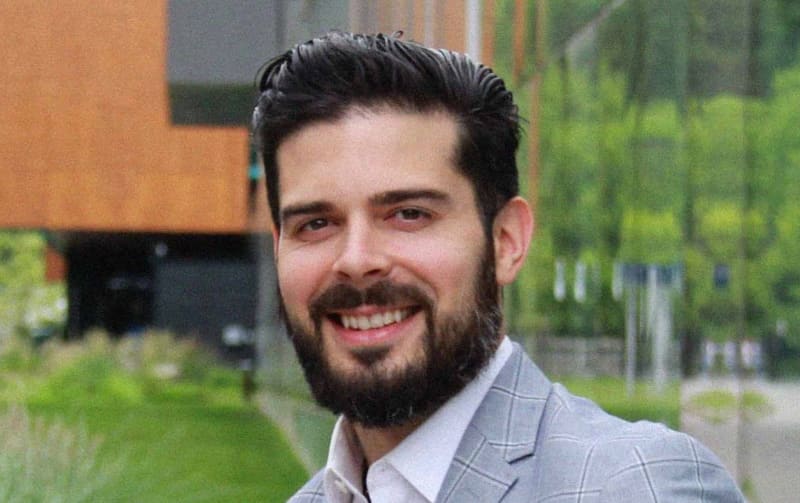
Caption:David R Samson is a Professor of Evolutionary Anthropology at the University of Toronto and the author of Our Tribal Future and The Sleepless Ape.Photo credit:Supplied
A “bone-crushingly awful, dragging feeling in your skeleton” is how RNZ presenter Susie Ferguson describes the day after a broken night’s sleep
When deprived of sufficient nightly rest, people struggle to think straight, emotionally regulate and are more likely to get injured, confirms evolutionary anthropologist David R Sampson
Thanks to technology, those living today are the worst-sleeping cohort of homo sapiens in history, he says, but all hope is not lost
“The thing that will get you the biggest payout is anchoring every morning to sunlight,” Sampson tells RNZ’sSaturday Morning
Is sleep our secret weapon?
Saturday Morning
Sleep is something humans desperately need, Sampson says, partly because REM (rapid eye movement) sleep helps us with a couple of really magical things – memory consolidation and emotional regulation
“If you experience some sort of emotional trauma in the day, then get some REM sleep – you’ll feel better in the morning
“It’s removing that nasty sort of emotional effect that happens when you recall the memory. When you recall the memory in the future, you can do it without that emotional pain.”
If you’re one of the many Kiwis who struggle with sleep, Sampson says it doesn’t help to “fetishise” the amount you get
It’s a “myth” that every person needs eight hours of sleep, according to Auckland academic and psychiatrist Tony Fernando
“Learning how to roll with [not sleeping sometimes] is really crucial,” he said in a lecture recorded by RNZ
!["Eight hours [sleep] is fine if you’re an eight-hour person, but many of us are not" - Dr Tony Fernando.](https://healthylife7.com/wp-content/uploads/2026/08/4JJ4SS9_tf_jpg.jpg)
The current “sleep epidemic” affecting so many is less about what we’re getting too much of – screens – Sampson tells Saturday Morning,
and more about what we’re not getting a healthy amount of – the inputs of natural light and temperature oscillations that support our body’s circadian rhythms
Inputs from the outside environment that remind our physiology of its organism nature are “just good data for a homo sapien to have”, he says
“That’s how our ancestors evolved for a billion-and-a-half years and it’s how our bodies work best, when we have that data.”
Usually “patient zero” for any science-backed recommendations he makes to other people, Sampson says supporting his body’s circadian rhythms by getting the right kind of light at the right time of day has improved his own sleep
Anchoring every morning to sunlight is what he says delivers “the biggest payout” when it comes to improved sleep
“This is a magical moment where you’re getting this full-spectrum light and this burst of infrared light that channels your mitochondria, and the mitochondria is key for your sense of energy
“[Then] around noon, if you can, go out and eat lunch outside, even if it’s uncomfortable, cold or rainy, the infrared light will go through the clouds.”
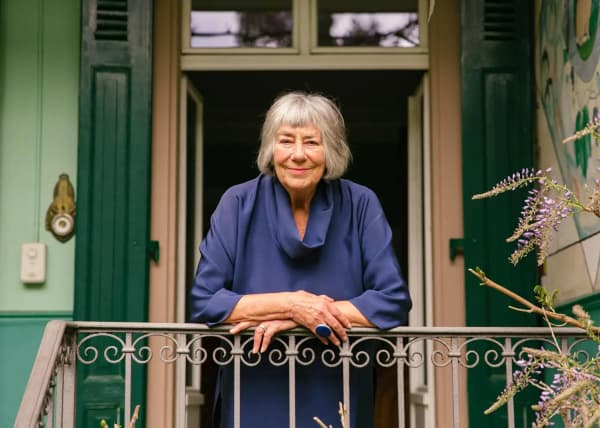
Heading outside for 30 minutes of daily daylight – “no matter what weather” – is one of the best things people can do for their sleep cycle and therefore mental health, NZ-born neurobiology researcher Anna Wirz-Justice told RNZ
On dark, gloomy mornings, writer and former chronic insomniac Kate Mikhail told RNZ she finds it helpful to “trick” her circadian rhythm with strong light from a 10,000-lux lightbox on her desk
On the potential negative impact of blue light from screens on sleep, Christchurch sleep expert Dr Michael Hlavac told RNZ last year that it was still unclear whether issues resulted from blue light itself or the stimulation of interacting with screens before bed
Sampson’s advice is to reduce exposure to LCD screens and cell phones as much as possible after sunset
When you’re winding down in the evening, candlelight or “metaphorical” candlelight – a soft warmth below 2000K on the Kelvin scale – could also help “guide you into sleep”, he says
“That warm, ‘hearthy’ light is good, because it’s not going to block the melatonin, which is the principal hormone that regulates sleep activity
“If you [also] did a lot of activity that day, you should hit what’s called a ‘sleep gate window’ and you should naturally fall asleep without struggle.”
29 August 2026
