


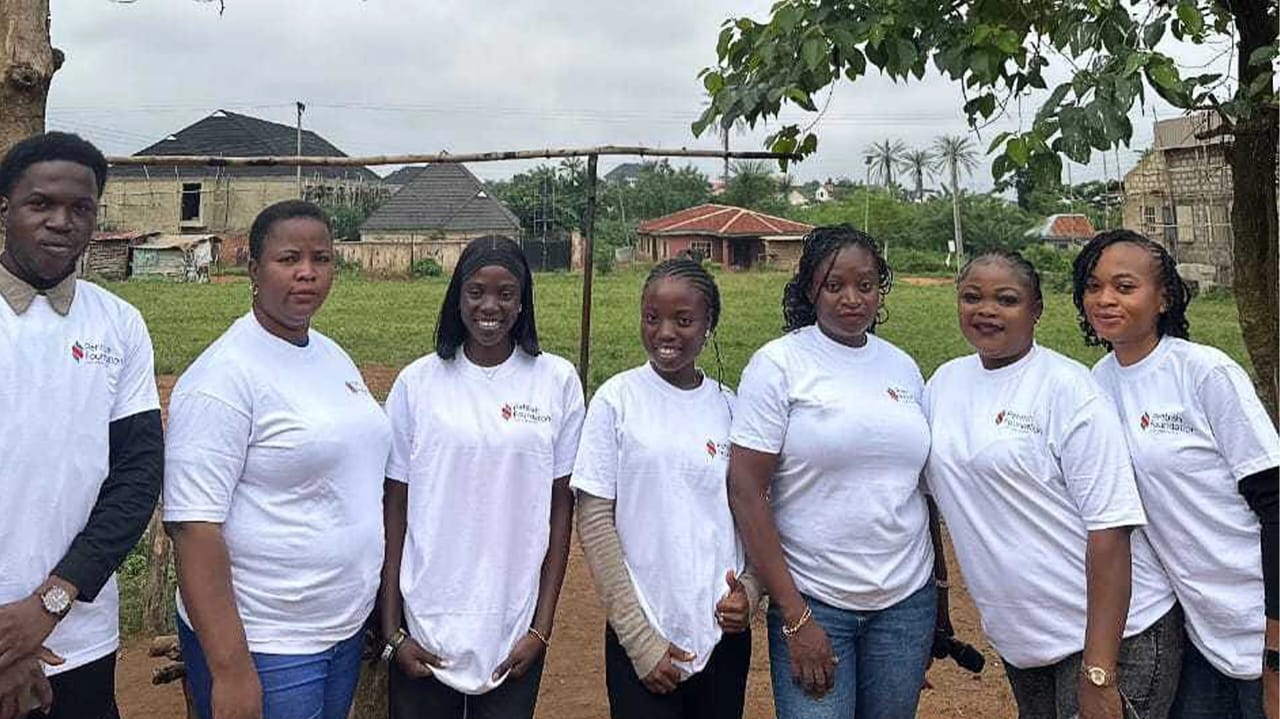
Foundation begins child nutrition assessment to address dietary diversity in Laaniba Community
Date:
29 August 2026 8:59am WAT


Pehtrah Development Foundation in partnership with Omayoza Humanitarian Nursing Foundation have launched the Laaniba Community Nutrition Initiative, a community-based child nutrition assessment and engagement initiative designed to better understand the factors affecting children’s nutrition and well-being
In a statement, it was noted that the outreach marked the second phase of the initiative, bringing together community leaders, caregivers, children, volunteers and representatives of both organizations
The assessment included weight, height or length, and mid-upper arm circumference (MUAC), alongside questions on dietary diversity, food access, health, hygiene, water
Community leadership played an important role in the initiative. The Baale of Laaniba, Chief Olukunmi Laaniba, welcomed the team and expressed support for continued engagement
According to the Baale, “We are happy that you have come to our community to look after our children. We welcome you, and we hope you will come back again to support our people.”
The Principal of Community Grammar School, Laaniba, Mr. Makinde Olugbenga, also supported the initiative by providing the school field for the outreach and encouraging future interventions focused on children’s health and development
It noted: “Our findings indicate that food insecurity is a major concern among participating households. Of the 36 households interviewed, 29, representing 81%, reported at least one food-insecurity behaviour, while 21 households, or 58%, reported all three measured behaviours: worrying about having enough food, reducing meal sizes and skipping meals because of financial constraints
“Specifically, 75% worried about having enough food, 72% had reduced meal sizes and 67% had skipped meals because of lack of money
“Affordability also emerged as a major barrier to healthy eating, with 24 of the 36 households identifying the cost of food as a challenge. These findings suggest that improving nutrition will require addressing not only knowledge, but also families’ ability to consistently access affordable, nutritious foods
“Dietary diversity was another concern. Among the 77 children for whom food-group information was recorded, 39, approximately 51%, did not consume foods from at least five food groups during the reference period
“Eggs, fruits and vegetables, and legumes appeared less consistently in children’s diets.
The assessment also identified gaps in preventive healthcare. Among 110 children with relevant health information, 65 had received deworming or vitamin A supplementation in the previous six months, while 35 had not and caregivers of another 10 were unsure. Thirty-five of the 110 children had also experienced illness during the two weeks preceding the outreach
“Taken together, the findings point to an interconnected challenge: food insecurity is widespread among surveyed households, dietary quality is inconsistent, some young children are showing signs of acute malnutrition, and gaps remain in preventive healthcare. Residents themselves identified regular medical outreach and food assistance among their highest-priority needs.”
The statement further explained that as part of the day’s activities, the organizations distributed chicken, snacks and school bags to participating children
It revealed that approximately 250 people, including children, caregivers, community leaders, volunteers and other residents, participated in the community engagement activities
Speaking on the initiative, Mrs. Joy Taiwo emphasized the importance of listening to the community before designing interventions.
“This initiative is about listening to the community, understanding local nutrition challenges, and working with families to develop sustainable solutions,” Taiwo averred
Beneficiaries expressed appreciation for the support and called for continued initiatives that would assist children and strengthen household livelihoods
One beneficiary said: “We are happy that you came to support our children. We need more programmes like this to help our children and also support our families to improve our livelihoods.”
Commenting on the findings, CEO of Pehtrah Development Foundation, Folayemi Delegan, said: “The findings from Laaniba reinforce the importance of listening to communities before designing interventions. Understanding how food access, dietary diversity, healthcare and livelihoods affect children’s wellbeing will help us develop appropriate and sustainable responses alongside the community.”
For Pehtrah Development Foundation, the findings reinforce the need to move beyond one-time outreach activities toward a coordinated response
The next phase will focus on targeted food and nutrition support, practical strategies to improve dietary diversity, continued child growth monitoring and referral, stronger links to preventive healthcare, and livelihood interventions that strengthen household resilience
The Foundation is seeking partnerships with philanthropic institutions, corporate organizations, development partners, healthcare organizations and individuals to support the next phase of the Laaniba Community Nutrition Initiative
The goal is not simply to provide temporary assistance, but to work alongside the Laaniba community to build the systems and opportunities families need so that children can grow, thrive and achieve healthier futures
