



The pill called orforglipron showed that it can lower blood sugar and body weight much more than oral semaglutide in adults withtype 2 diabetes.
A recent study compared orforglipron with oral semaglutide at 7 and 14 milligrams, not with a weekly semaglutide injection. Also this new option can be taken at any time without the need to plan around meals or water.
How the pill works
GLP-1 is a hormone released after eating that sends a signal to the brain that the body has enough food. The digestion slows down and the pancreas releases insulin. That explains why medications that imitate this effect are so effective for the control of diabetes and for weight loss
Developed byEli Lilly, orforglipron is a small synthetic molecule that activates the GLP-1 receptor. The difference with the oral semaglutide is that the orforglipron can be swallowed at any time of the day, with or withoutfood
What the trial found
Thestudy that united 1,698 adults gave participants different doses of orforglipron or oral semaglutide, while researchers measured the A1C. This is a blood test that reflects the average of glucose during approx 3 months
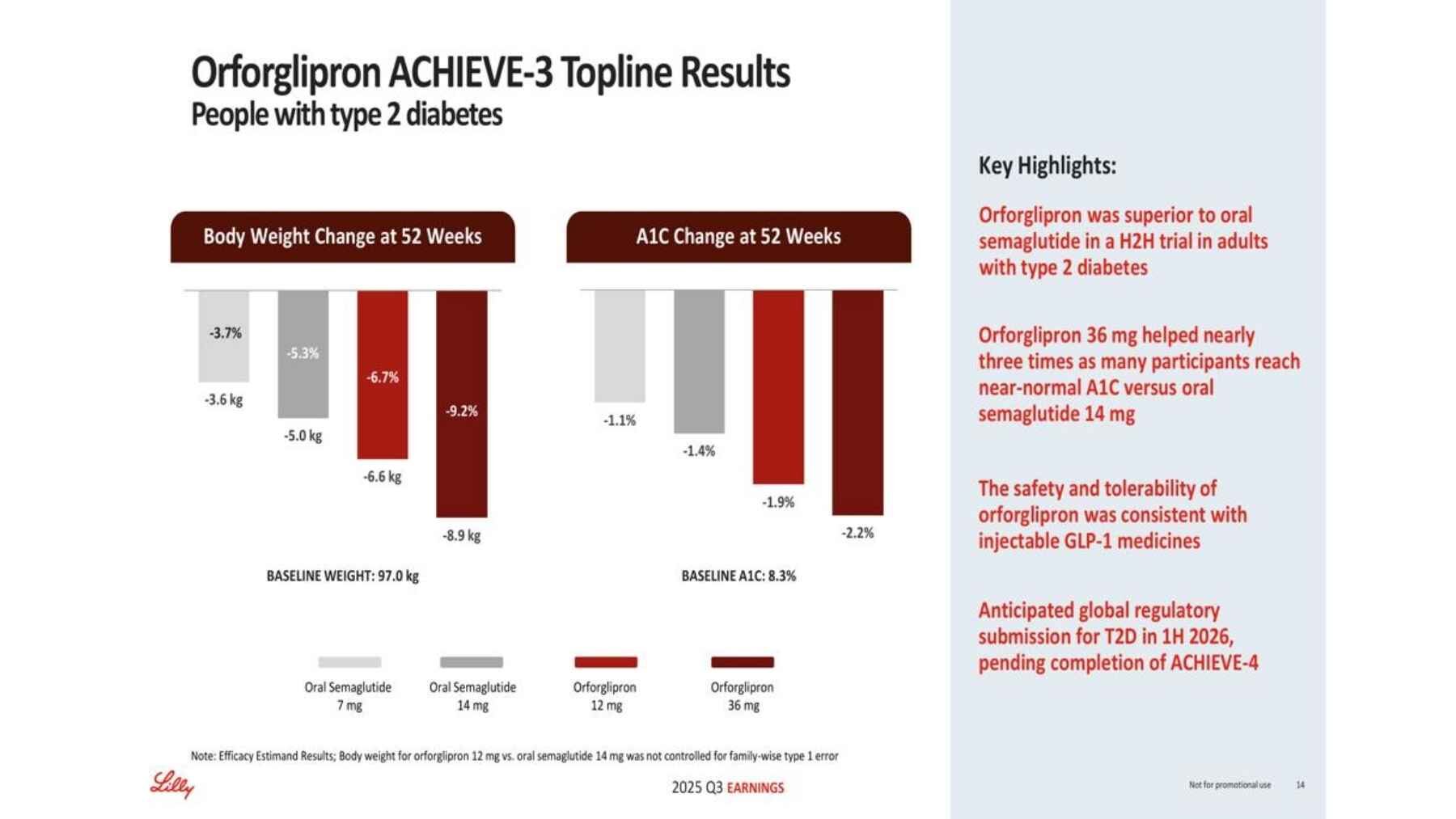
Participantslost an average of 19.7 pounds, versus 11 pounds with oral semaglutide
Convenience has a cost
The pill is very practical. It does not need refrigeration or a specific waiting period before breakfast.
On the other hand, the trial shows that this treatment has a weakness. Nausea, diarrhea, vomiting, indigestion, and extreme reductions of appetite were common. Almost 10 percent of those taking orforglipron decided to stop the treatment because of side effects
Where it stands now
TheFDA approved orforglipron under the brand Foundayo on April 1, 2026, forchronic weight management in adults with obesity or adults with overweight and at least one weight-related condition.
TheU.S. prescribing information includes warnings related to acute pancreatitis, severe gastrointestinal reactions, kidney injury from dehydration, and possible thyroid tumors. Anyone considering GLP-1 medication needs to consult a doctor to evaluate the benefits taking into account their personal medical history
The main study was published inThe Lancet
