


As a public health researcher at a university, I spend my career focused on preventing chronic disease. We study obesity, diabetes, cardiovascular disease and the many factors that shape health long before someone arrives at a doctor’s office. We encourage exercise, promote healthy environments and search for ways to make healthy choices easier
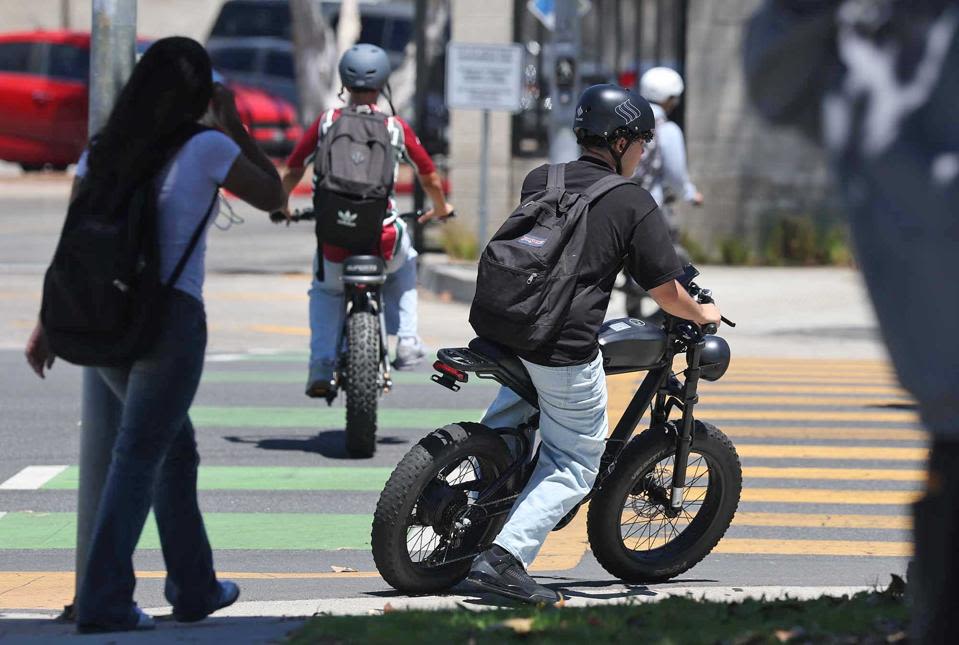
Yet recently, while walking across a university parking lot, I found myself stepping out of the way of electric scooters and e-bikes multiple times. In a matter of minutes, I nearly collided with riders on three separate occasions
It made me wonder: are we unintentionally engineering physical activity out of everyday life?
Advertisement
Advertisement
For decades, public health has encouraged people to incorporate movement into their daily routines. We have long recognized that health is not built solely in gyms or during organized exercise. It is built through countless small decisions throughout the day — walking to class, climbing stairs, crossing campus, carrying groceries or biking to work
Those seemingly insignificant moments matter. They improve cardiovascular fitness, help regulate blood sugar, support mental health and reduce the risk of chronic disease. They are the foundation of what public health experts call “incidental physical activity” — the movement that naturally occurs as part of everyday life
Today, many of those opportunities are disappearing
Technology has made transportation faster and more convenient than ever. Electric scooters and e-bikes allow people to travel across campus with little physical effort. For individuals with mobility limitations or those traveling long distances, these innovations can be tremendously valuable. Accessibility matters, and technology can play an important role in expanding it
Advertisement
Advertisement
But convenience also comes with consequences
When a five-minute walk becomes a one-minute ride, we lose more than time spent moving. We lose one of the most reliablegthen our cardiovascular systems, burn calories and interrupt the prolonged sitting that has become a hallmark of modern life
The irony is striking. At the very moment researchers are working tirelessly to prevent obesity, diabetes and heart disease, we may be removing one of the simplest and most effective forms of prevention from our daily routines
The human body was designed to move. Research has proven that even modest amounts of regular physical activity help prevent the accumulation of fatty deposits in blood vessels, improve metabolic health and lower the risk of chronic disease. These benefits are not reserved for marathon runners or elite athletes. They accrue through everyday movement
Advertisement
Advertisement
College campuses have long served as living laboratories for healthy urban design. Unlike much of modern America, where daily life often revolves around cars, campuses are intentionally built for people. Walkways connect classrooms, residence halls, libraries and gathering spaces. Students and employees naturally accumulate thousands of steps each day simply by moving through their environment
Public health researchers have spent decades advocating for exactly these kinds of communities. We know that walkable environments increase physical activity, strengthen social connections, reduce traffic injuries and contribute to better physical and mental health. In many ways, universities have modeled what healthier communities can look like
That is why the rapid proliferation of e-scooters and e-bikes on campuses deserves thoughtful consideration. These technologies offer convenience and can expand mobility for many users, but they also risk undermining one of the most valuable health-promoting features of campus life: routine, everyday movement
The future of chronic disease prevention may depend less on what happens in a laboratory and more on whether we continue making room for movement in everyday life. If we fail to do so, we risk creating a future that is more convenient than ever—and less healthy than it should be
This article was originally published onForbes.com
