


With 10 minutes left in his regular 6 a.m. fitness class, Kyle Hartley paused his rowing workout to grab a drink of water
He took a few gulps, sat down, then collapsed onto a classmate on a neighboring machine
He wasn’t breathing. His heart had stopped
Someone called 911. The class trainer, Juli Mosnes, and several classmates eased Kyle to the floor. Two classmates who happened to be nurses started Hands-Only CPR
Julie grabbed the gym’s automated external defibrillator, or AED, and the group continued their life-saving efforts until emergency responders arrived
At a hospital emergency room in Virginia Beach, Virginia, doctors determined Kyle’s cardiac arrest was caused by a heart attack. His left anterior descending artery, which supplies blood to the front of the heart, was 99% blocked. He was airlifted to a larger hospital, where doctors implanted a stent to open the artery
To help his body recover, Kyle was placed on a life-support machine
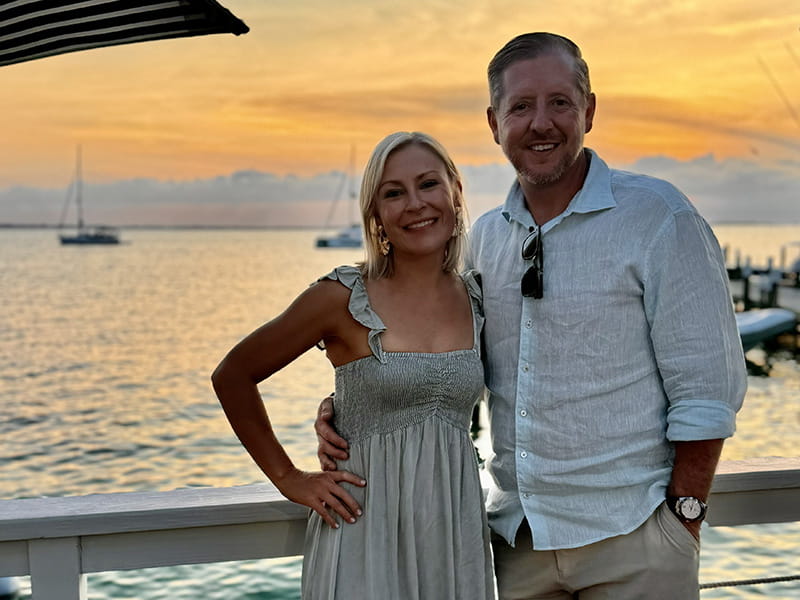
Kyle was 39. A former college soccer player, he now owned a family business in Virginia. He was supposed to have followed his early workout with a round of golf to celebrate a friend’s birthday. A week later, he woke up – his life forever changed
After early problems, recovery begins
One of Kyle’s legs was suspended in traction because of a circulation complication. A delicate surgery saved his leg
His kidneys were slow to recover, requiring dialysis. He feared dialysis becoming part of his new normal. A week later, his kidneys fully recovered
Kyle progressed from sitting up in bed to standing, taking a few shaky steps and eventually walking short distances in the hallway. With little appetite, he shed 50 pounds off his 5-foot-10 frame, dropping to 140 pounds over his monthlong stay in the hospital
Doctors couldn’t explain why Kyle had a heart attack. He was seemingly in good health. He exercised regularly, ate well and didn’t smoke or have high blood pressure. The only known family history of heart issues was his dad’s dad, who died of a heart attack
Gradual return to exercise
Kyle wasn’t eligible for cardiac rehab at the hospital because of his leg problem. Once home, he went on walks with his father – first 100 feet, then 200. Then the two walked the entire neighborhood. Kyle added sit-ups, push-ups and light weights
“You just keep building until little by little you can do more,” Kyle said
Two months after his heart attack, he returned to the hospital for a skin graft to close one of his leg wounds. About a year later, he went back to the gym
His father, David, and a few friends joined him for the 6 a.m. class
“It was therapeutic,” Kyle said. “It makes you feel like you’ve overcome something.”
Gradually, Kyle resumed his regular workoutsat the gym. At times, he felt short of breath. He figured it was just part of rebuilding his endurance. Although the heart attack left him with an irregular heartbeat, his heart function appeared strong otherwise
‘You’ve got to be kidding me’
Two and a half years later, Kyle was once again rowing at his gym
He paused to listen to the trainer’s next instruction when his vision blurred. Objects smeared, as if he were watching a movie with motion blur. Then he passed out
When Kyle regained consciousness, he was breathless and staring at the ceiling. The trainer, Madeline Dye – a college student certified as a lifeguard – had performed Hands-Only CPR and delivered a shock with an AED
You’ve got to be kidding me, Kyle thought
In the ambulance, he feared he wouldn’t even make it to the hospital
Kyle again had a cardiac arrest. Only this time, it wasn’t caused by a heart attack
He spent five days in the hospital. He received an implantable cardioverter defibrillator, or ICD, to monitor his heart rhythm. If it detects a dangerous rhythm, the device can correct it automatically with a shock
This time, Kyle completed 10 weeks of cardiac rehabilitation. “That was an awesome experience,” he said. “I built up confidence there.”
Back to the gym – but not alone
Kyle became so confident that he returned to the gym where both life-threatening events occurred, despite pushback from his girlfriend, Alex Stolle. The two met in the years between Kyle’s cardiac events
“I don’t want to be somebody that clips your wings,” Alex told Kyle, “but I’m scared. Maybe we take it down a notch and do yoga and walking.”
Seven months after his cardiac arrest, Kyle returned to his usual class, with Alex by his side
Now he’s back to attending two to three classes a week. Alex always joins him. They make sure to attend a class on the anniversary of both of Kyle’s cardiac events
“I have a sense of peace being there,” he said. “They’ve been great, supportive, and if something does happen, there are plenty of eyes on you. Exercise and my defibrillator give me confidence. There’s a safety blanket if anything else were to happen.”
Strong and healthy again
Now 43, Kyle wears a heart monitor whenever he’s at the gym
“They’ve got it ready and waiting for me when I walk in the door,” he said
Since his cardiac arrest in 2024, Kyle has also focused on fine-tuning his diet, getting enough sleep and cutting back on social activities to ensure he has more time for self-care
“He’s the fittest I’ve seen him,” Alex said. She sees his experience of having a heart attack and cardiac arrest at such a young age as both a blessing and a curse. “He was otherwise so healthy, and he used that strength and willpower to build himself back up. But it also makes you wonder, ‘Is this something I’m always going to have to deal with?’ I think Kyle is really starting to believe that, no, it’s not. ‘I can be me again.’”
A healthy lifestyle can lower your risk of heart attack and cardiac arrest, but it doesn’t eliminate it. Kyle’s story is a powerful reminder that learning CPR and how to use an AED can help you be ready when someone’s life depends on it
Stories from the Heart chronicles the inspiring journeys of heart disease and stroke survivors, caregivers and advocates
