


Cost control, eligibility requirements, and health risks of obesity among key factors shaping employer approach to medication: IFEBP survey
By
Louise Smith
Jul 09, 2026
When it comes to GLP-1 medications, traditionally used for diabetes management and weight loss, there’s been an increase in coverage by Canadian employers, according to new report
The percentage of employers providing the benefit has gone from 31% in 2025 to 37% in 2026
For diabetes only, the coverage for the drug — commonly known as Ozempic — has stayed about the same, at 56% in 2025 and 51% in 2026
A further 54% of Canadian employers say they are not considering offering coverage for GLP-1 drugs for weight loss, while 24% are not sure and 17% are considering it, finds the International Federation of Employee Benefit Plans (IFEBP)
Almost three-quarters (73%) say they are not covering for weight loss or GLP-1s for weight loss are carved out or excluded from the medical or drug plan
Why GLP-1s make sense for weight loss
As for why employers are considering GLP-1 coverage for weight loss, the top factor is the health risks of obesity at 53%:
Other benefits that are being considered for both diabetes and weight loss are:
- Nutritional counselling (54%)
- Prescription non-GLP1 drugs (43%)
- Lifestyle modification programs (24%)
- Disease management/case management/chronic care management (21%)
- Medication-free weight-loss interventions (13%)
Given all the media coverage about these drugs, how much of a difference are they making when it comes to employer plans? The IBEFP survey shows that in 2025, GLP-1 drugs for weight loss made up 11 to 15% of total annual claims by 26% of Canadian employers
Another 21% said the drugs made up 5 to 6% of overall claims, while 11% said they took up 7 to 9%
Managing GLP-1 costs
But the drugs are not cheap, so how are these being managed? The most common cost-control mechanisms in place for GLP-1 drugs for weight loss are:
- utilization management (54%)
- eligibility requirements (38%)
- annual maximum (35%)
- step therapy (23%).
Canadian pharmacies say generics have slashed the price to roughly $100 a month, which they expect will quickly drive up demand, according to a CBC article
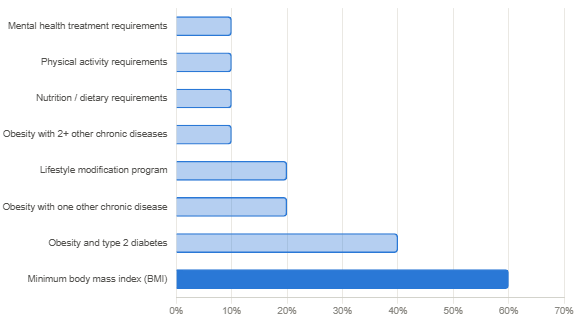
Canadian employers also have various requirements when it comes to approvals for GLP-1 coverage, according to the IFEBP survey, with body mass index coming out on top:
A major new cardiovascular study on glucagon-like peptide 1 receptor agonists (GLP-1 RAs) is sharpening an already fraught question for Canadian employers: How far should group benefits go in funding expensive diabetes and obesity drugs that may need to be taken for years?
