


A makeover for college: No gym, no meal plan and two years of work
NPR |
By
Jon Marcus
Published September 1, 2026 at 5:00 AM EDT
Oliver Parini for The Hechinger Report
Catch up on what you missed with our Education newsletter, sent weekly
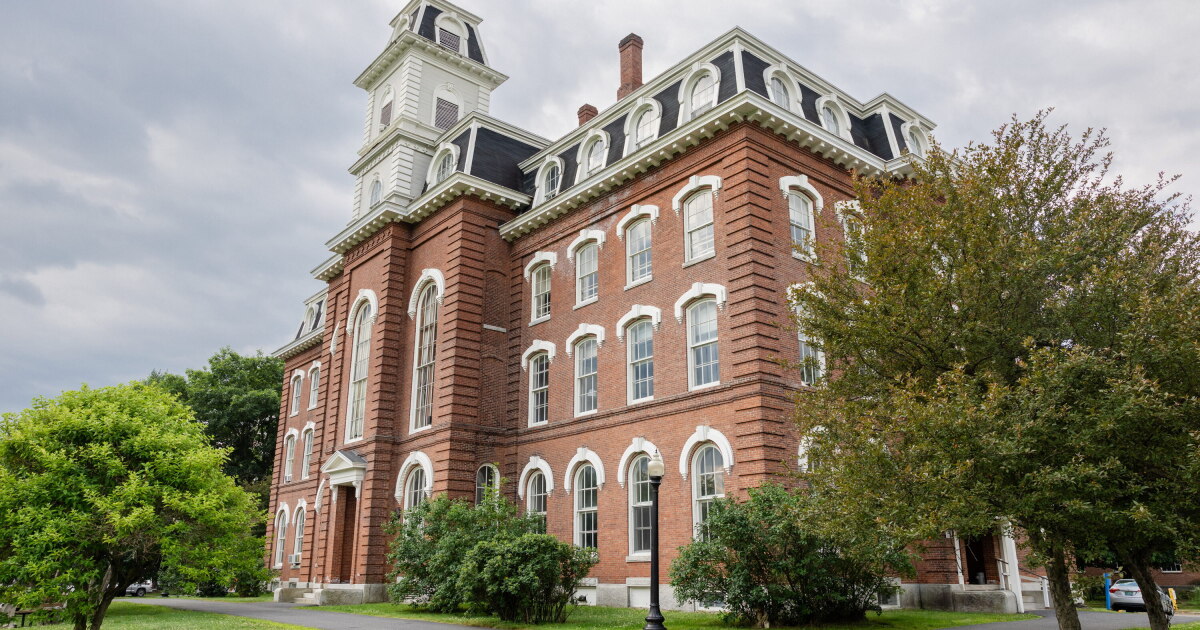
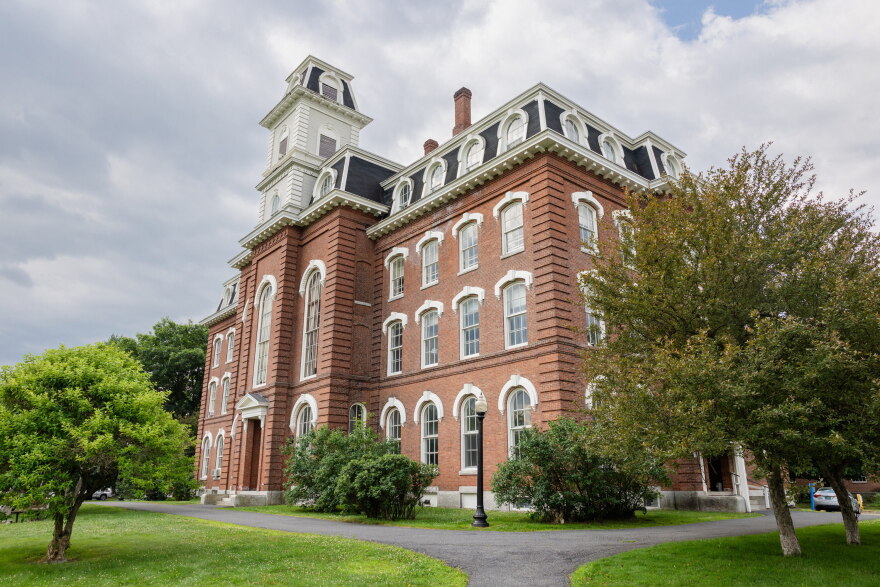
MONTPELIER, Vt. — The buildings that frame a grassy quad on a hill above Vermont’s capital city are all red brick and white trim, dating from as far back as the 1870s
This quintessential college campus from the 19th century is where a group of business, college and government leaders is working on the task of reinventing higher education for the 21st century
An entirely new college is being planned here to change not only how higher education is delivered, but at what price. It also proposes to highlight ways the current business model no longer works, as evidenced by the 152 colleges and universities that have closed or merged since 2016, and the 442 others that a new projection says are at risk
So deeply entrenched are the problems confronting higher education that a growing chorus of innovators says the easiest way to fix them is to begin again from scratch
The Greenway Institute — “green” as in new — will adopt instructional methods proven to work well, such as real-world training under the supervision of faculty mentors, while stripping away such things as layers of administrators and nonacademic amenitiesthat make college in the United States so expensive
“It’s not fancy. It’s a place where you do have a meaningful relationship with your faculty members. But you also take out your own trash,” said Mark Somerville, the founding president

Oliver Parini for The Hechinger Report /
Even more unexpected than the location of this startup is that it comes at a time when so many colleges are closing. In Vermont alone, seven private colleges have shut down in the last 10 years
But Somerville, the former provost of Olin College of Engineering in Massachusetts, said this “moment of mass extinction” makes it clearer than ever that “we need new models in higher ed.”
Enough of these experimental higher education institutions are in the planning stages that they have been organized by Duke University into a Future Universities Alliance. Greenway is a member
Project Polymath, for instance — founded by Dan Futrell, former CEO of the Pat Tillman Foundation, which gives scholarships to military veterans — proposes to mentor bachelor’s degree students beginning in 2028. Each student will take three majors and then be placed in an apprenticeship with an employer for two years
There is “broad agreement that something has to change and also recognition that changing legacy institutions from within is agonizingly difficult,” said Brian Rosenberg, former president of Macalester College in Minnesota. He is also author of the book “Whatever It Is, I’m Against It”: Resistance to Change in Higher Education and a member of both the Greenway and Polymath advisory boards
Greenway bought its campus in 2023 from the Vermont College of Fine Arts, which had mostly gone remote by then and would be acquired a year later by the California Institute of the Arts after enrollment declines and multimillion-dollar deficits
Oliver Parini for The Hechinger Report /
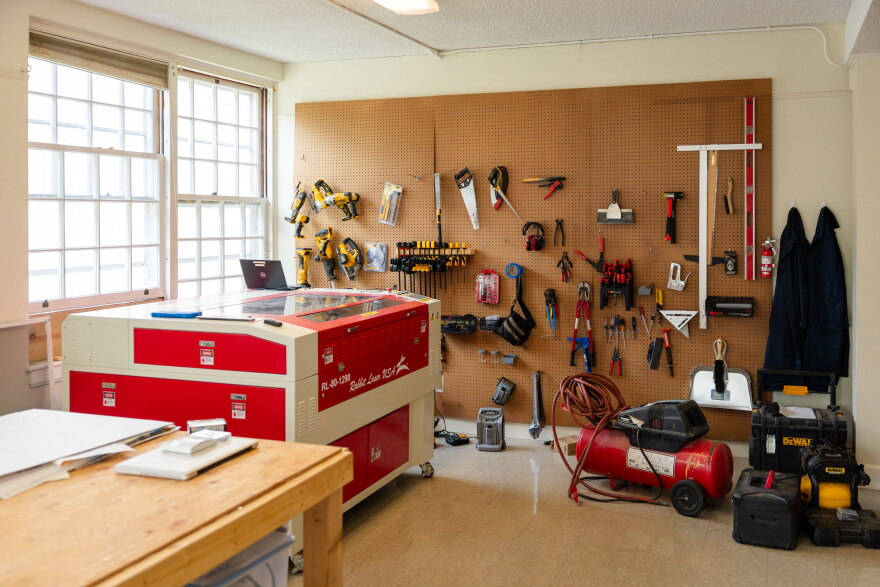
Many renovations are complete, including the transformation of one building into shop rooms full of tools that students will use to work on real-world projects under faculty supervision
Inside another building at the center of the campus — four stories of iconic, red-brick, Second Empire-style architecture, with big arched windows and a mansard roof — the Greenway team has arranged on a whiteboard color-coded sticky notes listing the many steps it takes to start a college
The new school tentatively plans to open in the fall of 2027. It has raised $4.5 million toward a goal of $30 million by 2031, Somerville said — including a grant from the National Science Foundation, which it shares with an existing traditional partner institution, Elizabethtown College in Pennsylvania. It’s also making money by renting out space it doesn’t need
Greenway’s founders and advisers include tech executives, CEOs, a onetime Vermont secretary of education, a NASA engineer and current and former administrators from Harvard University, Dartmouth College, Tufts University and other schools. It will teach one subject: engineering
The project tested its model in the spring semester of 2025 on four college sophomores from other schools, which gave them academic credit for coming to the Greenway campus and doing hands-on work with faculty supervisors in a prototype semester. Instead of sitting in conventional classes and lectures, the students designed wind turbines and solar-powered traffic signals
“Basically, they learned electrical, mechanical and some controls by doing, versus somebody standing at the front and saying, ‘All right, you know, this is Norton’s equivalent theorem [of electronic circuits]’ that you’ll never use in your life,” said Troy McBride, co-founder of a Vermont-based solar panel manufacturer and chair of Greenway’s board of directors
New research by scholars at the University of Wisconsin-Madison and the Strada Education Foundation shows that work-based learning improves students’ likelihood of getting jobs, advancing in their careers and earning more than classmates who studied in other ways. But fewer than half of students at public four-year universities get the experience ofpaid work-based learning, a separate Strada study shows. (Strada is among the funders of The Hechinger Report, which co-produced this story.)
“We’re stuck in the 1950s,” McBride said of traditional instruction. “We haven’t responded to the internet, let alone AI. We’re still memorizing things that don’t need to be memorized, and we’re not teaching skills and tools. We’re teaching facts, which is the least useful thing in these times.”
Jazz Gonzalez, who was part of Greenway’s prototype semester, said conventional lectures in his previous years at Elizabethtown College left him wanting more
Oliver Parini for The Hechinger Report /
“I would always say, ‘OK, but how do I dig deeper into this? How do I use this, and how do I actually apply it to what I’m going to be doing in the future?'” said Gonzalez, a Pennsylvania native who graduated this past spring
When Greenway is operating fully, students are expected to live on campus for two years doing projects and then go on to real-world workplaces for an additional two years while continuing to get support from faculty
That lowers the cost to the college of providing housing. It’s also part of the educational strategy: Research from the Association of College and University Housing Officers shows that students who live on campus benefit from a communal setting for the first two years, with lower dropout rates than classmates who live off campus. But “by the time a student is in their junior year at most colleges, they’re, like, ‘Could I go study abroad now?'” Somerville said
Greenway students will also shop for their own food and cook it for themselves in communal kitchens with utensils provided, plan their own extracurricular activities and, if they want to go to the gym, sign up for the nearby Planet Fitness or other off-campus options
“It goes right to the point,” said Emmanuel Attah, an engineering major at Elizabethtown who was also part of Greenway’s prototype semester
Not having climbing walls or football games “really didn’t matter to us,” Gonzalez said
Those kinds of amenities are part of what’s driving up the cost of college. In the 10 years leading up to the COVID-19 pandemic, the consulting firm McKinsey found, spending on noninstructional services grew four times faster than spending on teaching
“You see tuition going up and up and up and up, and not necessarily for the reasons that a student would want them to go up, like a better educational experience,” McBride said. “A lot of it is for amenities, extras and for space sitting empty.”
Increasingly, said Somerville, “young people and their parents are looking at [college] and saying, ‘Does this actually make sense?'”
There’s another reason to make students responsible for cooking their own meals and scheduling their free time, said Annick Dewald, Greenway’s first faculty member: so they learn how
“We assume that they can’t balance cooking for themselves and cleaning up for themselves, in addition to being college students, and I’m not totally sure why,” said Dewald, who teaches engineering
“Employers have told me the hardest thing about fresh-from-college undergrads is getting them to show up on time or sleep eight hours at night or to figure out how to feed themselves,” she said. “That to me is a product of how we view college or what services we provide.”
Hannah Root, Greenway’s chief of staff, recounted taking the college’s “test” students on their first food-shopping excursion, which she called one of the most challenging moments of the prototype semester. There were “just so many real decisions that they were having to make that it was clear they hadn’t really experienced before,” such as whether to buy organic produce
Without the frills, Greenway expects to charge tuition of $25,000 or less per year, offset by what students would be paid during their third and fourth years for their in-person work — generally called “co-op” jobs by other universities and colleges that offer them. The average full-time co-op pays more than $25 an hour for juniors and seniors, according to the National Association of Colleges and Employers. That comes to more than $50,000 a year
The average published total cost of attendance at private, nonprofit four-year universities is $65,470, the College Board reports
Greenway has to wait until it formally opens to apply for accreditation, a process that then takes at least four years. That’s one of the many examples of red tape that makes innovation challenging, its founders say. It also means students won’t be eligible for federal grants or loans for a while. Greenway’s founders said they expect the money they raise will offset that, and that accreditation would be retroactively applied to graduates’ degrees
The plan is to grow to 500 students in Montpelier, half of them on campus at any given time, and to add other locations nationwide, Somerville said. For now, he said, Greenway needs about 370 students by 2031 to break even
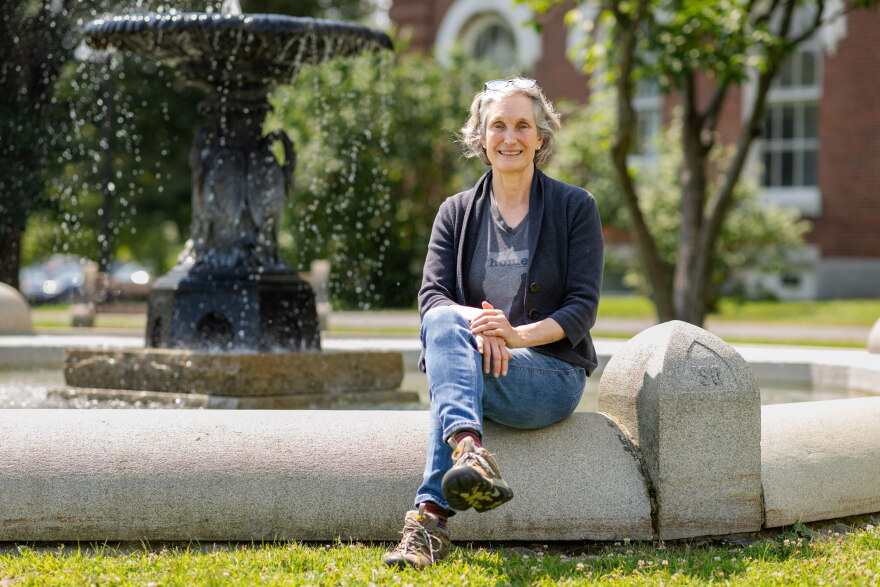
Greenway may not be for everyone, said Vermont state Rep. Rebecca Holcombe, a former Vermont secretary of education and onetime candidate for governor, and another founder
It’s “for kids who really know what they want to do,” she said
Oliver Parini for The Hechinger Report /
While the particularly large number of closing colleges in Vermont may seem a bad omen for an effort to open a new one, Holcombe said experiencing the problem has made the state that much more focused on it
“We’re ready to start saying, ‘OK, if not this, then what?'”
This story was produced by The Hechinger Report, a nonprofit, independent news organization focused on inequality and innovation in education. Additional reporting by Liam Elder-Connors
Edited byNirvi Shahand Steve DrummondVisual design and development by LA Johnson
