


Anyone who has ever endured burning, itchy eyes or extra tearing knows that these symptoms are tough to ignore
They can impact your vision and make it harder to work, focus or sleep
They are also some of the most common signs of dry eye disease, a condition that impacts up to 30 percent of the population globally, without any real cure. Dry eye can result from insufficient tear production or poor tear quality and may cause eye discomfort, a burning sensation and even fluctuating blurry vision
And often, medicine alone is not enough to treat dry eye. That prompted a multidisciplinary team of University of Miami researchers, led by professors Naresh Kumar and Dr. Anat Galor of the Miller School of Medicine, to investigate whether low cost ways to improve indoor air quality can help reduce dry eye symptoms. They received a $5.5 million grant from the National Eye Institute, part of the National Institutes of Health, to pursue their research
“People spend a lot of time trying to get their eyes to feel better. The problem is that we are so focused on the medical solutions that we often forget about the environmental triggers of dry eye symptoms and other diseases,” saidGalor, a professor of ophthalmology at the Miller School of Medicine and an ophthalmologist at Bascom Palmer Eye Institute. “We want to better understand whether improving indoor air quality can help reduce symptoms of this very common condition.”
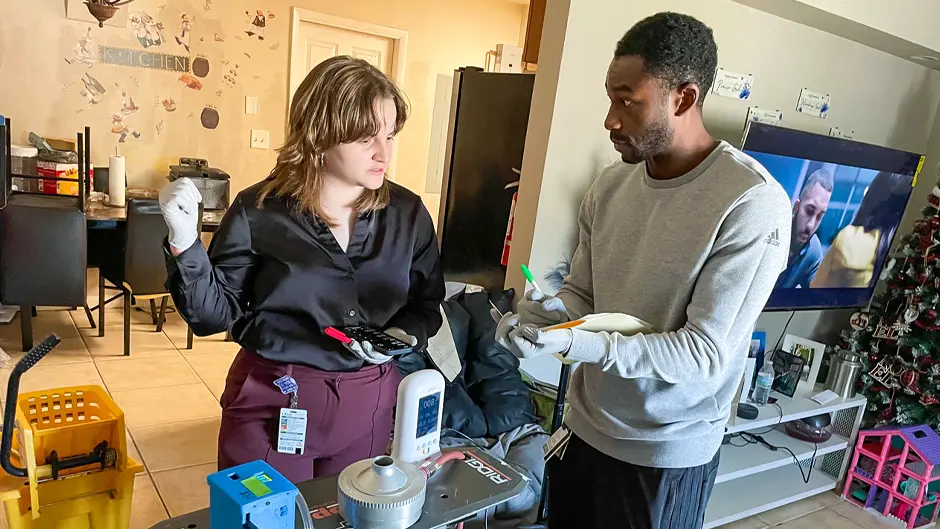
The University team will expand on an earlier 2024 study. Through that work, Kumar and Galor found that after nearly 165 patients’ homes were inspected for air quality and interventions were implemented to reduce indoor air pollutants, many patients experienced improvement in their dry eye symptoms after six months
“All of the subjects were provided with an objective report on their home air quality, and in most homes, mold and bacterial growth were showing up, which likely motivated participants to improve their indoor air quality because seeing is believing,” said Kumar, a professor of environmental health in the Department of Public Health Sciences. “It encouraged 77 percent of people to add some of these interventions, and later on, their dry eye symptoms decreased.”
However, all participants in the previous study did not use the same interventions, and the low-cost supplies were not provided as part of the study. The new study will build on these initial findings by recruiting nearly 400 participants and providing standardized, low-cost ways to improve home air quality, such as an air purifier, humidity control, and indoor plants
“If we see that dry eye symptoms improve, these measures could be suggested as part of the design, construction and recommended comfort provisions for occupants. This could reshape the path forward in the development of new affordable housing units because the one-time initial investment to build homes with these provisions in place could offer benefits in health or medical care,” said Esber Andiroglu, a professor of practice in civil and architectural engineering in the College of Engineering and a member of the study team.
At the start of the study, all participants will undergo an eye examination as well as an assessment of their home air quality before being randomly assigned to one of two groups. Within a week, participants in the first group will receive specific tools and instructions to help improve indoor air quality. They will also receive guidance on practical ways to improve the home environment, like optimizing ventilation, keeping heat and humidity low, and reducing indoor sources of air pollution. The study will then evaluate whether these changes improve dry eye symptoms over time. Participants in the second group will also receive intervention supplies six months after their home is inspected. Participants will be required to remain in the study for a full year.
Also as part of the study, researchers will conduct a cost-benefit analysis of adding these air quality interventions in the home, led by economist David Kelly of the University of Miami Business School
“Our study will hopefully spark a paradigm shift from treating the disease to treating the environmental causes of the disease, so if a person’s dry eye is because of poor indoor air quality, by improving it, we can allethe person has to keep on using artificial tears as a temporary treatment.”
In addition to Kumar, Galor, Andiroglu and Kelly, the larger team for this study includes other experts from across the University—Gaofeng Wang, associate professor of human genetics at the Miller School; Yan Guo, and Isildinha Reis, professors of biostatistics at the Miller School; Drs. Olveen Carrasquillo and Dushyantha Jayaweera, professors of medicine and infectious diseases at the Miller School; and Drs. Victor L. Perez and Raquel Goldhart, both clinical ophthalmologists at Bascom Palmer Eye Institute.
Since Kumar studies air quality and its impact on the body, he hopes this work could also reveal how these relatively easy interventions might benefit those struggling with other health issues
Ultimately, he said the team hopes to translate their findings into simple strategies for the larger South Florida community to improve indoor air quality in their homes
“Your eyes are key to understanding many other health conditions, so the eyes are a relatively easy way to study the effects of indoor air quality measures,” Kumar added. “What we study in dry eye disease could also have implications for mitigating and managing other diseases, like asthma, COPD, immunological disorders and even sleep.”
To learn more about this study or to participate, visit thewebsite
topics:
Health and MedicinePeople and CommunityHealth and LifestyleIn the Community
Top
