


EventsHealthNews Exchange
As Sonoma County Ages, Family Caregivers Face Hidden Health Toll
BySelen Ozturk
Jul 21, 2026
Latest Content
Author Related
SONOMA, Calif. — By 2030, nearly one in three Sonoma County residents will be 60 or older. Behind many is a family caregiver whose health may worsen faster than the person receiving care
Throughout California, that care is often provided by unpaid spouses, adult children, siblings and neighbors who don’t even think of themselves as caregivers
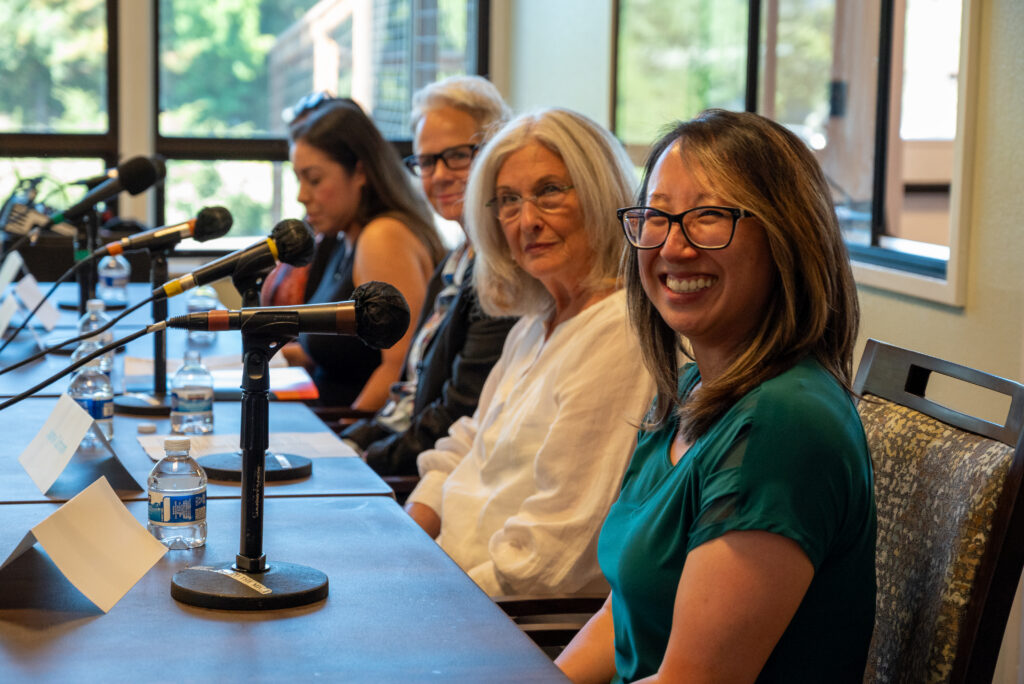
“They don’t begin with the title, they just begin with helping out mom, or a friend or neighbor,” said Connie Nakano, assistant director of the Office of Strategic Initiatives and Equity at the California Department of Aging (CDA), during a July 16 news briefing about family caregivers
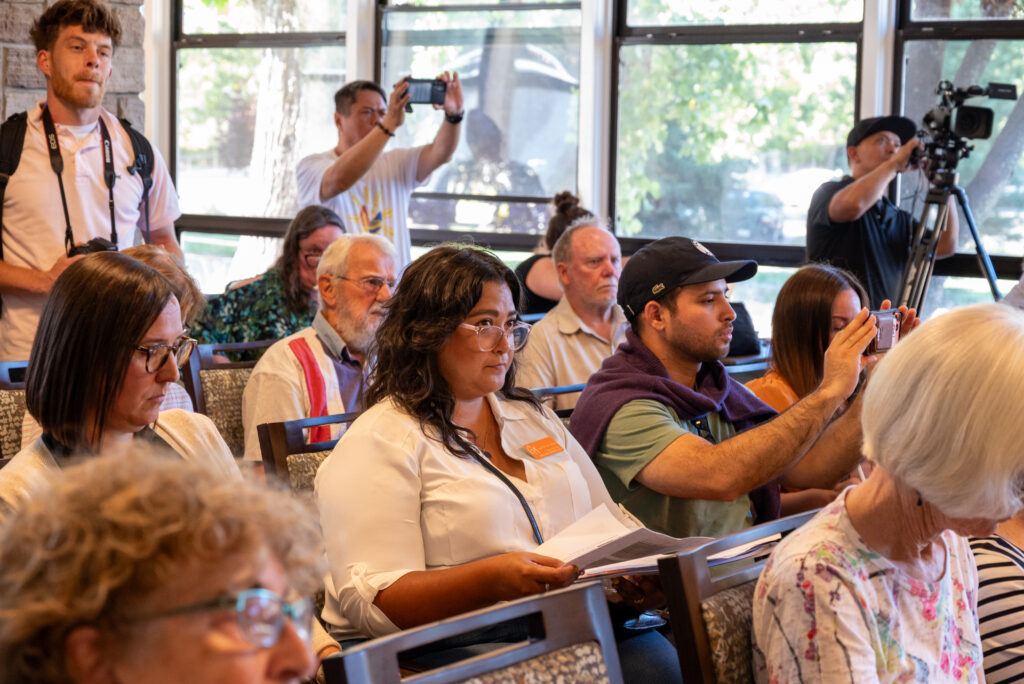
The event was hosted by the CDA and ACoM at Today & Together, an adult daycare center in Sonoma County. The region has the second-highest share of older adults of any Bay Area county, trailing only Marin by 1%
Among people 60 and older, county officials report that close to three in 10 have a disability, compared with roughly one in 10 in the general population
Nearly one in five adult Californians — over 7 million — care for someone with a complex medical condition or disability.
Nearly half of those caregivers have experienced “at least one negative financial impact” because of their responsibilities, a quarter experience seven or more days a month of poor physical health, and four in ten experience high emotional stress while caregiving.
Barriers to care and self-care
As these factors compound, many caregivers of people even with chronic degenerative illness show worse health indicators over time than care recipients, explained Alexis Glidewell, program director at the Redwood Caregiver Reunty for more than two decades
Conventional self-care advice can reinforce the problem, she said, describing a client who once pounded a table in her office: “She said ‘I don’t want to take care of myself just so I can keep taking care of her.’ And I thought, what are we telling people, that the only value in taking care of themselves is so that they can continue taking care of someone else? It’s dehumanizing.”
Those cared for “are getting their doctor’s appointments on time, they’re getting their three meals a day, they’re getting their medications on time, but the caregiver can’t remember if they took their own pill this morning,” Glidewell continued
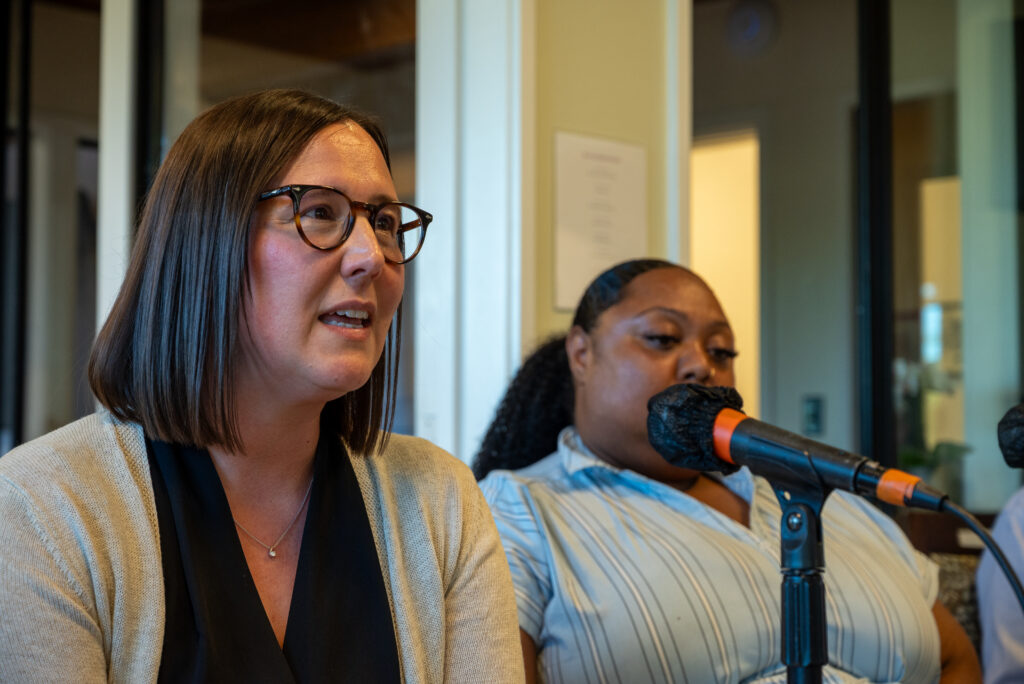
Maisie Hak, a family consultant at Redwood Caregiver Remixed dementia, said the main barrier to help is family expectations, not lack of re
“The challenge is getting my parents to accept respite from outside of the home,” she explained. “And living in Sonoma County, there’s not a lot of Vietnamese language speakers, and my grandmother only speaks Vietnamese,” making it harder still for her family to trust an outside agency
“What most affects a caregiver is if you are caring for someone 24/7, as opposed to being able to go in and out. If you have the ability to walk away, it’s very different than if you’re unable,” said Jeanie Schram, a Sonoma resident who cares for her husband of 46 years, Richard, who was diagnosed with dementia about four years ago and attends Today & Together
“People don’t all of a sudden wake up one morning and go, ‘Oh, my partner has dementia.’ It’s a very slow process. Slowly the invitations stop, slowly the modifications happen. It’s a very insidious, slow process of losing the life that you live,” she continued
“The mantra ‘you have to take care of yourself,’ is good advice, but it can’t easily be followed, because you never really come first, and it looks like for the rest of your life, you never are going to,” she added
‘We need more respite’
Johnna Watson, whose mother has frontotemporal dementia and attends Today & Together, said her 31 years in law enforcement trained her for almost any situation except aging
Law enforcement officers “don’t ask for help. We take your problems and we figure out how we’re going to solve them. We have local, state, federal ren’t fix this. This is one thing that we cannot fix,” she said.
Her mother’s progression to stage six of dementia’s seven stages “is the most challenging event that has happened,” she continued. “She can’t say anything that you will understand. She pretty much talks gibberish … but since she has been attending here, she literally dances out the door. She paints. She sings. She exercises. She engages. We need more Today & Togethers. We need more respite.”
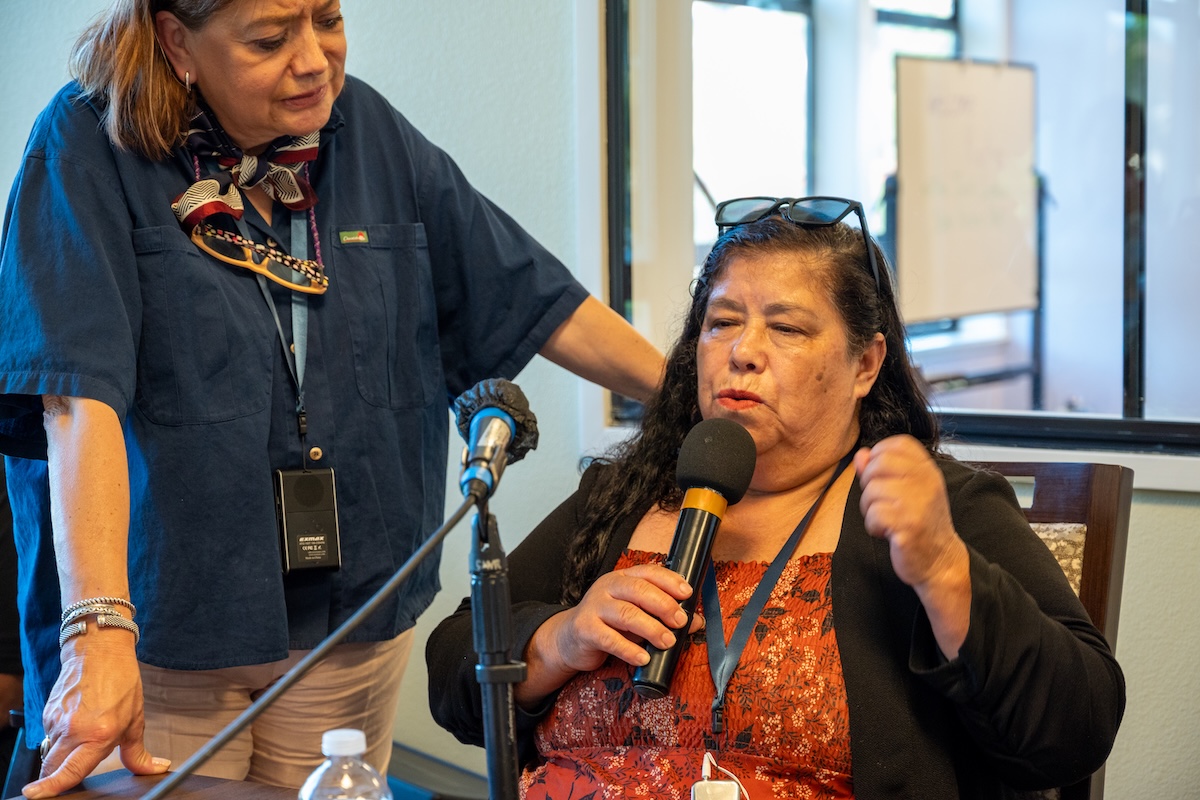
Due to the toll, “There’s a lot of families who put their parents (in a facility) and don’t visit, nobody visits,” said Mirella Alcaraz, who drives 45 minutes from Sonoma to a rehabilitation facility to help care for her father throughout diabetes, dementia and the amputation of both feet.
“I have six kids, but I have to be here for my father because my dad knew me,” she added, speaking through a Spanish interpreter
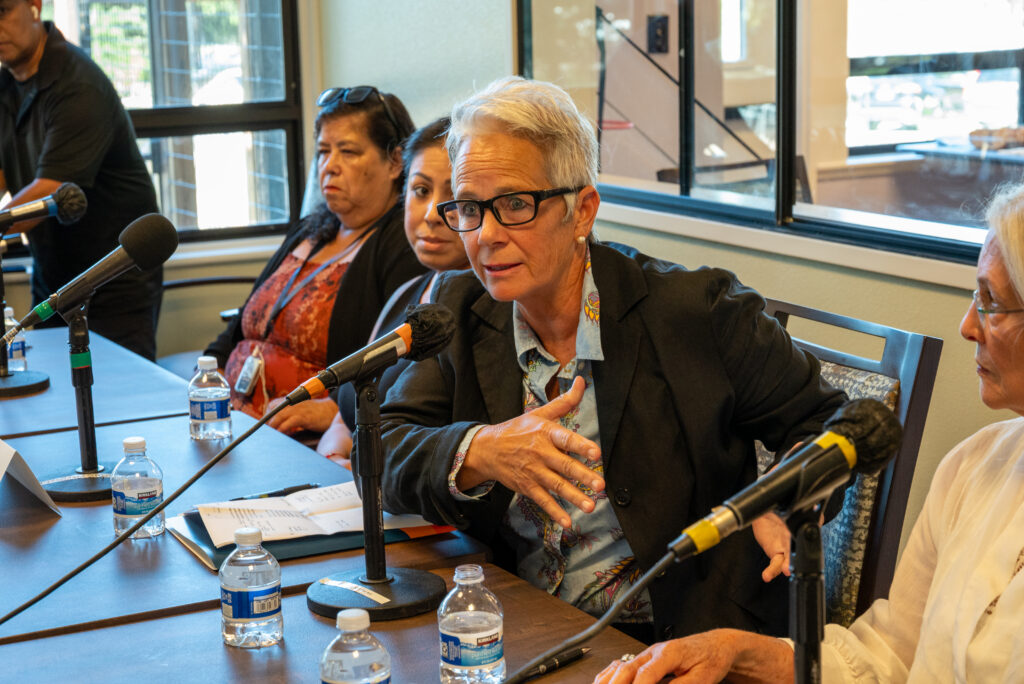
Theresita Ortiz, who cared for her father until his death and now cares for her 76-year-old mother following a stroke, said “I sometimes don’t know what to do,” describing days when she takes a walk to steady herself before going back in the house. “She’ll still try to yell at me like I’m still 13 years old because she’s right and I’m wrong.”
“Stress is a big issue for me, and I do try to manage that with medication, which my mom sometimes understands and doesn’t understand, because she says, ‘Put everything in God’s hands,’” she continued. “God isn’t helping right now, but I do my best, and I just wish there were a phone [line] just to call somebody, just to vent.”
‘You can’t do this alone’
Sonoma County runs an aging rener for anything from finding a day program to building a full caregiving plan, said Joni Huntsperger, the county’s Master Plan for Aging implementation coordinator.
Her husband, she said, pushes back when she calls caregiving a “journey”: “Every time somebody says we’re on a journey, it sounds like there’s going to be elves and hobbits. What it really means is it’s really hard, and you don’t want to do it today … We’re here to help caregivers still feel like themselves, like you’re not losing yourself.”
“You can’t do this alone. It’s just like raising children. You have to have a village behind you,” said Christina Gonzalez, executive director of Today & Together, who said a year of non-ambulatory day care in the program — including medication management, transfers, bathing and feeding assistance — costs less than one month in a memory care community
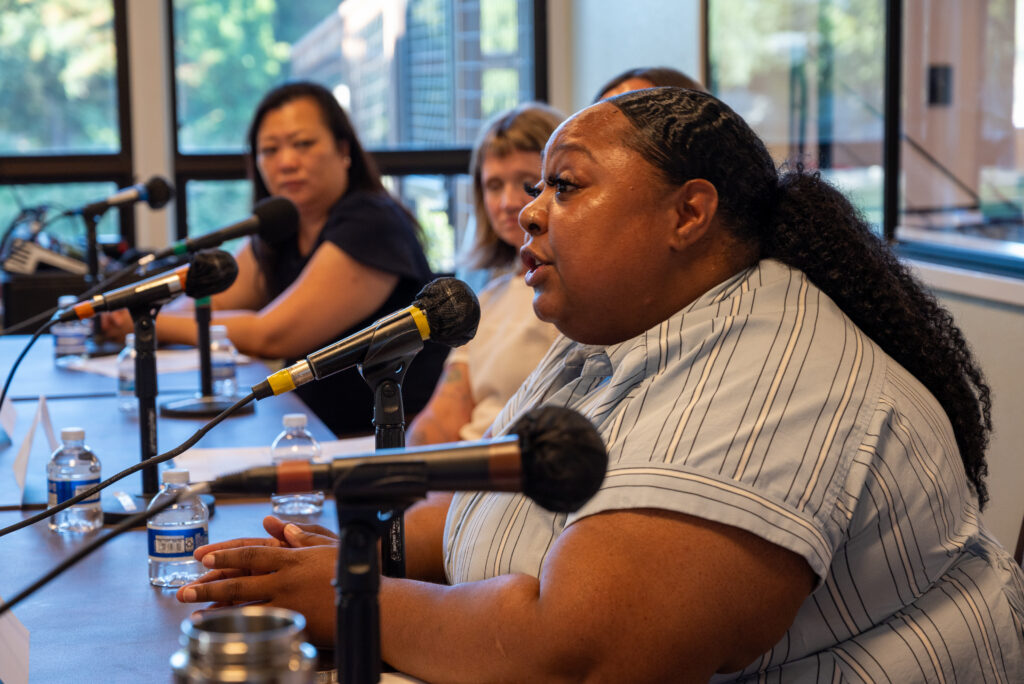
Caregiving compounds financial strain for low-income and immigrant families in Sonoma Valley facing grocery inflation, rent hikes and layoffs in a softening local wine industry, said Leonardo Lobato, executive director of La Luz Center.
For one client of his Latino community reook for regiving, that stress also causes trauma,” he said
He added that many longtime immigrants who arrived in the region as agricultural workers decades ago, whose families remain in their countries of origin, are often aging with no one nearby to care for them at all
“We hear phrases like the ‘silver tsunami,’” regarding California’s aging population, said Erick Larson, executive director of the Village of Sonoma Valley. “I resist using those because they seem to denote that growing older is a bad thing.”
Real progress, he said, depends on people recognizing the toll of caregiving before it becomes a crisis.
“I had surgery on my toe that took me by surprise, I was laid up for three months, and that was a rude awakening to what it’s like to be aging. I’m 70 years old, and this was my first experience of ‘Wow, I’m getting older,’” Larson continued
“None of us really accept that the aging process is happening until we already have an event, either ourselves or someone in our family,” he said. “If we want to help caregivers … we need to change that.”
- Family Caregivers in California Can Tap Into a Wealth of State Resources
