Actions
- <a href="https://twitter.com/intent/tweet?url=https://www.wxyz.com/news/health/ask-dr-nandi/ask-dr-nandi-back-to-school-common-illnesses-when-to-keep-kids-home-sick&text=Ask%20Dr.%20Nandi%3A%20Back-to-school%20common%20illnesses%2C%20when%20to%20keep%20kids%20home%20sick” rel=”nofollow noopener” target=”_blank”>Tweet
Ask Dr. Nandi: Back-to-school common illnesses, when to keep kids home sick
PrevNextIn today’s Health Alert, kids are back to school, and that means more than just homework could be coming home. From coughs to colds, illnesses can spread quickly through crowded classrooms.

By:Dr. Partha Nandi
Posted
and last updated
(WXYZ) — In today’s Health Alert, kids are back to school, and that means more than just homework could be coming home. From coughs to colds, illnesses can spread quickly through crowded classrooms
Ask Dr. Nandi: Back-to-school common illnesses, when to keep kids home sick
As a dad of three boys heading back to school, I know that many parents can relate to the runny noses and coughs that start showing up
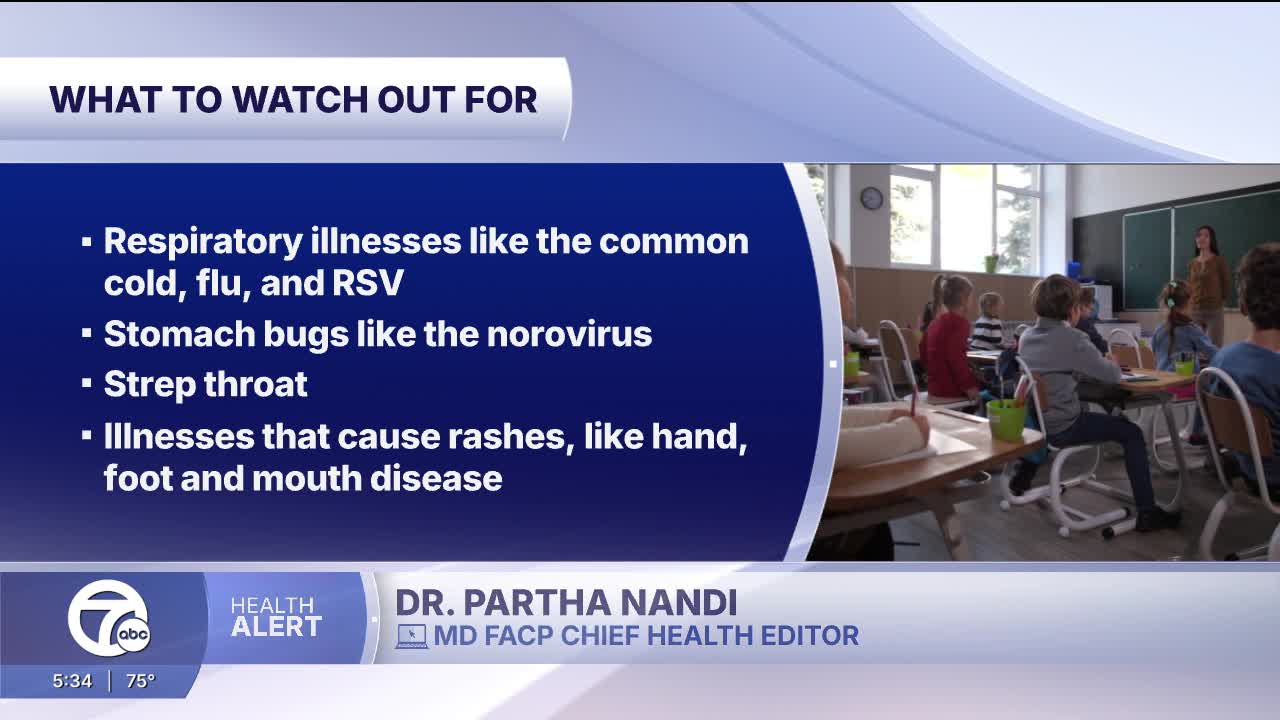
Respiratory illnesses like the common cold, flu, and RSV are very common when kids spend more time together indoors. That’s because their immune systems are now exposed to more germs
Parents may also see stomach bugs like the norovirus, which can cause nausea, vomiting, and diarrhea. Then there’s strep throat with its notorious sore throat and swollen or painful neck glands; pink eye, which can cause eye discharge, burning, and red eyes; and of course, we can’t forget illnesses that cause rashes, like hand, foot, and mouth disease
The good news is, there are simple ways to help reduce the spread of germs. Encourage frequent handwashing with soap and water, cover coughs and sneezes, and avoid sharing drinks, utensils, and water bottles. Keeping vaccinations up to date, including the yearly flu vaccine, can also help protect against serious illness
So when a child does get sick, when should parents keep them home?
That can be tricky because not every cough or sniffle means your child has to stay home
The Michigan Department of Education recommends keeping a child home if they have a fever of 101 degrees or greater, vomit two or more times, have two or more loose or watery stools, or have respiratory symptoms that are getting worse or not improving. Also, children with draining skin sores should stay home if the sores cannot be covered
That means kids can generally return to the classroom once they’re fever-free for at least 24 hours and not taking fever-reducing medication. Vomiting should have resolved for at least 24 hours, and they should be able to keep down food and liquids. Diarrhea should be improving, with no loose stools for at least 24 hours before returning to school
Now, most of these illnesses get better with time. But if symptoms aren’t improving, then please contact your child’s doctor. And if your child is having trouble breathing, is severely ill, or has another emergency, seek immediate medical care
In general, your child should feel well enough to participate in school and not need more care than school staff can provide
And lastly, your child’s school or local health department may have its own policies, so check those as well