


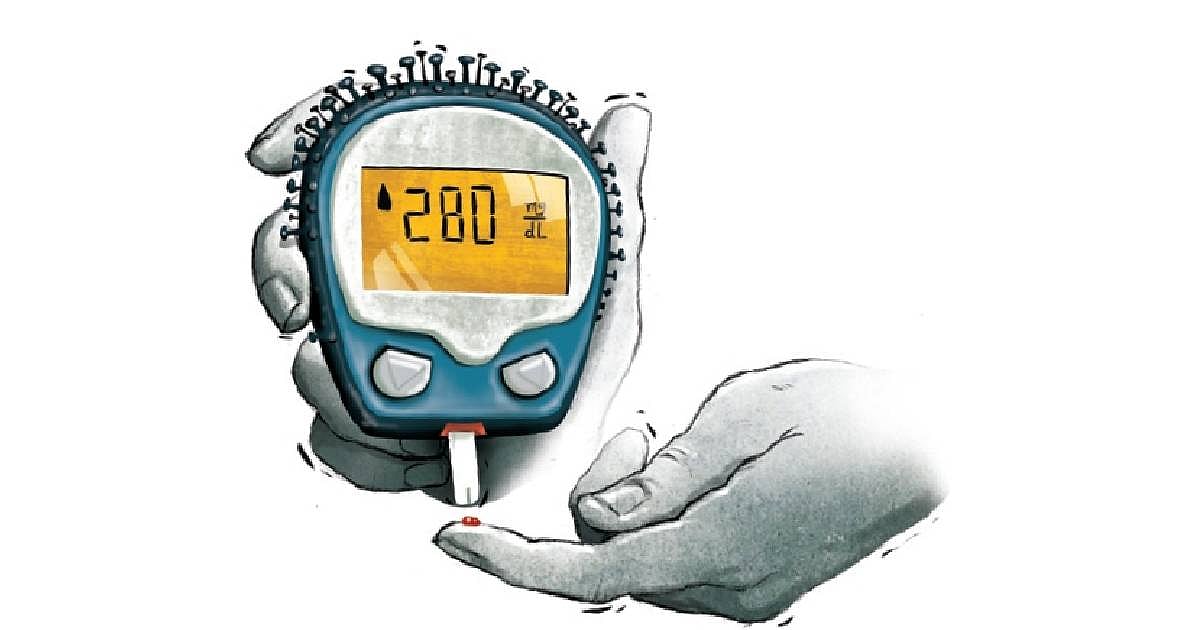
Changing food patterns, greater consumption of processed foods, reduced physical activity and stress could collectively be contributing to the trend.Photo | Express Illustrations.
Updated on: 28 Aug 2026, 4:17 am
BENGALURU: Karnataka is recording a significant rise in elevated blood sugar levels among adults, with experts attributing the trend to changing dietary patterns, increased consumption of ultra-processed foods, physical inactivity and the pressures of urban life
According to the National Family Health Survey (NFHS-5), 2023-24, 26.1% of men and 22.3% of women aged 15 years and above in Karnataka either had blood sugar levels above 140mg/dl or were taking medication to control it. The figures in 2019-21 were 15.6% and 14%, respectively
Doctors and public health experts cautioned that figures should not be interpreted as a direct measure of diagnosed diabetes. NFHS data indicates a population-level rise in elevated blood sugar, while the reasons require a broader understanding of changing lifestyles and social factors
Dr Yogish CB, Assistant Professor, Institute of Public Health (IPH), said the increase cannot be attributed to a single factor such as sugar consumption. Changing food patterns, greater consumption of processed foods, reduced physical activity and stress could collectively be contributing to the trend. “It’s not that people have consciously decided to consume more sugar. There has been an unnoticed shift in the way people eat,” he said
Public health researcher Arushi Thapar, IPH, said the issue needs to be viewed through the broader framework of non-communicable disease (NCD) risk factors. Poor nutrition, physical inactivity, alcohol and tobacco use are among the major risk factors associated with NCDs. She pointed to a decline in dietary diversity
“Changing dietary patterns, increasing consumption of ultra-processed foods and physical inactivity are major concerns. Among urban working-age populations, particularly those in desk-heavy jobs, there are also structural barriers to being physically active,” she said
Thapar said Bengaluru’s environment also plays a role, with inadequate footpaths, limited open spaces and shrinking recreational areas making regular physical activity difficult
Dr M Ravi Kumar, Senior Consultant (Internal Medicine), Sakra World Hospital, said increased consumption polished rice and maida, along with ultra-processed snacks, fast food and sugary drinks, is contributing to the growing burden. “This is compounded by sedentary lifestyles, long working hours, prolonged screen time and lack of exercise, particularly among urban populations,” he said
Kumar said persistent fatigue, excessive thirst, increased water intake and frequent urination can be warning signs that should prompt people to get their blood sugar tested. Darkening or thickening of skin around the neck and armpits can also be associated with insulin resistance, he added
Follow The New Indian Express channel on WhatsApp
diabetes
Lifestyle
Blood sugar level
