


Benchmarks
Nifty24,157.9067.06
Precious Metal
Gold (MCX) (Rs/10g.)158,267.00-729.0
Enter search text:
The Economic Times daily newspaper is available online now.
Read Today’s Paper
Psychology says your long-term success depends on the automatic micro habits you repeat every day
Psychology says your long-term success depends on the automatic micro habits you repeat every day
By Divyadeep Singh
, Global DeskLast Updated: Aug 28, 2026, 10:02:00 AM IST
Synopsis
Regularly performed actions can establish automated self-discipline, which frees up cognitive resources for more significant tasks. Habitual behavior change is often hindered by ingrained habits and external pressures. Adjusting one’s environment can successfully disrupt habitual patterns by modifying the cues that initiate those behaviors. Key life changes can pave the way for successful habit change, leading to the development of positive routines that support sustainable behavioral improvements.
TIL Creatives
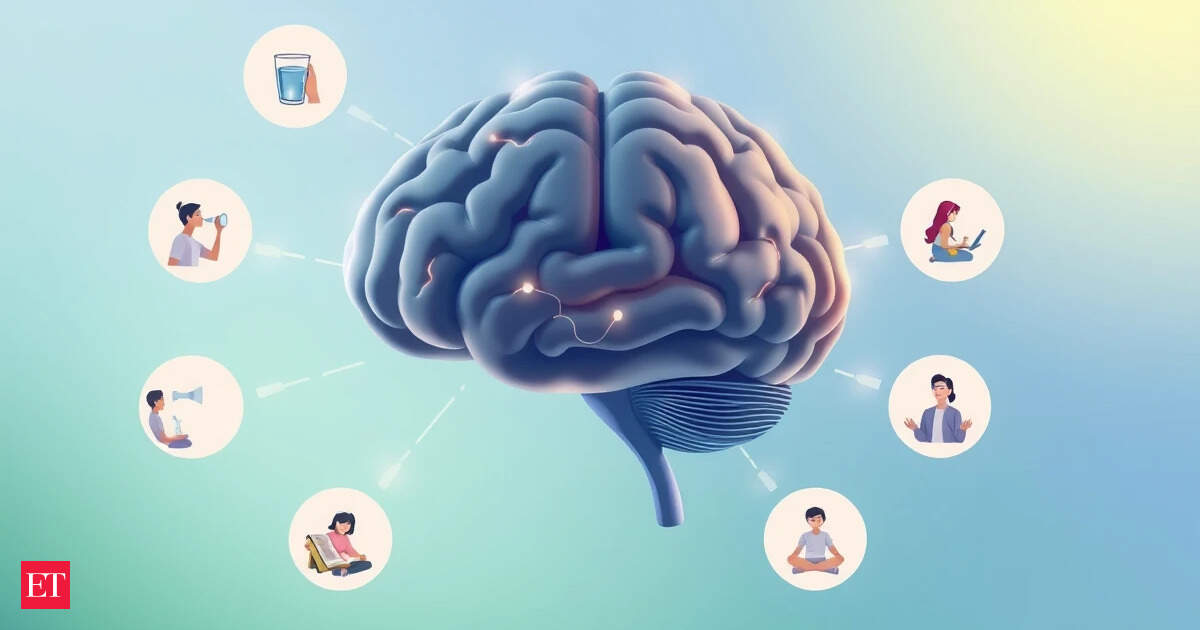
Imagine waking up every morning, reaching for your phone, and scrolling through notifications before your eyes are fully open. It feels almost automatic, an effortless loop executed without a single second of conscious deliberation. Have you ever wondered why small, repeated actions like this hold such a powerful grip on our daily lives? What if the key to reaching your biggest personal and professional goals isn’t massive willpower, but the subtle science of these micro-level routines?This psychological phenomenon is known as Habit Formation and Automated Self-Control. Research shows that repeated actions shift attention to context cues, allowing habits to serve as an automated form of self-control.
What Micro Habits Really Mean
Habit formation relies on specific cognitive and attentional mechanisms. According to a research review by Lucas Carden and Wendy Wood published in Current Opinion in Behavioral Sciences, stimuli that have been rewarded in the past acquire attentional priority over non-rewarded ones. When actions become automated, details of daily life are handed over to automatism, freeing higher mental powers for other tasks.This automaticity fundamentally alters how researchers view self-control. Rather than an internal struggle where one part of a person stops another part, Carden and Wood note that acting on beneficial habits provides people with an automated means of self-control.
The Deeper Context Behind Everyday Habits
Behavior change interventions often struggle to alter lifestyle behaviors like diet, exercise, environmental sustainability, and financial solvency. Carden and Wood point to the national “5-A-Day-For-Better-Health” campaign, which successfully increased people’s knowledge about healthy choices but had limited effect on actual behavior change.Changing habits involves environmental pressures just as much as intrapsychic forces. As Carden and Wood report, popular interventions like implementation intentions and reminders show small or negligible long-term effects, especially for strong antagonistic habits like unhealthy eating and smoking.
Real-World Applications in Daily Life
Altering environments is key to disrupting habits because changing environments alters the cues that activate old behaviors. Carden and Wood cite the “habit discontinuity effect,” which shows that behavior change interventions are most effective during major life transitions—such as moving house, having a child, or changing jobs—when familiar cues are absent.Additionally, researchers are using smartphones and big data to study habits outside the lab in natural settings. Carden and Wood highlight a smoking cessation study where smartphone geolocation mapping showed that relapse rates increased with exposure to point-of-sale tobacco cues, proving the impact of external triggers on behavior.Key TakeawayAchieving long-term goals depends more on creating automated routines and managing environmental cues than relying on willpower alone. As Carden and Wood conclude in Current Opinion in Behavioral Sciences (2018), developing beneficial habits grants individuals an automated form of self-control, proving that changing everyday environments is essential for lasting behavior change.Add 
as a Reliable and Trusted News Source

Add Now!
Read More News on
habit formationmicro habitspsychology of habitsbehavioral science
Read More News on
habit formationmicro habitspsychology of habitsbehavioral science
Stories you might be interested in
