


Every antidepressant approved by the FDA — from Prozac to esketamine to the new wave of psychedelic-derived compounds advancing through late-stage trials — acts inside the brain. SSRIs rebalance serotonin at synapses. NMDA antagonists modulate glutamate. Psilocybin remodels neural plasticity. The assumption built into all of them is that depression is, at root, a disorder of brain chemistry, and the drug must cross the blood-brain barrier to fix it
The FDA has now cleared a clinical trial that tests the opposite idea: that depression can be treated by injecting a single drug into the muscles of the forehead
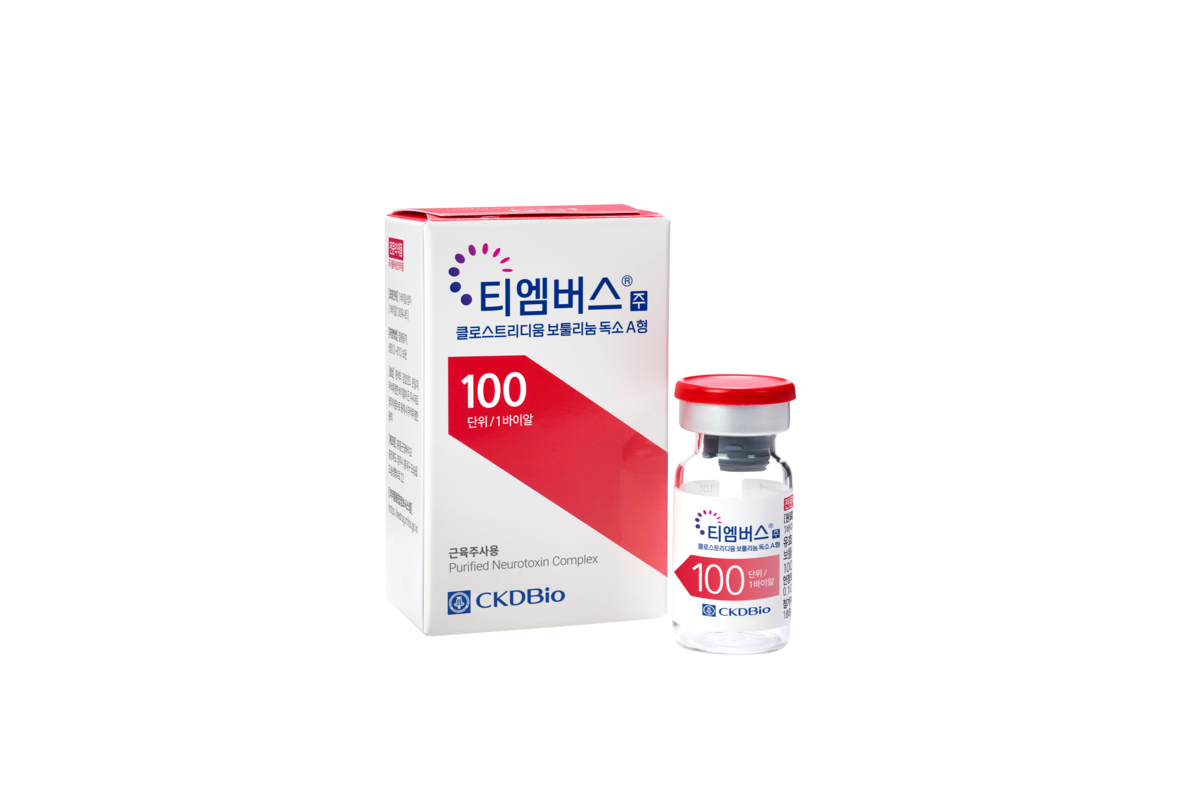
Chong Kun Dang Bio, the biologics subsidiary of South Korean pharmaceutical group Chong Kun Dang, announced Wednesday that the FDA approved its Investigational New Drug (IND) application for TYEMVERS Inj. 100 units — a botulinum toxin type A product — to proceed into a Phase 1 clinical trial targeting major depressive disorder (MDD). The trial will be conducted in the United States by CKD Bio’s development partner, Healis Therapeutics, while CKD Bio handles production and supply from its GMP-certified facility in Osong, South Korea.
This marks the first time the FDA has formally cleared the path for any botulinum toxin product to be studied as a depression treatment on US soil — validating a mechanistic premise that has been accumulating evidence for nearly two decades, and that remains scientifically contested in ways that make this trial genuinely significant
How Frowning Maintains Depression — and Why Blocking It May Help
The scientific foundation for TYEMVERS as a depression treatment rests on the facial feedback hypothesis — an idea with roots in Charles Darwin and William James, and with a complicated experimental history that is worth understanding before accepting the trial’s premise at face value
The hypothesis holds that facial expression is not merely a passive signal of emotion but an active contributor to it. Specifically, the corrugator supercilii and procerus muscles — the frown muscles positioned in the glabellar region between the eyebrows — contract during negative emotional states such as sadness, anxiety, and anger. According to the hypothesis, proprioceptive afferent signals from those contracting muscles travel through the trigeminal sensory system to the amygdala and other limbic structures, maintaining and reinforcing the negative emotional state in a feedback loop.
Depressed patients show measurably elevated corrugator activity compared to non-depressed controls. The theory is that this is not just a symptom of depression but a mechanism that sustains it: the frowning feeds the feeling, which deepens the frown
Botulinum toxin type A offers a uniquely precise way to test — and potentially exploit — this mechanism. Unlike sedation or general anesthesia, BoNT/A does something surgically specific: it cleaves SNAP-25, a component of the SNARE protein complex required for vesicle fusion at the neuromuscular junction, blocking presynaptic release of acetylcholine. The result is that the corrugator muscles cannot contract normally. Motor efference commands from the brain to the muscle remain intact — the brain still tries to frown — but the sensory afference from the muscle back to the brain is diminished or eliminated. That bidirectional asymmetry is what makes it a research tool: it does not dull the brain’s awareness of emotion but severs one specific feedback pathway.
An fMRI study by Hennenlotter and colleagues confirmed the neural consequence directly: injecting botulinum toxin into the corrugator supercilii decreased activation in the amygdala and brainstem when participants imitated angry facial expressions — providing neuroimaging evidence that the peripheral injection changes how the brain processes negative emotional content
A Field That Began in 2006 — and a Blinding Problem That Has Shadowed It
The evidence base for this approach is older than most people know. Dr. Eric Finzi, co-founder of Healis Therapeutics and the researcher who originated the field, published the first trial showing botulinum toxin efficacy in treating MDD in 2006 — testing the hypothesis twenty years before the FDA cleared a US trial. A subsequent case series of 25 depressed individuals following that first publication showed a 54% decrease in Beck Depression Inventory scores 12 weeks after a single treatment
The field then expanded across independent research groups in multiple countries. A landmark randomized, controlled trial by Wollmer et al. found that a single glabellar botulinum toxin injection produced a marked improvement in depression symptoms significantly better than placebo, with a response rate of 60% in the treatment group (number needed to treat: 2.13), sustained effects lasting approximately three months, and a meta-analytic effect size of d=0.98. A subsequent re-analysis found that patients with higher baseline corrugator muscle agitation responded significantly better — indirect mechanistic support for the facial feedback pathway.
By the time CKD Bio and Healis filed their IND, ten randomized controlled trials conducted across five countries had shown early efficacy results for glabellar botulinum toxin type A in MDD. A 2024 systematic review encompassing 21 studies and 471 patients found significant symptom reductions across multiple psychiatric conditions.
There is, however, a genuine methodological problem that the field has not fully solved. Because botulinum toxin has visible cosmetic effects — the frown lines soften, the corrugator relaxes — both patients and clinical raters can often identify who received active treatment versus placebo. In clinical trials for antidepressants, the average placebo response rate is approximately 30%, but the botulinum toxin trials have reported unusually high active-treatment response rates alongside unusually low placebo rates — a pattern consistent with partial unblinding inflating effect sizes. Stearns et al. identified this as a core limitation in their critical review of the field’s trial design. This is the same unblinding problem that has complicated psychedelic therapy trials, and it is not resolved by the IND clearance.
Read more:FDA Finalizes Psychedelic Trial Rules: Unblinding Problem Gets Official Answer
The Phase 1 trial is an open-label, single ascending dose study — meaning there is no placebo group, and it is enrolling healthy volunteers rather than depressed patients. This design is appropriate for safety and pharmacodynamics characterization, but it does not address the blinding problem. That challenge will need to be solved in Phase 2 efficacy trials, if the program advances. Researchers have proposed design workarounds — including injecting active drug in two different facial locations (one active, one control) so patients cannot identify the treatment by where the cosmetic effect appears — but no definitive methodological solution has been adopted across the field, as shown by the OnaDEP study comparing glabellar with crow’s feet injection sites.
What Makes TYEMVERS Different from Botox
TYEMVERS is not a generic copy of Allergan’s onabotulinumtoxinA (Botox). CKD Bio developed TYEMVERS from a strain exclusively licensed from a German research institution, and the manufacturing process was designed to exclude animal-derived ingredients at every stage. Specifically, TYEMVERS does not use human serum albumin — a stabilizer derived from human blood that is standard in most competing botulinum toxin formulations — as confirmed by CKD Bio’s announcement
That distinction matters commercially as well as clinically: TYEMVERS has received halal certification from Indonesia’s Halal Product Assurance Organizing Agency, making it the world’s first halal-certified botulinum toxin product. For a company seeking to expand into Muslim-majority markets in Southeast Asia and the Middle East — regions where most competing products cannot qualify for halal status — this represents a distinct commercial position that a potential depression indication would amplify significantly.
In its Phase 3 cosmetic trial in South Korea — a randomized, double-blind, active-controlled study of 300 patients (NCT05804656) conducted at multiple Korean medical centers — TYEMVERS demonstrated non-inferiority to Botox in the primary efficacy endpoint of glabellar line improvement, with 80.7% of patients in the TYEMVERS group achieving at least a two-point improvement in frown line score at four weeks, versus 70.8% in the Botox group. That existing safety and efficacy dataset in humans is part of the foundation that supported the FDA’s IND clearance.
Why AbbVie Let Go — and Why Healis Picked It Up
The history of this field includes an institutional signal that is worth noting for clinical context: Allergan (now AbbVie) acquired the rights to develop botulinum toxin for depression in 2013, completed a Phase II study in 2017, announced plans for Phase III — and then did not advance them. In February 2022, AbbVie transferred the exclusive license to Healis, which then partnered with CKD Bio in January 2024 for its product
AbbVie’s decision to cede its Phase II data and not proceed is not necessarily evidence that the science failed. Large pharmaceutical companies make portfolio decisions based on commercial priorities, development costs, and regulatory risk. But it is a data point that a well-resourced company with a Phase II dataset in hand chose not to write the Phase III check. Healis, which in March 2024 entered a clinical collaboration with Massachusetts General Hospital and Harvard Medical School affiliates, is betting that the science is real and that the development can be executed.
Why This Mechanism Is Unlike Any Approved Antidepressant
Depression is treated today through four broad pharmacological routes. Traditional antidepressants — SSRIs, SNRIs, tricyclics — modulate neurotransmitter reuptake in the brain. Atypical antipsychotics used in augmentation modulate dopamine and serotonin receptor subtypes. Esketamine (Spravato), FDA-approved in 2019, targets NMDA glutamate receptors via intranasal delivery. Psychedelic compounds in late-stage trials (psilocybin, LSD analogs) work through serotonergic and neuroplasticity pathways.
TYEMVERS acts at none of these sites. It never enters the brain or crosses the blood-brain barrier. It acts at the neuromuscular junction in the periphery — in the forehead — and its antidepressant effect, if confirmed, would arise from interrupting afferent proprioceptive signals from facial muscles to central limbic structures. This is a fundamentally different anatomical target from every approved and investigational antidepressant on the market
If Phase 1 confirms safety and Phase 2 confirms efficacy in depressed patients, this would establish an entirely new pharmacological category: drugs that treat mental illness by acting on the body’s sensory feedback system rather than on the brain’s neurochemistry. That premise — peripheral intervention producing central psychiatric effects — has no precedent in approved psychiatry, and validating it would change the conceptual framework for how the field understands the brain-body relationship in mood disorders.
What the Trial Will and Will Not Show
The Phase 1 IND clearance authorizes an open-label, single ascending dose study in healthy adult volunteers. Healis will administer TYEMVERS in incrementally increasing doses across cohorts, evaluating safety, tolerability, and pharmacodynamics — how the drug behaves in human tissue over time at each dose level. This is standard first-in-indication Phase 1 design
What Phase 1 will not show: whether TYEMVERS treats depression. That question belongs to Phase 2, which would require patient enrollment, a placebo design capable of addressing the blinding problem, and a primary efficacy endpoint — likely a validated depression rating scale such as the Hamilton Depression Rating Scale (HAM-D) or the Montgomery-Åsberg Depression Rating Scale (MADRS). A successful Phase 1 leading to a Phase 2 design approval is the next gate. If that passes, Phase 3 — the multi-site, powered trial needed for FDA approval of a new psychiatric indication — is still years away.
The market stakes are significant. Approximately 280 million people globally live with depression, and among US adults who experience a major depressive episode, a substantial proportion do not receive treatment or receive inadequate care. More than 30% of MDD patients do not respond adequately to two consecutive antidepressant trials — a condition classified as treatment-resistant depression — leaving roughly 7 to 8 million Americans with few proven options. The global MDD treatment market reached approximately $7.4 billion in 2025 and is projected to nearly double by the early 2030s.
For Healis co-founder Sebastian De Beurs, the potential is not abstract. He has described the planned clinical development as the “largest patient population and market opportunity of any therapeutic indication in the history of BoNT/A,” as
What the Peripheral Approach Could Mean for Patients Who Have Failed Medication
The pharmaceutical and investor communities will watch the trial primarily as a commercial bet. For the millions of people who have worked through multiple antidepressant regimens without adequate response, the significance is more immediate. A treatment that acts through a mechanism entirely orthogonal to the serotonin and glutamate systems — and that produces its effects from a single periodic injection rather than daily dosing — would represent a category distinct from every option currently available.
The caveat is important: Phase 1 clearance is not evidence of efficacy. It is permission to begin testing safety. The twenty years of evidence that preceded this clearance have been promising but not definitive, and the unblinding problem remains a genuine scientific challenge that Phase 2 design must address carefully if the results are to be credible. What the FDA’s clearance does confirm is that the mechanistic premise — peripheral neuromuscular blockade as a treatment for central psychiatric illness — is sufficiently grounded in the existing evidence to warrant formal investigation on US soil.
For patients with treatment-resistant depression, that is a reason to watch this trial. It is not yet a reason to expect a new treatment
Frequently Asked Questions
How does botulinum toxin injected into the forehead possibly treat depression?
The mechanism is called the facial feedback hypothesis: the frown muscles (corrugator supercilii and procerus, in the glabellar region between the eyebrows) are not just expressions of negative emotion but active contributors to it. When those muscles contract during sadness, anxiety, or anger, they send proprioceptive sensory signals through the trigeminal nerve system to the amygdala and limbic structures of the brain. In depressed people, these muscles are measurably overactive. Botulinum toxin type A blocks the release of acetylcholine at the neuromuscular junction, preventing those muscles from contracting normally — and, the hypothesis predicts, interrupting the sensory feedback loop that helps sustain depressed mood states. fMRI studies have confirmed that corrugator botulinum toxin injections reduce amygdala activation during negative emotional stimuli, providing direct neuroimaging support for the mechanism.
Is Botox for depression FDA-approved, and how soon could it be available?
No. Botulinum toxin is not FDA-approved for any psychiatric indication. The FDA’s clearance announced today permits only the first Phase 1 clinical trial of TYEMVERS — an ascending-dose safety study in healthy volunteers conducted by Healis Therapeutics. A full regulatory pathway to approval would require Phase 1 safety data, Phase 2 efficacy data in depressed patients (with a credible placebo design), and at least one Phase 3 pivotal trial — a timeline typically spanning seven to ten years or more from this point. TYEMVERS remains an investigational product and is not approved for depression treatment.
Why are scientists uncertain about this treatment if there are already ten randomized controlled trials showing it works?
The primary concern is the blinding problem. Botulinum toxin has visible cosmetic effects — frown lines soften, the corrugator visibly relaxes — that make it difficult to keep both patients and clinical raters unaware of whether active drug or placebo was given. In conventional drug trials, blinding protects against the placebo effect inflating apparent benefit. When blinding is compromised, patients who know they received active treatment may report feeling better partly because of expectation, and raters who can see the cosmetic change may unconsciously score depression symptoms more favorably. The botulinum toxin depression trials have reported unusually large effect sizes (meta-analytic d=0.98) alongside unusually low placebo response rates — a pattern that some researchers attribute, at least in part, to partial unblinding. The science is promising enough that the FDA allowed a Phase 1 trial to proceed, but the blinding problem needs to be solved in Phase 2 design for the results to be fully credible.
What makes TYEMVERS different from standard Botox?
TYEMVERS is a distinct product derived from a strain licensed from a German research institution. Unlike Botox (onabotulinumtoxinA, developed by Allergan/AbbVie) and most competing products, TYEMVERS is manufactured without human serum albumin, an animal-derived blood stabilizer. This vegan, non-animal manufacturing process earned TYEMVERS the world’s first halal certification for a botulinum toxin product, granted by Indonesia’s Halal Product Assurance Organizing Agency — a meaningful commercial distinction in Southeast Asian and Middle Eastern markets where most competitors cannot qualify. In its South Korean Phase 3 cosmetic trial, TYEMVERS demonstrated non-inferiority to Botox, with 80.7% of patients achieving the primary improvement benchmark at four weeks versus 70.8% in the Botox group.
ⓒ 2026 TECHTIMES.com All rights reserved. Do not reproduce without permission
Tags:DepressionFDAAntidepressantClinical Trial
