


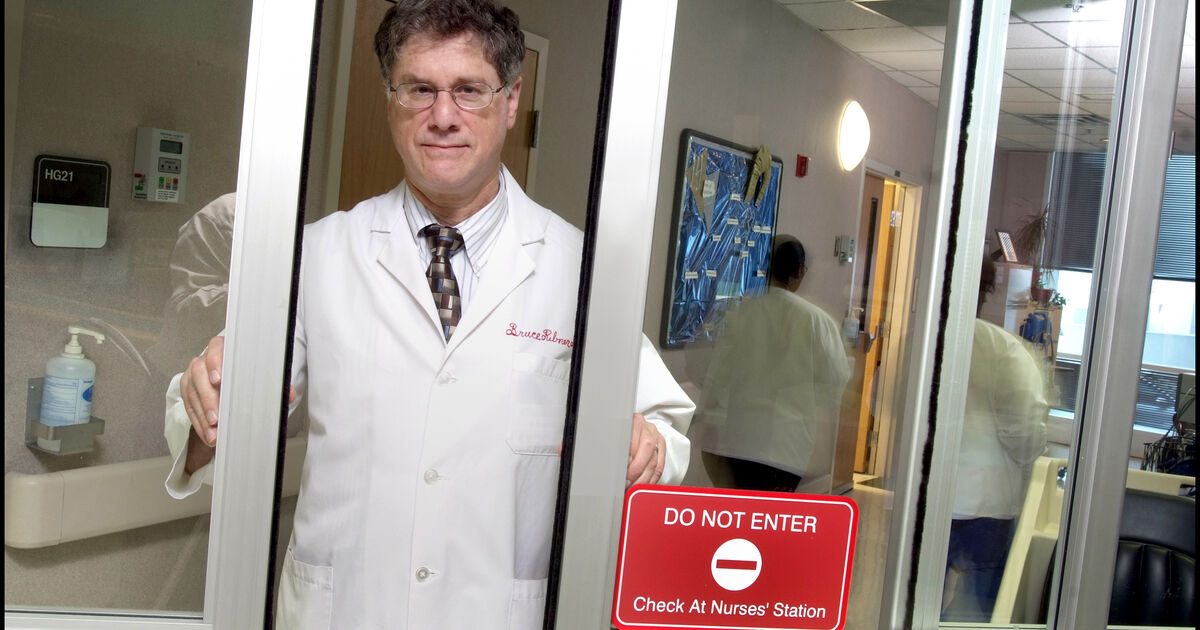
Bruce Ribner leaves legacy of redefining infectious disease care
August 6, 2026Mary Loftus
In December 2014, TIME magazine named its Person of the Year.
Rather than honoring a politician, business leader or celebrity, the magazine recognized “the Ebola fighters” — the doctors, nurses, scientists and caregivers who stood on the front lines of the largest Ebola outbreak in history
Among them was Dr. Bruce Ribner, an infectious diseases physician from Emory University Hospital, who became the face of one of Emory’s most defining moments: caring for the first patients with Ebola virus disease in the United States
Ribner, who retired from Emory in 2021, died July 19 at age 80. Colleagues say he will be remembered for his contributions to the field of infectious disease, his devotion to patient care and his attention to his medical teams’ well-being.
Pieced together from archival videos, news articles and interviews with Ribner and his colleagues conducted during and after the outbreak, this account reflects the lasting impact that Ribner and Team Ebola had on Emory and the world
“Bruce’s legacy can be viewed through the lens of the Ebola response and how the decision to care for the first patients in the U.S. with Ebola virus disease at Emory fundamentally changed the conversation around the treatment of patients with high-consequence infectious diseases,” says Colleen Kraft, current medical director of the Serious Communicable Diseases Unit (SCDU) and professor of infectious diseases, and pathology and laboratory medicine at Emory.
“That moment elevated Emory’s role on the global stage and continues to shape biocontainment care today,” she adds.
Emory at the ready
Ribner joined Emory in 2000 as the epidemiologist for Emory University Hospital and spent more than a decade building a biocontainment unit capable of safely treating patients with the world’s most dangerous infectious diseases.
He joked that he sometimes felt like Noah, building an ark before anyone believed a storm was coming
“Part of me said, ‘Gee, this is frustrating that we’ve had this open all these years and spent all these reBut I always felt there was value in having that level of insurance.”
Indeed, on July 30, 2014 — his birthday — the storm arrived.
Ribner received a call that a plane was leaving for Liberia and would return carrying two American healthcare workers infected with Ebola virus disease. Upon their arrival in Atlanta, the seriously ill patients would be transported to Emory University Hospital.
They would be the first individuals with Ebola ever to set foot on U.S. soil, and the world was watching
Building Team Ebola
The SCDU had opened in 2002 in collaboration with the U.S. Centers for Disease Control and Prevention (CDC), whose headquarters sit down the street from Emory University Hospital. The isolation unit was intended to provide a place where CDC personnel or others exposed to rare, highly dangerous pathogens could receive advanced medical care without placing healthcare workers or the public at risk
A select group of physicians, nurses, laboratory specialists and environmental services personnel would staff the unit. They rehearsed scenarios, practiced putting on and taking off personal protective equipment (PPE), and stayed up to date on emerging infectious diseases. “It was really more in a training mode,” Ribner recalled. “The basic tenor of the program was one of watchful waiting and preparedness.”
From 2002-2014, the unit activated twice, once for a patient suspected of having SARS, and the other for suspected Marburg hemorrhagic fever. Ultimately, neither patient fell ill
But Ribner never wavered in believing the unit was necessary: “I think the one thing nature has taught us is that we will have an outbreak of a serious communicable disease, and it will be with something we didn’t anticipate.”
“This is what we’ve been training for”
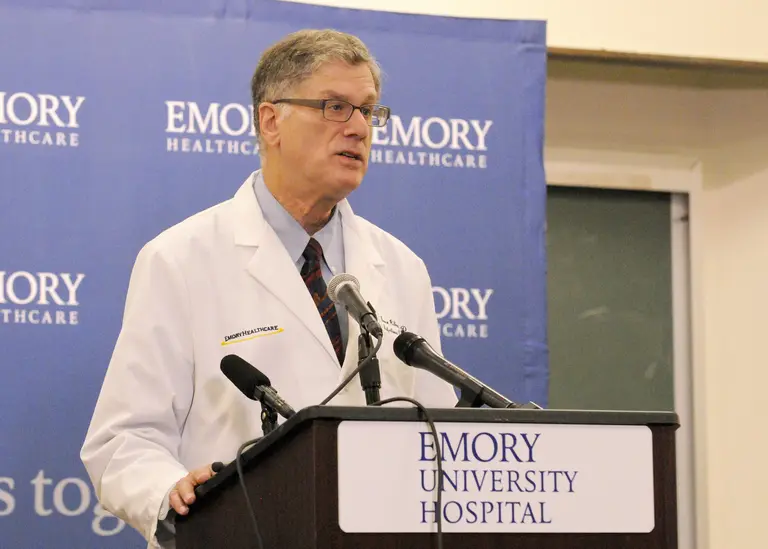
As a specially equipped ambulance carried the first patient from the airport to the SCDU, television cameras followed every step of the journey. News crews camped outside the hospital and satellite trucks lined Clifton Road. Some commentators and politicians questioned whether patients with Ebola should have been brought to the U.S. at all.
And Emory began receiving panicked calls from community members asking: How are you keeping everyone safe? Is there a chance this disease could spread outside the walls of the hospital?
As fear and rumors spread, Ribner and his team met the arrival of the patients and the accompanying global media storm as a teachable moment.
“We viewed this as an opportunity for education,” he said later. “We knew that most of the anxiety that was being voiced was due to lack of knowledge about this infectious disease, about our ability to treat it, and about our ability to contain it within our unit.”
Working closely with Emory’s communications team, Ribner became one of the nation’s most trusted public voices during the crisis.
“We were very conscious that the way we managed this was potentially going to determine the entire way in which our country addressed future patients,” he later explained
Trust through teamwork
Those who worked beside Ribner at the time saw a calm, competent leader focused on three things: taking care of the acutely ill patients, protecting his team of caretakers and learning as much as possible.
Nurse Jill Morgan, current SCDU site manager, remembers that decisions were madewithTeam Ebola members instead offorthem. When a question about PPE arose that would involve retraining everyone, Ribner asked for, and heeded, her recommendation.
“Dr. Ribner knew that the nurses would be the ones in the PPE the longest and the ones performing tasks that could get them contaminated, so we were the most likely to get infected if things weren’t done correctly,” Morgan says. “He set the tone that many others have commented on over the years — this really was a team of equals, each with our own role and expertise.”
Twice each day, physicians, nurses, laboratorians, environmental services staff and others on the SCDU team gathered for “family meetings.”
“The model that worked for us was a close collaborative effort among all personnel in the unit,” Ribner said. “It created an environment where people felt comfortable that they were not placing themselves or their families at risk.”
Years later, colleagues would describe building that culture of trust as one of Ribner’s greatest accomplishments
“Bruce was the real deal,” says Dr. Carlos del Rio, who worked closely with Ribner for decades. “He was bold, driven, unassuming and humble.
“He always wanted to do what was best for patients or for anyone who asked for his help, yet he rarely took credit for what he did or accomplished,” continues del Rio, Emory’s H. Cliff Sauls Distinguished Professor of Medicine. “He was always about the team.”
Lessons learned and shared
Four patients with Ebola virus disease were treated at Emory’s SCDU; all four survived.
Their care overturned assumptions that had shaped Ebola treatment for decades. Before 2014, severe Ebola was considered a disease with few options once patients became critically ill.
A year later, Ribner said, “We’ve had the opportunity to advance science dramatically, as well as the opportunity to advance the knowledge about how we care for patients with this very serious disease.”
Ribner and his team were able to observe patients with the disease in unprecedented detail: profound fluid loss, electrolyte abnormalities that contributed to dangerous heart rhythms, and how the immune system responded
They saw that patients with Ebola could survive if they received the kind of aggressive supportive care routinely provided in intensive care units across the U.S., including breathing tubes, dialysis and platelet transfusions. And they shared those observations with colleagues around the world.
“We would like to think that, in part, this helped contribute to the fact that as the outbreak proceeded, the fatality rates tended to go down,” Ribner said
Preparing for future outbreaks
The Ebola response also changed the way the U.S. prepared for emerging infectious diseases more broadly. Before 2014, hospitals across the country had limited experience caring for patients with high-consequence pathogens.
The Ebola outbreak exposed a national vulnerability, leading to the creation of the National Ebola Training and Education Center (NETEC), a partnership among Emory University Hospital, the University of Nebraska Medical Center and NYC Health + Hospitals/Bellevue.
Through training, consultation and research and exercises, the Serious Communicable Diseases Program at Emory helped establish a tiered national approach to preparedness.
“After the Ebola outbreak subsided, Bruce, Sharon Vanairsdale and I started visiting dedicated international units,” says Dr. Marshall Lyon, a member of Team Ebola and an Emory infectious disease physician.
“We visited three countries and five units,” Lyon continues. “It was a great time as we built friendships abroad and learned about unit designs and technology that others were using, and incorporated them into the Emory unit when possible. I especially treasure the mentorship he gave me and the professional example he set.”
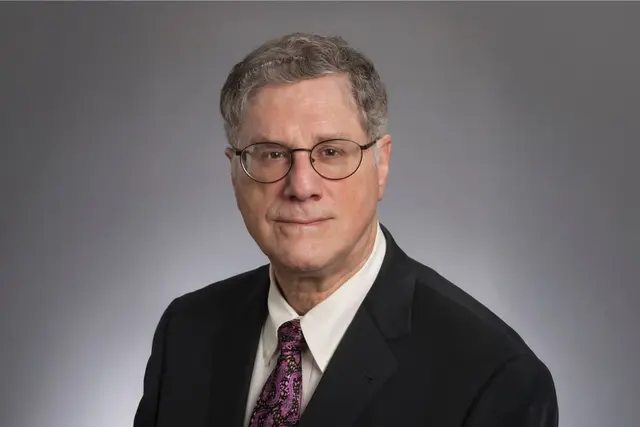
Bruce S. Ribner died on July 19, 2026, at age 80. A native of Brooklyn, New York, he earned his undergraduate degree in chemistry from Princeton University, his MD from Harvard Medical School and a master’s in public health in epidemiology from the University of Michigan
Ribner served for eight years in the Army National Guard Reserve and held positions in infectious disease and hospital epidemiology before moving to Atlanta in 2000 to work at Emory, where he led the creation of the Serious Communicable Diseases Unit.
He is survived by his wife, Barbara; sons, Aaron, Adam and Thad (Brie), and Amer Smailbegovic (Zemira); seven grandchildren and two great-grandchildren
Related Stories
Five Years After Ebola
Because They Got Better
Five years later, Ebola patients return to Emory
Emory’s Ribner among Ebola fighters named TIME’s ‘Person of the Year’
Top Stories
Science & Technology
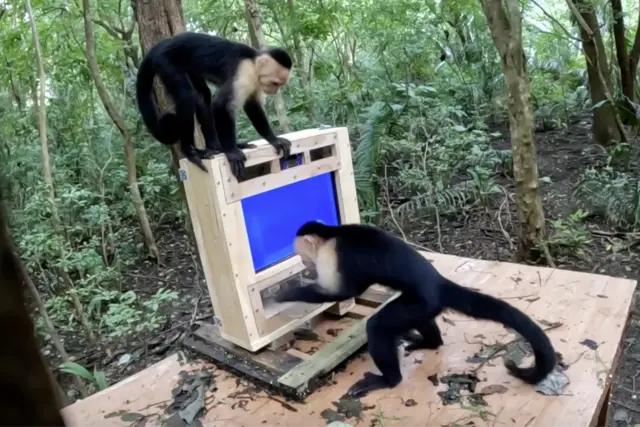
AI opens new era in cognitive studies of wild primates
Emory anthropologists created an AI system to automate behavioral studies of capuchins monkeys in the wild. The novel method provides a roadmap for the first scalable, systematic way to evaluate and monitor the cognitive abilities of wild primates

Arts & Culture
Emory alum’s choreography set for festival curated by ballet icon Misty Copeland
The Joyce Ballet Festival, which celebrates the best and brightest in dance, will include a piece choreographed and performed by a 2025 Emory College graduate. The festival will be held in New York in August.

Science & Technology
Emory scientists selected for U.S. Genesis Mission awards to speed discovery through AI
Emory researchers earned Genesis Mission awards for two AI-powered projects: an Emory-led effort exploring plasma from the lab to the cosmos, and a collaboration to develop tools to find critical minerals in mine waste
