


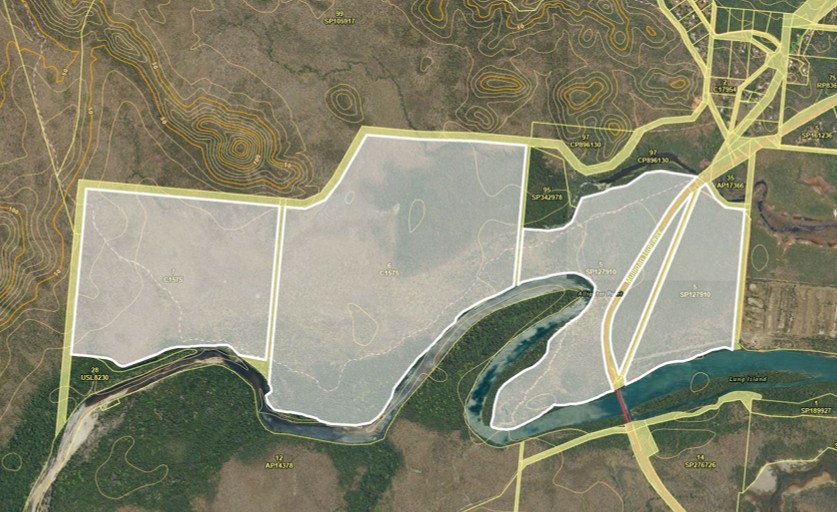
The proposed Cooktown subdivision. Image: Cook Shire Council development application
A developer has pitched a “rural lifestyle subdivision” with hundreds of lots over more than 620 hectares in the Cook Shire, which had the lowest housing vacancy rates in the state according to recent data
Filed with Cook Shire Council, a development application planning report by the Olivetto family and Taase Taase through Coral Cape Pty Ltd proposes turning three lots along Annan River, Cooktown Development Road and Mulligan Highway into 320 lots
Individual lots would be two hectares at a minimum and “considerably larger than rural residential lots at typically 4000 sqm”. The land is largely undeveloped and there’s no current intensive agricultural, commercial or industrial activity
The land is located in the Cooktown locality “and has direct frontage to the Mulligan Highway, a state-controlled road that connects Cooktown with inland Cape York communities”
“The site has practical access to the full range of regional services and community facilities available in Cooktown, including health, education, retail, commercial and community infrastructure,” the developer states
“Cooktown is identified in the (council’s) strategic framework as the regional centre for southern Cape York, and the planning scheme recognises the need to support housing diversity and lifestyle choices in and around Cooktown.”
Pushing for the project to get the green light, the developer said the land was in “reasonable proximity to Cooktown’s established services” – and more housing was needed
“There is an identified need for additional rural residential land supply in the Cooktown region. The provision of rural lifestyle allotments on well located rural land with direct access to the regional road network and proximity to Cooktown’s services would support housing choice and diversity in a rural and natural setting, consistent with the objectives of the planning scheme,” the developer states
It was acknowledged that environmental constraints and concerns would have to be addressed for the project to go ahead
“The site is affected by a range of mapped constraints including biodiversity values, regulated vegetation, waterways, declared fish habitat area, bushfire hazard, flood hazard, coastal management district, erosion prone area and storm tide inundation,” the 150-plus page application reads
“The proposed subdivision should be supported by an appropriate planning response that demonstrates avoidance and minimisation of impacts to mapped environmental values, waterways, flood-prone land and bushfire hazard areas.”
The council asked the developer for more information, including the length of all new roads, so an application fee could be calculated
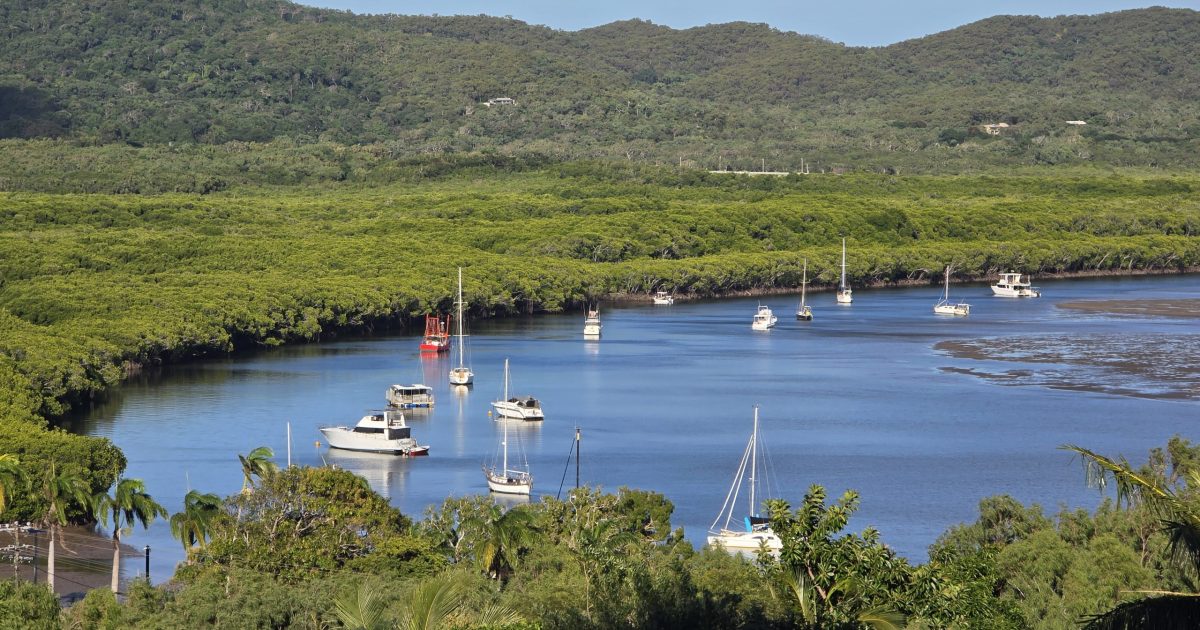
Cooktown, Cape York. Photo: Cape York Weekly/Luke Mortimer
The housing vacancy rate dropped slightly to 0.9 per cent in the March quarter, down from 1 per cent in the previous three quarters, according to the latest Real Estate Institute of Queensland (REIQ) Residential Vacancy Rate Report
Cook recorded a zero vacancy rate – the lowest in the state. The REIQ deems a healthy vacancy rate between 2.6 and 3.5 per cent
It comes after a late-2024 local housing action plan report by the council detailed housing issues in the shire
“A variety of challenges are impacting local housing supply. This includes land and construction costs versus likely sale price for detached and medium density housing, lack of local trades and developers, insurance costs, supply chain challenges, increased cost of freight for materials, and rising financing costs and interest rates,” the report states
“A key opportunity to support housing diversity and growth could be through the delivery of secondary dwellings
“Dual occupancy development can assist in renewing existing housing stock by offering variety in typology and composition, ranging from single bedroom to three-plus bedroom units. This diversity provides housing options for professional workers looking for accommodation in small complexes, or even housing for young families.”
The document forewarns of problems with relying on 2021 Census data. The next Census is on 11 August
“Cook Shire Council does not consider the data in this report to accurately reflect our true data and shire’s housing needs,” the council states
“The report’s reliance on 2021 Census data has resulted in understated population figures and projected growth rates, failing to capture the urgency of current housing pressures
“The Census data overlooks many off-grid properties, unregistered dwellings, and the large itinerant farm worker population within the shire.”
