


Goodlife
Don’t get conned — learn to decode the nutrition facts on food packages
At some point over the last decade, supermarkets stopped resembling grocery stores and began to feel like wellness boutiques. Olive green packaging appeared everywhere. The language softened. Shelves began speaking in the vocabulary of virtue. Suddenly, biscuits were “artisanal”. Chips became “hand-cooked”. Chocolate acquired Himalayan salt, probiotic cultures, and a quiet moral superiority. Even water began to look aspirational!
Recently, I watched a woman spend nearly seven minutes choosing yoghurt at an upscale food store. She rejected one because it seemed “too commercial”, dismissed another because it looked “clean”, and finally settled on a beautifully packaged tub labelled gut-friendly, low-fat, and natural. It contained more sugar than vanilla ice cream.
She had not bought yoghurt. She had bought reassurance. And that, perhaps, is the most important thing to understand about modern food labels. They no longer merely inform the consumer. They manage emotion.
The labels of an earlier era were blunt and functional. They told you what was inside the packet. Today’s labels are psychologically sophisticated. They understand urban anxiety remarkably well. They know that people fear weight gain, inflammation, diabetes, ageing, gluten, carbohydrates, and increasingly, guilt itself
So the packaging evolved accordingly. Food companies no longer sell cereal. They sell energy. They no longer sell beverages. They sell immunity. They no longer sell snacks. They sell mindful indulgence. Consumers, particularly the educated and health conscious, respond readily to this language because modern wellness culture has quietly transformed food into identity. People no longer simply eat. They express their values through their groceries
The revealing part, however, begins the moment someone turns the packet around. Experienced shoppers develop a habit that appears almost instinctive. They barely glance at the front of the package. Within seconds, they flip it over and begin reading the back. Because the front of the package is theatre. The back is evidence.
And hidden within that small print is often a far more honest story than the one advertised on the front. Ironically, most people still read labels in the wrong order. They search for calories first. Calories matter, certainly. But when dieticians evaluate a product, calories are rarely the first thing they examine. They begin with the ingredient list. Always. Because ingredients reveal what the food fundamentally is.
And there is one detail most consumers overlook. Ingredients are listed in descending order by quantity. Which means the first three ingredients usually tell you almost everything. Consider breakfast cereals, perhaps one of the greatest performances in nutritional marketing
Boxes display oat fields glowing in sunlight. Almonds fly theatrically across the packaging. Athletic-looking families smile over bowls of fibre-rich optimism. Yet many of these cereals are essentially refined grains, disguised with sophisticated forms of sugar.
A mother once told me proudly, “My son eats only healthy chocolate cereal.” “Healthy chocolate cereal” is a phrase modern marketing deserves an award for inventing. The cereal she referred to contained corn syrup, malt extract, glucose solids, and caramel. Not listed together as sugar, of course. Separated carefully. Because if all the sugars were grouped under one honest name, sugar itself might appear first on the ingredient list. Something manufacturers would rather avoid.
This is why decoding labels is less about memorising nutrition science and more about recognising strategy. Once consumers grasp this, shopping changes immediately
The second thing experienced label readers notice is length. If a tub of yoghurt reads like the programme for a chemistry conference, pause. If bread lists 27 ingredients, pause again. This does not mean every scientific-sounding ingredient is harmful. Ascorbic acid, for instance, sounds alarming but is simply Vitamin C. The issue is not pronunciation. The issue is excessive processing
The longer the ingredient list, the more likely the food has been engineered for a longer shelf life, hyper palatable texture, artificial flavour enhancement, and repeated craving. Real food generally spoils quickly. Industrial food survives distribution. And nowhere is this engineering hidden more cleverly than in foods marketed as healthy
Take the word multigrain. Most consumers assume it means wholesome. Not necessarily. A loaf can legally call itself multigrain even when most of it is made from refined flour. Decorative seeds sprinkled across the top create the appearance of nutrition without significantly improving the product itself.
Brown bread, similarly, is sometimes nothing more than white bread tinted with caramel colouring. The healthiest-looking loaf is not always the healthiest loaf. Sometimes it is merely the most skilfully marketed loaf on the shelf.
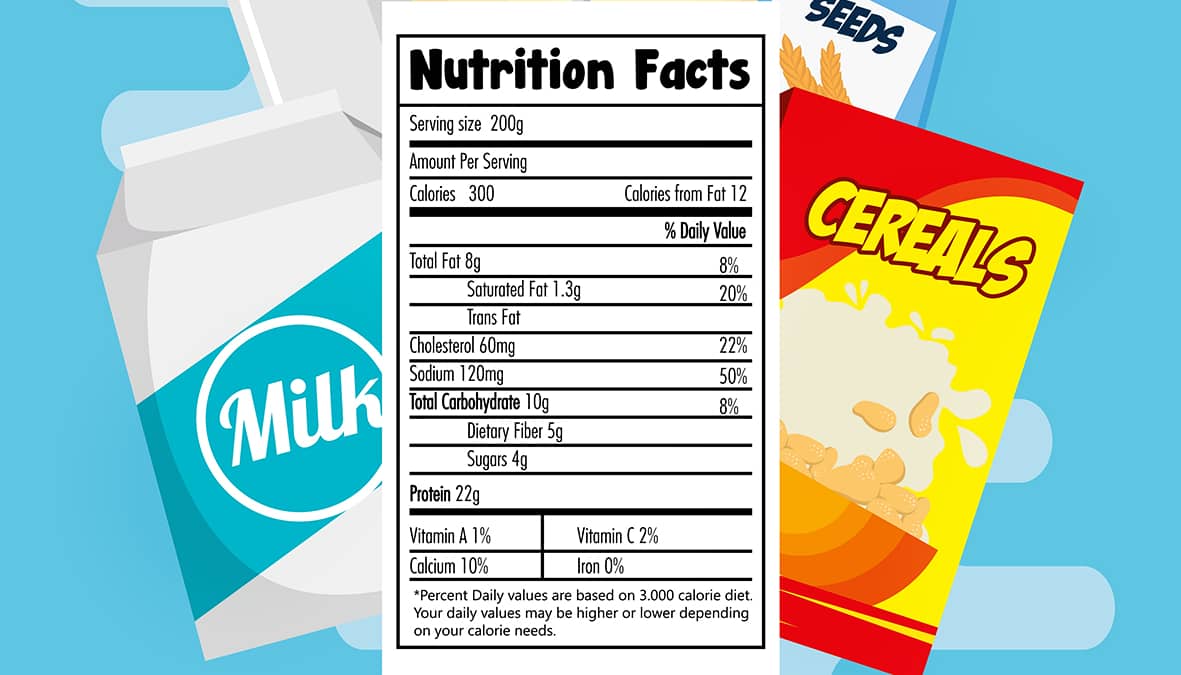
Then comes perhaps the most underestimated trick in modern food packaging. Serving size mathematics. A bottle of iced tea may confidently announce only 90 calories. Printed quietly beneath it are the words per serving. The bottle contains two-and-a-half servings. Nobody drinks two-and-a-half polite sips and refrigerates the rest with laboratory precision. People drink the whole bottle.
Manufacturers know this. But nutritionally, the smaller number feels emotionally reassuring. And packaging understands emotional reassurance exceptionally well. The same psychology appears in products labelled low-fat, protein-rich, or no added sugar.
When fat disappeared from foods years ago, flavour disappeared along with it. Manufacturers compensated by quietly increasing sugar, starches, and flavour enhancers. That is how many low-fat yoghurts quietly became desserts masquerading as breakfast
The modern obsession with protein works similarly. Protein cookies. Protein chips. Protein ice cream. Adding whey powder to almost anything now elevates its social standing instantly. A cookie, however, remains a cookie, even when heroically fortified.
And “no added sugar” creates another misunderstanding altogether. Consumers interpret it as sugar-free, even when many such products still contain concentrated fruit purées, date paste, or juice concentrates that deliver substantial quantities of sugar.
The body, unfortunately, does not award moral credit because the sugar arrived organically. This is where informed consumers begin reading labels differently. Not fearfully. Strategically. They stop asking, “Is this marketed as healthy?”
They begin asking, “What is this product actually made from?” That single shift changes everything. Because, after a point, decoding food labels becomes surprisingly simple
Ignore the front. Read the first three ingredients. Notice how many forms of sugar appear. Check whether the serving size is realistic. And whenever packaging tries too hard to sound virtuous, become quietly sceptical. That quiet scepticism may be healthier than half the claims printed on the packet. Because modern food companies are no longer competing on taste alone.
They are competing on psychology. On aspiration. On identity. On the human desire to feel responsible, disciplined, and well. Which is why the smartest shoppers today are not the ones obsessively counting calories in supermarket aisles. They are the ones who recognise when packaging is trying very hard to create a feeling before communicating a fact.
Once you learn to see this, supermarkets become unexpectedly revealing places. You no longer see shelves full of healthy snacks. You see persuasion. Carefully packaged, beautifully lit, and nutritionally edited
Pictures: iStock

Priyanka Shah is a clinical nutritionist
