


August 30, 2026
Drought can make disease outbreaks worse, and scientists now know why
Shrinking water supplies can crowd people, wildlife, and mosquitoes together, creating surprising new opportunities for infections to spread
ByLuis Arrais
Author
Less water should mean less disease. Mosquitoes need standing water to breed, and cholera spreads through contaminated drinking water. A dry year ought to be a bad year for infection
That is not what keeps happening. The Horn of Africa’s worst drought in 40 years was followed by major cholera outbreaks
Two years later, an unusually dry summer in the western United States coincided with one of the largest outbreaks of ae than 94,000 nesting and migratory birds around Tule Lake
Ecologists Pieter Johnson of the University of Colorado Boulder and Tara Stewart Merrill of the Cary Institute of Ecosystem Studies pulled together nearly 100 studies to explain why
Drought, they found, does not simply take water away. It rearranges whatever depends on the water that remains, and where the crowding is worst, infections often rise
“One broader lesson is that we need to move beyond thinking about drought simply as ‘less water,’” Johnson told Earth.com
Drought, he said, changes everything from temperature and water quality to crowding and food webs, and those indirect effects can sometimes matter more for disease than the missing water itself
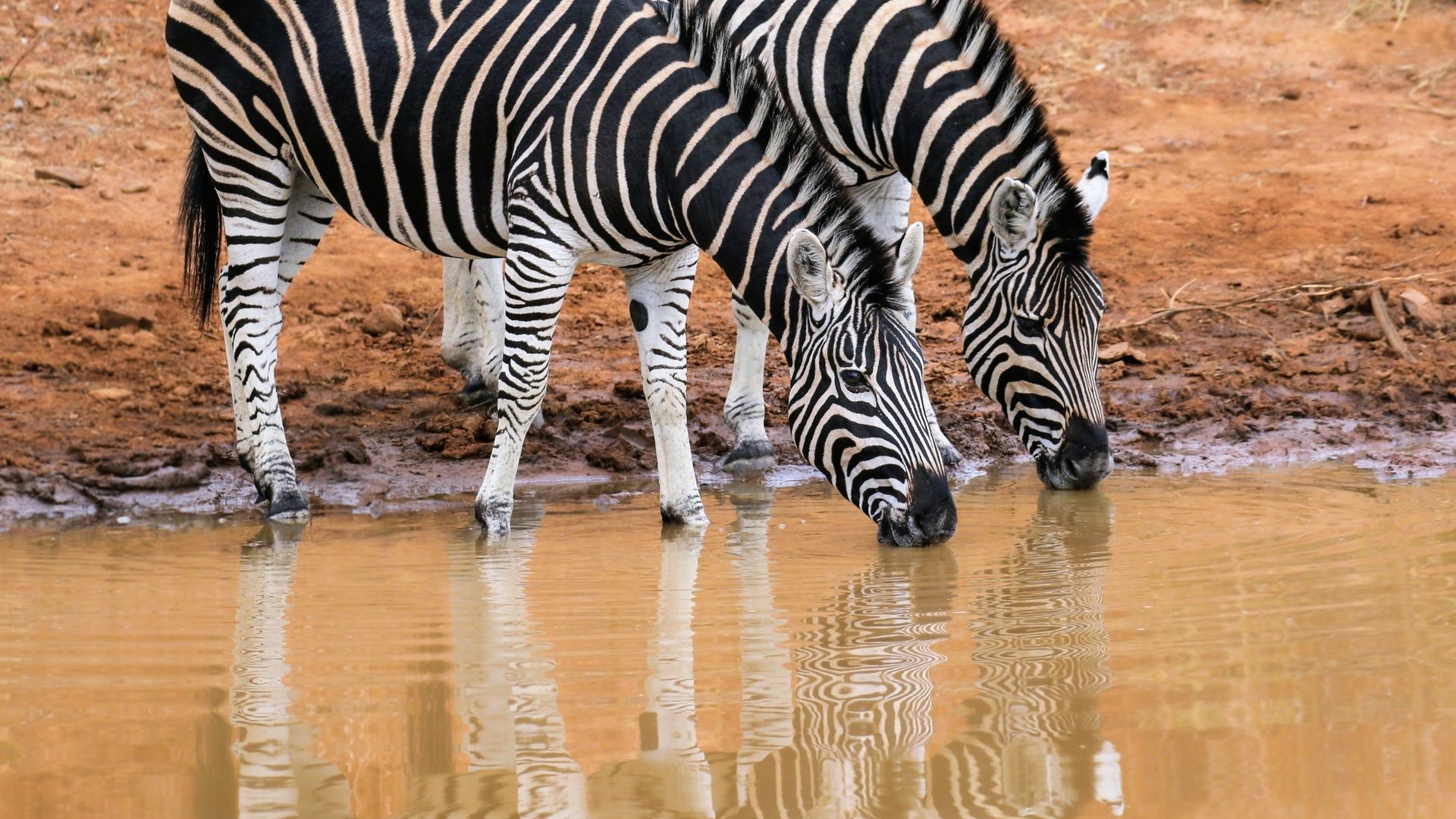
Animals crowd around shrinking water
Johnson saw the problem up close in California. His team studies a waterborne parasite that makes infected frogs grow extra legs, and when severe drought hit the state in 2014, the ponds they monitored shrank
Frogs packed into the water that remained, and their infections grew worse and more common
“That got us curious about why the loss of water sometimes kills off pathogens, but in other cases actually amplifies them,” Johnson said. “It seemed that the effects of drought on disease patterns are not linear.”
The same crowding appears wherever water gets scarce. In East Africa, wild grazers and cattle share the watering holes that outlast a drought, and the gut worms they carry pass between them
Mosquitoes gain when predators disappear
Drought also changes which species thrive, and mosquitoes often benefit. Shrinking ponds support fewer of the dragonfly larvae that eat mosquito larvae, and the warm, still pools left behind suit the insects well
In one experiment, wetlands that held water for only part of the year produced 20 times more mosquitoes than wetlands that never dried
Scientists call mosquitoes vectors: carriers that move an infection from one animal to the next
In North America, two mosquito-borne viruses, West Nile virus and St. Louis encephalitis virus, have grown more common partly because of drying, and a drought the season or year before predicts outbreaks of both
Valley fever, a fungal infection of people and other animals, spreads through contaminated dust, and dry times make more dust
No parasite is guaranteed to win
Not every germ gains. Chytrid fungus, a skin infection that has helped drive amphibian declines around the world, spreads poorly in dry conditions
In South Africa, a long drought pushed salt levels past what an invasive parasitic crustacean could survive, and the fish it fed on got healthier
Earth.com asked Johnson which pathogen he expects to gain the most as droughts get less predictable
“I don’t think our results point to one particular pathogen as the likely single ‘winner,’ and I’d be hesitant to make that prediction,” Johnson said
Parasites that can wait out a dry spell, or exploit animals crowding into shrinking habitat, “may be particularly well positioned,” he added. Germs that infect many species are also less exposed when drought hits any one of them
Some parasites are ready for scarcity: one flatworm that lives on desert toads breeds on the single night each year when its toads do
Hotspots come first, and losses come later
Both effects can show up in the same ponds, a few years apart. Through California’s 2013 to 2015 drought, Johnson’s team tracked three parasites of Pacific chorus frogs
In 2014, a quarter of the wetlands they monitored dried out completely, and infections in the remaining frogs went up, exactly what crowding predicts
A local hotspot could not make up for a landscape running out of water
People gather at shrinking water too
The Horn of Africa drought created similar conditions for cholera
As millions of people were displaced and sanitation deteriorated, families crowded around the few water
In the highlands of Indonesia, one severe drought raised malaria deaths through two routes at once
Food and water shortages pushed people to lower elevations, where malaria is more common, and failing streams turned into the standing pools that mosquito larvae need. The outbreak killed 554 people
Johnson had a starting point for health agencies in drought-prone regions. “I would pay particular attention to places where drought changes how people, animals, or vectors interact with the remaining water,” he told Earth.com
Disease risk can arrive years later
Nearly two-thirds of the contiguous United States experienced drought conditions in 2026. By one United Nations count, more than 77% of Earth’s land has grown drier over recent decades
What no one can predict is the timing. Drought’s effects on disease can appear within a season or only years later, and the review lists that lag as an open question
“While substantial climate-disease related attention has focused on temperature, and for good reason, the effects of drought are no less dramatic but often more cryptic,” Johnson said
“Droughts can take years to unfold, making it challenging to always understand the cause and effect relationships.”
Biologists already measure how a parasite performs across a range of temperatures. Johnson and Stewart Merrill want matching curves for drying: how a parasite handles humidity, or a stretch without water
The review also asks for experiments that dry ponds on purpose, watched long enough to catch the delayed effects
Those experiments are still rare. Until they run, every new drought is the experiment, at full scale and with no controls
The full study was published in the journal Trends in Ecology & Evolution
—–
Like what you read? Subscribe to our newsletter for engaging articles, exclusive content, and the latest updates
Check us out on EarthSnap, a free app brought to you by Eric Ralls and Earth.com
—–
