


Episcopal Health Services expands primary care to improve preventive health | Herald Community Newspapers | www.liherald.com
Skip to main content
Home
Amityville
Babylon
Baldwin
Bellmore
East Meadow
East Rockaway
Elmont
Five Towns
Franklin Square
Freeport
Glen Cove
Glen Head
Hempstead
Island Park
Long Beach
Lynbrook
Malverne
Massapequa
Merrick
Oceanside
Oyster Bay
Rockville Centre
Sea Cliff
Seaford
Uniondale
Valley Stream
Wantagh
West Hempstead
Digital Editions
Episcopal Health Services expands primary care to improve preventive health
Posted
Friday,July 24, 202612:14 pm
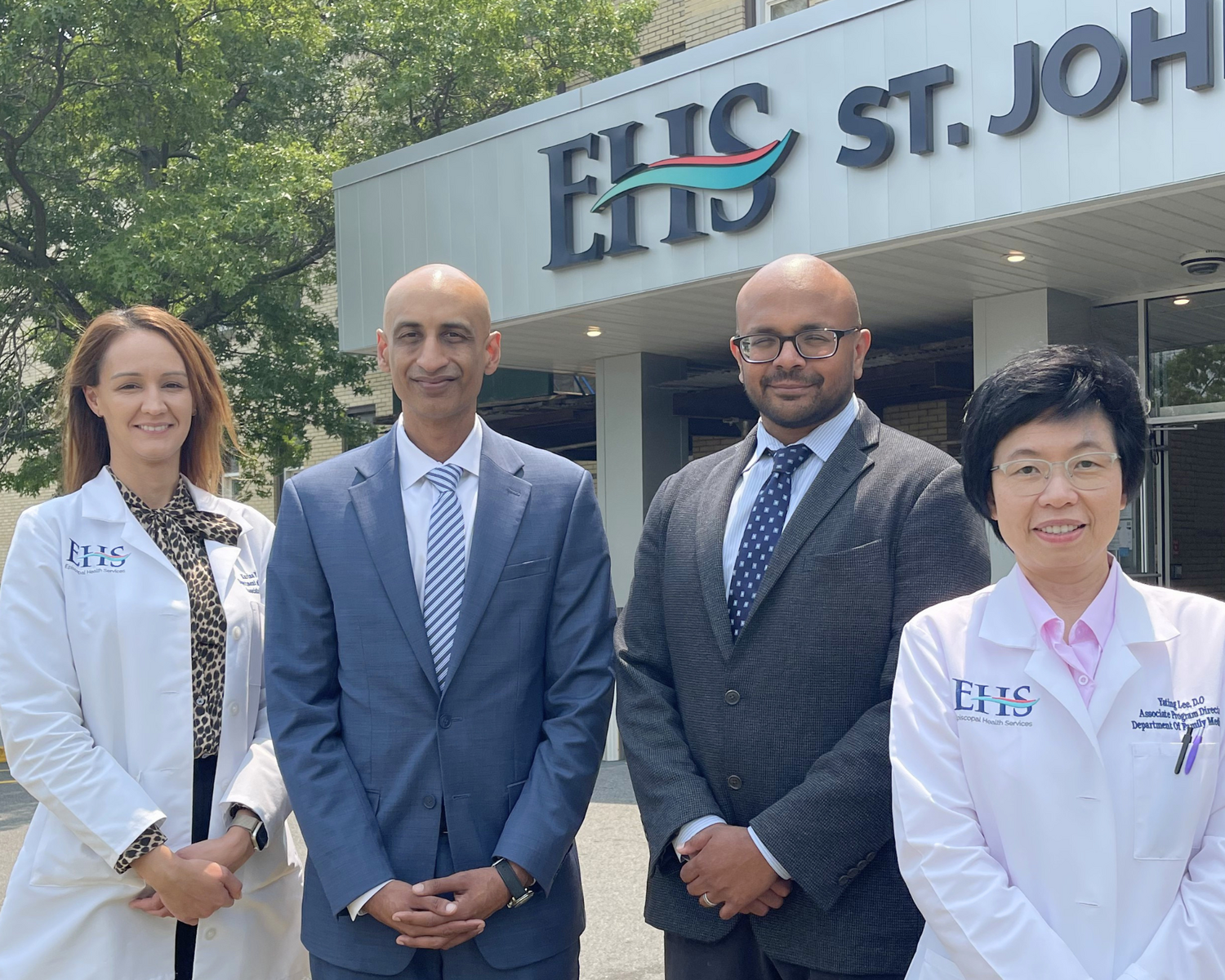
The EHS team includes, from left, Dr. Karina Appel, internal medicine and primary care physician and associate director of the Internal Medicine Residency Program; Dr. Ravi Gupta, chair, Department of Medicine; Dr. Zubin Tharayil, internal medicine physician and director of internal medicine residency; and Dr. Yating Lee, internal medicine and primary care physician.
Courtesy Episcopal Health Services
By Melissa Berman
For many residents of the Five Towns, Far Rockaway and the surrounding peninsula communities, a visit to a doctor often comes only after a health problem has become more serious
Physicians at Episcopal Health Services hope to change that by expanding access to primary care and encouraging patients to seek routine preventive care before chronic illnesses lead to emergencies
The health system, which serves the Rockaway Peninsula and neighboring communities, has expanded primary care services at the new Walsh Ambulatory Pavilion while recruiting additional physicians and strengthening connections to specialists. Hospital leaders emphasized that the goal is to make it easier for residents to receive comprehensive care close to home
“Primary care is really about preventing illness before it becomes something much more serious,” said Dr. Ravi Gupta, chair of the Department of Internal Medicine at Episcopal Health Services. “Communities like this have historically been underserved, and many chronic illnesses don’t cause symptoms until they’re already at an advanced stage.”
Gupta said residents throughout the peninsula experience disproportionately high rates of hypertension, diabetes, obesity, asthma, chronic obstructive pulmonary disease and high cholesterol. Left untreated, those conditions can lead to heart attacks, strokes, kidney failure and other life-threatening complications
“The important thing is identifying these conditions early,” he said. “If we manage high blood pressure before someone has a stroke or treat diabetes before it damages the kidneys or eyes, we can dramatically improve quality of life and prevent hospitalizations.”
Residents of Far Rockaway have long faced challenges in accessing health care, physicians said. While Episcopal Health Services has significantly expanded its medical offerings over the past decade, many residents remain unaware that services are now available much closer to home
“In the past, patients often had to leave the peninsula to see specialists,” Gupta said. “Now we’ve built a much larger infrastructure, but many people still assume those services aren’t available here.”
The expansion of the Walsh Ambulatory Pavilion has helped address that challenge by bringing primary care physicians and specialists together in one location. Patients who require additional evaluation can often be referred to a specialist within the same building rather than traveling elsewhere in Queens or Nassau County
“We’re trying to make it as easy as possible for patients to receive care quickly within the system,” Gupta said. “That continuity is incredibly important.”
Dr. Zubin Tharayil, an internal medicine physician and director of the Internal Medicine Residency Program, said many patients don’t seek medical attention until a condition becomes severe enough to require hospitalization
“People often think about going to the doctor only when something is wrong,” Tharayil said. “By that point, they may already be having a heart attack or their diabetes may be completely out of control.”
Routine office visits allow physicians to monitor blood pressure, cholesterol levels, blood sugar and other health indicators before complications develop, he added
“It allows us to catch issues before they become out of control,” Tharayil said. “That prevents unnecessary hospitalizations while reducing emotional, physical and financial stress for patients and families.”
He said many of the barriers to preventive health care extend beyond insurance coverage
“There are financial challenges, but there’s also health literacy,” Tharayil explained. “Some people simply don’t realize that preventive care can stop these problems before they start.”
Regular colonoscopies can detect precancerous polyps before they develop into colorectal cancer. Mammograms allow physicians to identify breast cancer at its earliest and most treatable stages. Low-dose CT scans help screen longtime smokers for lung cancer before symptoms appear
“There’s nothing more valuable than preventive screening,” Gupta said. “If we find these conditions early, we have tremendous opportunities to improve outcomes.”
Primary care physicians also routinely screen patients for diabetes using blood tests that can identify prediabetes before permanent damage occurs
“We can intervene before someone actually develops diabetes,” said Dr. Karina Appel, an internal medicine and primary care physician who also serves as associate program director of the Internal Medicine Residency Program. “Those regular follow-up visits every three to six months allow us to adjust medications and keep patients healthy.”
Appel, who completed her residency at St. John’s Episcopal Hospital after growing up in the area, said the peninsula’s aging population makes regular primary care even more important
“Many patients have multiple chronic conditions,” she said. “Managing them requires ongoing follow-up and developing relationships over many years.”
She said transportation, limited incomes and lack of insurance continue to prevent some residents from receiving consistent care
“It’s important to make sure patients return for follow-up appointments,” Appel said. “We remind patients because continuity really matters.”
The residency program is also preparing future physicians to meet those community needs. Residents now train in the Walsh Pavilion while participating in expanded educational opportunities, including a simulation laboratory where they practice emergency procedures and clinical skills before treating patients
“The biggest message is simple,” Tharayil said. “Primary care isn’t just about treating disease. It’s about preventing it, improving quality of life and helping people stay healthy where they live.”
