


Key points
- Emotional and psychological vulnerabilities often make people susceptible to influence from cult leaders.
- Life changes, lack of family support, and attraction to charismatic leaders are common reasons people join.
- The influence of a cult can last long after the person has left the cult community.
- Many survivors find support from therapy, other survivors, and friends outside of the influence of the cult.
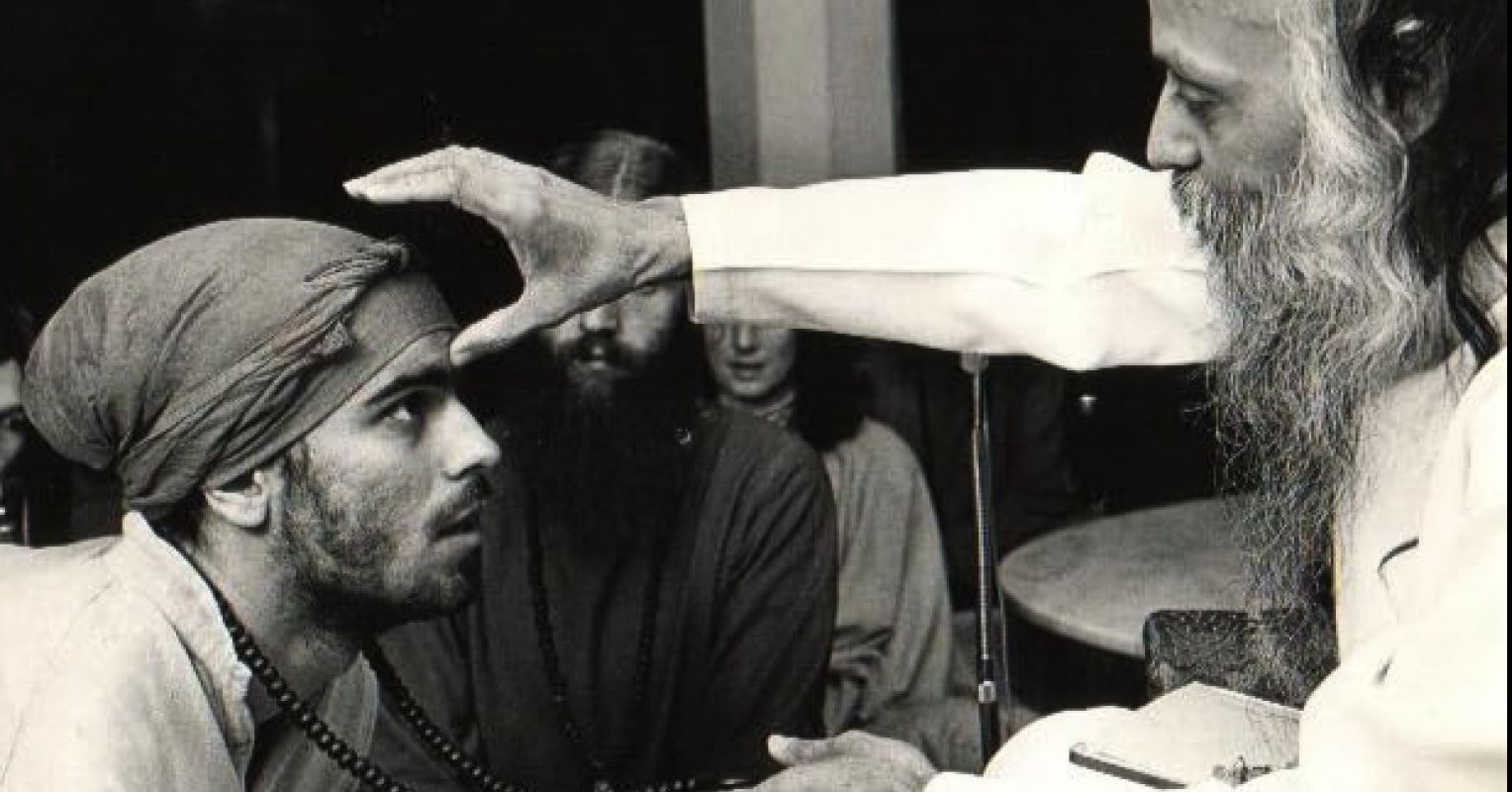
We can learn a lot about social psychological persuasion from talking to cult survivors. I recently had the privilege of interviewing psychotherapist, educator, and cult survivor Nicola Ranson. Her memoir, A Slice of Orange: Loving and Leaving the Osho/Rajneesh Cult(Unsolicited Press, Dec. 2026), vividly reveals how bright people can fall victim to toxic psychosocial manipulation. With a strong resonant voice and warm British accent, Ranson shares some hard-won wisdom in the following discussion:
Gina Simmons Schneider: What first inspired you to join the Rajneesh Movement?
Nicola Ranson: Bhagwan Shree Rajneesh, now known as Osho, was an Indian guru who moved his ashram from India to Oregon in the 1980s. He was formerly a philosophy professor and lectured extensively on a wide range of religions. I was drawn to his eclectic teachings, which combined Western psychotherapy and Eastern mysticism. I went to India in 1979 and participated in the mandatory therapy groups inspired by the Human Potential Movement—popular at that time. Rajneesh’s groups (and meditations) included cathartic practices which are now almost obsolete in psychotherapy due to the harm they can cause.
In Oregon, we constructed a city on a vast 100-square-mile tract of land. It housed over 4,000 permanent residents and over 30,000 temporary festival visitors. The movement there fell apart after a grand jury investigation found the leadership guilty of multiple crimes, including poisoning over 750 people in the Dalles in an attempt to sway an election. That earned the cult the dubious distinction of causing the largest bioterrorist attack in modern American history. The Oregon commune folded in 1985, but the group continues to this day with a headquarters in India.
I joined when I was 24. The guru’s teachings met my desire for personal growth and fascination with spirituality. I shared his interest in multiple religions and liked that he encouraged me to trust my own experience. He told us not to elevate him, that he was simply a doorway to the divine. He was handsome and charismatic, and I was drawn to him. It felt like a calling. Plus, he’d amassed an extraordinary international community surrounding him. In retrospect, that vibrant group played a larger role in the appeal than I realized at the time.
GSS: Research shows that social, psychological, or emotional vulnerabilities can make one more susceptible to cult programming (Rousselet, et al. 2017). What made you vulnerable?
NR:It’s true that while cults can attract anyone, certain circumstances make us more vulnerable and one of those is life transitions. I was at a crossroads. I’d finished university, and most of my friends had moved on. I had just botched an important job interview and lacked family support. I was awed by the disciples I met who seemed so happy and fulfilled, and I wanted to know their secret
GSS: The social influence of a cult community can keep people feeling trapped inside, even when they know something is wrong (Hassan, 2015). When did you first realize something was wrong?
NR:From the initial attraction to declaring that I was fully done—and naming it a cult—was ten years of my life. Yes, there were a number of times when I sensed something was wrong and ignored my inner guidance. I had been conditioned not to trust my own mind. We were taught not to be “negative” and to see discomfort as a sign that our ego was being challenged. But absolutely there were times when I knew something was wrong and recognized that I was afraid to speak up publicly
I discussed this with trusted friends, but my mind did calisthenics with the cognitive dissonance that arose. I had to face that the community I believed was based on love and bettering the planet had committed cruel and criminal actions. It was difficult to determine who was responsible for the crimes. There was a lot of blame and deflection going on that didn’t ring true to me. When the Oregon commune fell apart, I was in shell shock and had to figure out how to restart my life at thirty with no money and no résumé.
I was homeless on the beach when I arrived in San Diego, and my fellow disciples were still family to me. Some were willing to question the guru, but many were not. Complete extrication took years—and is a process that continues. Look at how long it can take someone to get out of a bad romantic relationship. My relationship was not only with a guru but with an entire community, many of whom remain close friends
GSS: Many cult survivors describe feeling shattered and broken after leaving a cult (Hadding et al.,2023). How did you eventually leave? What helped you recover?
NR:When I saw the discrepancy between what the group proclaimed and the unkind and unethical behavior taking place, something inside me broke, and I began to question everything. When the commune folded, we were all asked to leave, but my mental extrication took longer. We had been told that outsiders were hostile and couldn’t possibly understand spiritual truth, which of course made us feel special and created a sense of “us” and “them.” I hadn’t left the commune in four years, but when I got out and began making friends outside, I realized it was arrogant, self-serving nonsense.
Conformity Essential Reads

Why You Don’t Need to Be Loud to Be Defiant

When Everyone Agrees, Nobody Sees
I think my friendships, both with other cult members who were open to questioning and with kind people who accepted me and my past, were the most helpful components of recovery. When I studied social work and group and organizational dynamics, I learned a lot about social influence and how groups behave (which led me to teach group behavior in National University’s counseling psychology department for seventeen years)
As a psychotherapist, I learned a lot from my clients when I saw cult dynamics play out in abusive relationships, sometimes known as cults of one. We need more education to inoculate the general population from the trap of toxic cults. Undue influence and coercive control can show up in multiple areas of our society, including work, healthcare, religion, and politics. We need more retic influences that can impact any of us
Hassan, S. 2015, Combatting Cult Mind Control, Freedom of Mind Press
Hadding C, Semb O, Lehti A, Fahlström M, Sandlund M, DeMarinis V. Being in-between; exploring former cult members’ experiences of an acculturation process using the cultural formulation interview (DSM-5). Front Psychiatry. 2023 Sep 13;14:1142189. doi: 10.3389/fpsyt.2023.1142189. PMID: 37779627; PMCID: PMC10534031
M. Rousselet, O. Duretete, J.B. Hardouin, M. Grall-Bronnec, Cult membership: What factors contribute to joining or leaving?, Psychiatry Research, Volume 257, 2017, Pages 27-33, ISSN 0165-1781, https://doi.org/10.1016/j.psychres.2017.07.018
