


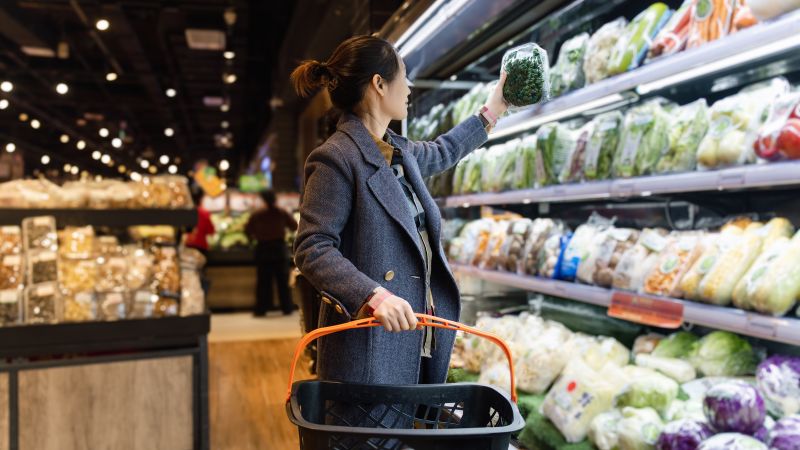
Ongoing investigations have identified iceberg lettuce as a source in one of the largest foodborne illness outbreaks in the US to date.
See all topics
Deciding which veggie to throw in the cart or what to pick from the lunch menu rarely feels as high stakes as it has this summer, with recalls and foodborne illnesses capturing headlines
The concern is valid: Federal data suggests that this is a particularly bad summer for foodborne illness outbreaks in the US. And challenges around tracing the questions unanswered
Between 2021 and 2025, the US Food and Drug Administration investigated an average of about 25 foodborne illness outbreaks each year. This year, the agency has already posted 20 investigations and says work remains active for 18 foodborne illness clusters
The FDA posted a dozen foodborne illness outbreak investigations within the past two months alone
Summer is typically peak season for foodborne illness, but there haven’t been this many outbreaks in this short of a timeframe at any other point over the past five years at least
This summer has seen a confluence of challenges, including excessive heat that allows food contamination to grow and a pathogen that’s particularly tough to pin down. Federal funding cuts under the Trump administration that reduced budgets both for food inspections by federal agencies and for grants to state and local health departments that conduct the traceback investigations to determine where the outbreaks come from
“We’re seeing the public health system tested right now as it relates to foodborne illness,” said Dr. Manisha Juthani, president of the Association of State and Territorial Health Officials
The number of outbreak investigations “represents an increase from previous years,” the FDA said in an email to CNN
“The FDA is constantly working to improve laboratory detection of foodborne illness, and these strengthened surveillance efforts often lead to increased detection,” the agency said. “Ensuring the safety of the food supply is a shared responsibility among many different points in the global supply chain. All stakeholders must actively participate in food safety efforts, as foodborne illness outbreaks affect both consumers and the entire industry.”
The US Food And Drug Administration has posted a dozen foodborne illness outbreaks in the last two months.
The current active investigations involve the four most common pathogens involved in outbreaks over the past five years: cyclospora, E. coli, listeria and salmonella
Food safety experts say that the accumulation of outbreaks this summer is striking but that tracking the number of outbreaks — or recalls, for that matter — isn’t the best way to capture the risk from foodborne pathogens
One recall can often apply to multiple different products that were available at a variety of stores or restaurants
“It’s not really incorporating the severity and impact,” said Darin Detwiler, a food safety advocate and former professor of food policy and corporate social responsibility at Northeastern University
“We need to measure these five things: severity, frequency, scale, public health burden and systems performance. Are the same preventable failures recurring despite regulations intended to stop them?”
A much better gauge is the number of illnesses associated with outbreaks, they say. But it may not make you feel any better: The US is on track to have one of its worst years yet
There have been about 7,400 cases of foodborne illness associated with outbreaks so far this year, according to data from the FDA and the US Centers for Disease Control and Prevention. That’s nearly five times higher than the annual average of about 1,500 cases between 2021 and 2025
The vast majority of illnesses this year are from the cyclosporiasis outbreak involving iceberg lettuce used at restaurants like Taco Bell and distributed more broadly by Taylor Farms. At least 6,358 illnesses have been linked to that outbreak as of last week — more illnesses than there have been from all outbreaks over the past four years combined — and there are thousands more under investigation. It’s the largest cyclosporiasis outbreak on record in the US and one of the largest foodborne illness outbreaks overall.
But foodborne illnesses from other outbreaks are accumulating quickly, too
There have been more than 1,000 cases of illness associated with outbreaks beyond the cyclospora outbreak so far in 2026, FDA data shows. With nearly four months left in the year, this puts the US on track to surpass the average annual case count from the past five years — in addition to the massive cyclospora outbreak
This summer’s challenges stand out for their size and complications, but public health is constantly responding to foodborne illness outbreaks, experts say
That work is often handled out of the public eye because they’re typically smaller clusters that can be managed swiftly. But this year, the number and scale of foodborne illness outbreaks are overwhelming the system and disrupting the ability to respond
“We are experiencing some unprecedentedly large outbreaks for diseases that are complex in the best-case scenarios,” said Janet Hamilton, executive director of the Council of State and Territorial Epidemiologists
“When you’re faced with responding to large complex outbreaks, you need staff to surge, and surging is increasingly difficult right now,” she said, highlighting the strain that public health systems have been under with significant cuts to staff, funding and expertise. “There are too many investigations to get done without having adequate surge staffing.”
It can take an epidemiologist about an hour to interview a single patient about what they may have recently eaten and collect information that can help trace illnesses back to a effectively and efficiently as they would like because the system is stretched thin
“We don’t really have a lot of bandwidth or a deep bench of people who can do this kind of work,” Juthani said. “The more delays you have in every step of the investigation train … that’s more risk. That’s more exposure time for people out there.”
Other large outbreaks this year include a few different salmonella outbreaks associated with jalapeño peppers, moringa leaf powder, eggs and cantaloupe
In mid-July, Taylor Farms recalled iceberg lettuce that was distributed in dozens of states due to possible cyclospora contamination.
For a couple of the largest outbreaks, however, a
This is quite common: Over the past five years, FDA investigations did not identify a food
“The FDA evaluates trends, analyzes underlying causes, and adapts oversight strategies to address risks in an increasingly complex food system, all with the goal of reducing foodborne illness and protecting the public,” the agency statement said. “While the underlying causes of this year’s outbreaks remain unclear, the FDA continues to work with federal, state, and international partners to investigate these multistate outbreaks and ensure products implicated in these outbreaks have been removed from the market.”
Still, public health and food safety experts say uncertainty about thehey might have otherwise
“If you’re a conscientious consumer and you’re trying to pay attention to the news and the recalls and notices that you get from your grocery store, but there’s no notice, there’s no news, then you don’t know what to avoid,” said Teresa Murray, consumer watchdog director for the US Public Interest Research Group. “That’s particularly important for families who have somebody with a vulnerable health condition.”
See all topics
