


Download PDF
Abstract
Background/objectives
Malnutrition is frequent in maintenance hemodialysis (MHD). We aimed to validate the Global Leadership Initiative on Malnutrition (GLIM) criteria using different muscle mass assessment methods and evaluate their associations with nutritional biomarkers, functional status, quality of life, and mortality
Subjects/methods
This prospective study included 218 MHD outpatients (63% male; mean age 70.6 ± 12.2 years). Muscle mass was assessed using bioimpedance analysis (BIA), mid-arm muscle circumference (MAMC), and calf circumference (CC). Serum biomarkers, handgrip strength, gait speed, and nutritional scores (Malnutrition Inflammation Score [MIS], Geriatric Nutritional Risk Index [GNRI]) were obtained. Malnutrition was defined as MIS > 10. Associations with SF-36 scales and survival were analysed
Results
Malnutrition prevalence was 26.1% with BIA-based GLIM, 25.2% with MAMC-based GLIM, and 27.1% with CC. BIA-based GLIM correlated with albumin, MIS, GNRI, phase angle, handgrip strength, and gait speed. MAMC-based GLIM showed similar associations except for gait speed. CC-based GLIM correlated with albumin and GNRI. Agreement with MIS was fair (κ = 0.31–0.35). All GLIM variants showed high specificity but low sensitivity. Only BIA- and MAMC-based GLIM were associated with reduced quality of life. BIA-based GLIM predicted higher mortality (HR 1.70, 95% CI 1.01–2.85), and CC-based GLIM showed a stronger association (HR 2.94, 95% CI 1.41–6.14). MAMC-based GLIM showed a nonsignificant trend.
Conclusions
GLIM demonstrated fair agreement with MIS, high specificity, and meaningful concurrent validity. MAMC- and CC-based GLIM provided practical alternatives to BIA. These findings support further validation of anthropometric GLIM variants in diverse MHD populations
Subjects
- Nutrition
- Translational research
Introduction
Malnutrition is common in patients undergoing maintenance hemodialysis (MHD) and is linked to increased morbidity and mortality [1]. Traditional assessments such as the Subjective Global Assessment (SGA) and the Malnutrition Inflammation Score (MIS) integrate subjective, biochemical, and anthropometric data and are widely used in this population [23]
To standardize malnutrition diagnosis, the Global Leadership Initiative on Malnutrition (GLIM) proposed criteria that include phenotypic components—unintentional weight loss, low BMI, and low muscle mass—and etiologic components—reduced food intake and inflammation or disease burden [4]. In MHD patients, studies using GLIM criteria have yielded inconsistent findings. Avesani et al. reported low agreement and sensitivity when GLIM was compared with SGA or MIS [5], whereas El Alami et al. found good agreement between GLIM and SGA [6]. Given the high prevalence of cognitive dysfunction in this population [7], an objective tool like GLIM warrants further validation.
Assessing muscle mass, a core phenotypic criterion in GLIM, typically requires advanced tools such as bioelectrical impedance analysis (BIA) or dual-energy X-ray absorptiometry (DEXA), which may not be readily available in dialysis settings. ESPEN supports using anthropometric surrogates—mid-arm muscle circumference (MAMC) or calf circumference—as practical alternatives [89]. However, no studies have validated these surrogates for use within GLIM in MHD populations
This study aimed to validate the GLIM criteria for diagnosing malnutrition in MHD patients using BIA, MAMC, and calf circumference, and to assess their concurrent validity with nutritional markers, functional status, and quality of life, as well as their predictive value for all-cause mortality
Subjects & methods
Study design and participants
This prospective observational study included 218 MHD patients from two prospective cohorts at our institution, both approved by the local ethics committee (ASF-0718 and 0116-23-ASF). The first cohort (n = 112) was recruited between January and May 2019 [10]; the second (n = 142) between January and May 2023. To avoid duplication, 36 patients who had participated in both cohorts were excluded from the second cohort and included only from the first. Participants were followed from study enrollment until death, kidney transplantation, transfer to peritoneal dialysis, transfer to another dialysis facility, or the administrative censoring date (October 2024), whichever occurred first. Median follow-up duration was 7 months (IQR 6–13.8 months). Survival time was calculated from the date of study enrollment to death or censoring.
Inclusion criteria were age ≥18 years, ≥8 weeks of MHD treatment, and written informed consent. Exclusion criteria included active infection, malignancy, autoimmune disease, chronic use of immunosuppressants, or physical deformities
Patients underwent thrice-weekly 4-h dialysis using vascular access. Dialysis adequacy was assessed by single-pool Kt/V. Dietary protein intake was estimated, derived from urea kinetics [11]. Residual kidney function (RKF) was measured using 48-h urine collections with creatinine and urea clearance [12]
Malnutrition assessment
Nutritional status was assessed by MIS, and GLIM criteria, while GNRI was calculated as an index of nutritional risk
GNRI, recommended by the KDOQI guidelines as a screening tool among composite nutritional indices for CKD [13], was calculated as:
GNRI = (14.89 × albumin [g/dL]) + (41.7 × weight/ideal weight), with ideal weight calculated using sex-specific Lorentz equations [14]
MIS includes nutritional history, physical exam, BMI, and labs [3]. MIS has shown strong predictive validity [3] and is effective for monitoring nutritional status in MHD patients [15]. A score >10 defined malnutrition, based on a Spanish multicenter study [16] and ROC analysis in our cohort (Supplementary Fig. 1). Because no universally accepted gold standard for diagnosing malnutrition exists in maintenance hemodialysis patients, we used the Malnutrition–Inflammation Score (MIS) as an external reference criterion. MIS is one of the most extensively validated nutritional assessment tools in dialysis populations and is strongly associated with hospitalization, inflammation, morbidity, and mortality [35].
GLIM criteria included ≥1 phenotypic and ≥1 etiologic criterion [4]. We did not perform initial malnutrition screening, as all MHD patients were considered at high risk. The etiologic criterion of reduced intake was assessed using cohort-specific dietary assessment methods. In the first cohort, dietary intake was evaluated using 3-day food diaries including a dialysis day, a non-dialysis day, and a weekend day as previously described [10]. In the second cohort, dietary intake was assessed by 24-h dietary recall obtained by an experienced dietitian during a face-to-face interview and referring to intake on the preceding day. Dietary data were analyzed using computerized nutritional software (Zameret), adapted for the Israeli population, and calculated intake was normalized to ideal body weight according to European Best Practice Guidelines [12]. Reduced intake was defined as energy intake at least 50% below age-specific recommended norms [12]. Inflammation was defined as CRP > 10 mg/L [17].
Muscle mass was assessed using BIA, MAMC, and calf circumference. In accordance with GLIM recommendations, BIA-derived appendicular skeletal muscle mass index (ASMI) was considered the primary phenotypic criterion for the diagnosis of malnutrition, while MAMC- and calf circumference-based cutoffs were evaluated as alternative phenotypic markers. BIA was performed post-dialysis using Nutriguard-M (cohort 1) or BCM (cohort 2), with patients supine for 5 min prior to measurement, following clinical recommendations for bioelectrical impedance analysis [18]. Phase angle (PhA) was calculated as:
$${rm{PhA}}={rm{arctangent}}({rm{Xc}}/{rm{R}})times (180/{rm{pi }})$$
Although earlier recommendations and manufacturers’ guidance advised caution regarding BIA use in patients with cardiac implantable electronic devices, more recent prospective studies suggest that clinical-grade BIA can be performed safely in this population without clinically significant device interference or arrhythmias [1920]
Appendicular skeletal muscle mass (ASMM) was estimated using the Sergi equation [21] and normalized by height² (ASMI). Malnutrition cutoffs: ASMI < 7.0 kg/m² (men), <5.7 kg/m² (women) [9]
MAMC = mid-arm circumference − 0.314 × triceps skinfold thickness (TSF) with malnutrition defined as <22.5 cm (men) or <20.5 cm (women) [22]
Calf circumference was measured at the point of the largest calf girth using a non-elastic tape, with patients standing upright and weight evenly distributed on both feet. In accordance with GLIM guidelines, low muscle mass based on calf circumference was defined using sex-specific cutoff values: <33 cm (men) or <32 cm (women) [9]
These choices were further supported by ROC curve analyses, which tested the discriminative ability of MAMC and calf circumference for sex-specific ASMI cutoffs in our population (Supplementary Fig. 2)
Anthropometric assessments (body weight, MAMC, and calf circumference) were performed post-dialysis, when patients were at their dry weight
Functional status and QoL
Handgrip strength (HGS) was measured using a Harpenden dynamometer, recording the best of three trials in each arm. Gait speed was evaluated as the faster of two timed six-meter walks. This approach was chosen to reduce the influence of initial hesitation or familiarization and to better capture each participant’s best steady walking performance [23]. This distance was chosen to ensure that participants reached a steady walking pace, reducing the influence of acceleration and deceleration phases. An additional 1-meter acceleration zone was used before the timed 6-meter segment. Handgrip strength and gait speed measurements were conducted before the dialysis session to minimize the impact of post-dialysis fatigue and hemodynamic instability. Quality of life was assessed using the SF-36 questionnaire, validated in MHD patients [24]. Comorbidity burden was measured using the dialysis-specific index by Liu et al. [25].
Laboratory parameters
Mid-week predialysis labs included albumin (bromocresol green), creatinine, urea, CRP (high-sensitivity assay), and lipid panel, using standard automated analyzers
Power and statistical analysis
Post hoc power analysis using G*Power 3.1.9.7 confirmed 98.6% power to detect diagnostic performance differences. Normally distributed data were expressed as mean ± SD; skewed variables as median (IQR); categorical data as n (%). T-tests, Mann-Whitney U, and chi-square tests were used as appropriate
ROC curves defined optimal MAMC and calf circumference cutoffs. Sensitivity and specificity were calculated using 2×2 contingency tables. Positive and negative predictive values (PPV and NPV, respectively) were calculated to assess the diagnostic accuracy of the tests. Additionally, positive and negative likelihood ratios (PLR and NLR, respectively) were computed to determine how much the odds of the disease increase or decrease when a test result is positive or negative, respectively. Agreement was assessed using Cohen’s kappa. Differences between κ coefficients derived from the same participants were evaluated using bootstrap comparison of dependent κ coefficients. McNemar’s test compared paired proportions.
Multivariable logistic regression was used to examine whether GLIM-defined malnutrition was associated with clinically relevant differences across nutritional, functional, body-composition, and quality-of-life domains, as part of the concurrent validation of the GLIM criteria. In these models, GLIM diagnosis (malnutrition: yes/no) was entered as the independent variable, and the clinical parameter of interest was entered as the dependent variable. Logistic regression requires a binary dependent variable; therefore, continuous variables were dichotomized at the median of their distribution. This approach is consistent with prior GLIM validation studies. Cox proportional hazards regression was used to examine the association between GLIM-defined malnutrition and all-cause mortality. Both multivariable logistic regression and Cox regression models were adjusted using the same prespecified clinically relevant covariates: age, sex, dialysis vintage, diabetes, comorbidity index, residual kidney function, and Kt/V.
SPSS v29.0 was used for all analyses
Results
The participants had an average age of 70.6 years (± 12.2 years), with 63% being male and 63% diagnosed with diabetes. Over half of the participants received dialysis via an arterial-venous (A-V) fistula or graft, while 45.9% were treated through permanent central catheters. The average Kt/V, a measure of dialysis adequacy, was 1.42 ( ± 0.31) (Table 1). In the study population, 57 patients (26.1%) were identified as malnourished according to the GLIM criteria using BIA-derived ASMI as the primary phenotypic marker (Table 1), with ASMI representing the most frequently met phenotypic criterion in this diagnostic framework (Supplementary Fig. 3). Using the GLIM criteria with MAMC as a surrogate for muscle mass, 25.2% of the patients were identified as malnourished, while the GLIM criteria with calf circumference as a surrogate for muscle mass indicated a slightly lower malnutrition rate of 27.1% (data not shown). Patients diagnosed with malnutrition according to the GLIM criteria were older and exhibited a lower prevalence of diabetes. They lacked residual kidney function and had higher Kt/V values. These patients also showed reduced handgrip strength (in both genders) and slower gait speed, along with lower levels of serum albumin, creatinine, and uric acid. Additionally, they had elevated CRP levels, lower BMI, LBMI, and phase angle, as well as higher MIS and lower GNRI scores, as anticipated (Table 1).
As part of the ongoing study on the concurrent validation of GLIM criteria using different surrogates for muscle mass, a logistic regression analysis was conducted (Table 2). This revealed significant associations between GLIM criteria based on BIA measurements and gait speed, handgrip strength in both sexes, serum albumin, fat mass index (FMI), phase angle, as well as MIS and GNRI. After multivariable adjustments for age, gender, dialysis vintage, diabetes status, comorbidity index, residual kidney function, and Kt/V, the GLIM criteria remained significantly associated with gait speed, LBMI, MIS, and GNRI. GLIM, when using MAMC as a surrogate for muscle mass, showed similar associations in the univariate regression analysis, except for the lack of associations with gait speed. Additionally, after multivariate adjustments, the association with LBMI was not observed (Table 2). GLIM using calf circumference as a measure of muscle mass demonstrated fewer associations with various nutritional markers compared to GLIM incorporating ASMI calculated from BIA or MAMC measurements. After multivariate adjustments, significant associations were found only with albumin and GNRI (Table 2).
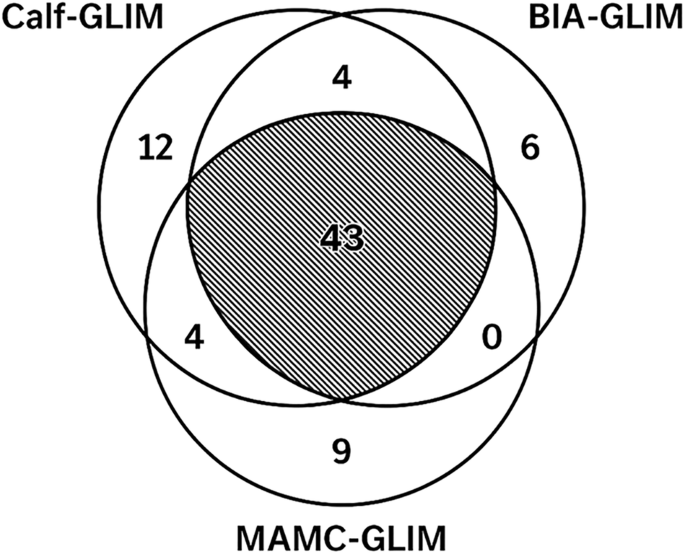
We further explored the ability of GLIM criteria, using different muscle mass surrogates, to replicate the malnutrition diagnosis rate defined by an MIS score above 10, using the kappa statistic (Supplementary Table 1). The κ score indicated fair agreement between malnutrition diagnoses based on MIS and GLIM criteria across all three muscle-mass assessment methods, with numerically lower agreement for the calf circumference-based GLIM than for the BIA- and MAMC-based GLIM (Supplementary Table 1); however, bootstrap comparison of the dependent κ coefficients showed no statistically significant differences between methods. There was substantial agreement between the BIA-based GLIM criteria and the two GLIM variants incorporating anthropometric muscle-mass assessments (Fig. 1). Agreement was excellent for both comparisons, with the κ coefficient slightly higher for MAMC-based GLIM (κ = 0.77, 95% CI: 0.67–0.86) than for calf circumference-based GLIM (κ = 0.74, 95% CI: 0.63–0.83), reflecting the robustness and internal consistency of GLIM phenotyping across measurement approaches.
The Venn diagram illustrates the number of patients identified as malnourished by each GLIM variants. A total of 57 patients were classified as malnourished according to the BIA-based GLIM definition, 56 according to the MAMC-based definition, and 59 according to the calf circumference-based definition. Of these, 43 patients were identified as malnourished by all three GLIM variants. Only a small number of patients were uniquely classified as malnourished by a single method (6 by BIA alone, 9 by MAMC alone, and 12 by calf circumference alone), while few patients were classified by any pair of methods without overlap across all three (4 by BIA + MAMC, 4 by BIA+calf circumference, and 0 by calf circumgerence+MAMC). These patterns demonstrate substantial concordance across the muscle-mass assessment methods used for GLIM phenotyping.
McNemar’s test revealed no significant difference between malnutrition diagnoses based on an MIS score above 10 and the GLIM criteria using different muscle mass surrogates (Supplementary Table 2). Likewise, when comparing GLIM variants based on anthropometric measurements to those based on BIA-derived ASMI, no statistically significant differences were observed (Supplementary Table 2)
Sensitivity analyses comparing BIA-based, MAMC-based, and calf circumference-based GLIM criteria with MIS > 10, as well as among GLIM methods using anthropometric versus BIA-based standards, are shown in Table 3. All three GLIM variants (BIA-based, MAMC-based, and calf circumference-based) showed low sensitivity but high specificity in predicting malnutrition diagnosed by MIS. This suggests GLIM may under-diagnose malnutrition compared to MIS but is reliable in ruling out malnutrition. The low positive predictive value and high negative predictive value further indicate that GLIM criteria are more accurate in confirming the absence of malnutrition than identifying its presence. Compared to BIA-derived GLIM, the MAMC-based GLIM showed higher sensitivity and specificity for predicting malnutrition than the calf circumference-based GLIM (Table 3).
Malnourished patients identified by BIA-based and MAMC-based GLIM reported significantly lower scores in the mental and physical health dimensions, general health, role physical, and functionality scales of the SF-36 QoL questionnaire (Table 4). The calf circumference-based GLIM was only significantly associated with the physical function scale (Table 4)
During follow-up, 70 deaths occurred over 256.5 patient-years, corresponding to a mortality rate of 27.3 deaths per 100 patient-years. We compared the predictive ability of the three GLIM variants for all-cause mortality. Patients classified as well-nourished by BIA-based GLIM (Supplementary Fig. 4a) and calf circumference-based GLIM (Supplementary Fig. 4b) had better survival rates. For MAMC-based GLIM (Supplementary Fig. 4c), there was only a trend toward better survival for well-nourished patients. Consistently, in Cox regression analyses (Table 5), BIA-based GLIM was associated with increased mortality risk in fully adjusted models (HR 1.70, 95% CI 1.01-2.85), and calf circumference-based GLIM showed an even stronger association (HR 2.94, 95% CI 1.41-6.14). In contrast, MAMC-based GLIM was non-significant across all models.
Discussion
Our study demonstrated that the GLIM criteria identified broadly similar proportions of malnutrition regardless of whether muscle mass was assessed using BIA-derived ASMI, MAMC, or calf circumference. All three GLIM variants showed substantial agreement, with comparable κ coefficients and no significant discordance in McNemar’s tests. These findings indicate that anthropometric muscle-mass surrogates – particularly MAMC and calf circumference – may serve as practical alternatives to BIA for GLIM phenotyping in maintenance hemodialysis patients.
GLIM is a relatively recent framework with growing validation data, including in MHD populations [2627]. In our cohort, GLIM identified malnutrition in 26.1% of patients, comparable to the 25.8% [26], though lower than the 42% global prevalence reported elsewhere [1027]. Differences in prevalence may reflect population characteristics, regional factors [27], and the use of different diagnostic tools such as MIS and SGA [1027]
In our study, all GLIM variants showed low sensitivity but high specificity when MIS was used as the external reference criterion, indicating that some patients classified as malnourished by MIS were not identified by GLIM, whereas those meeting GLIM criteria likely had clinically meaningful nutritional compromise. This discrepancy may partly reflect the different nature of these tools: GLIM is based on predefined objective criteria [4], whereas MIS incorporates a broader and partly subjective clinical assessment [3]. In the maintenance hemodialysis setting, MIS may therefore detect earlier or more nuanced manifestations of malnutrition, while GLIM may preferentially identify more overt or advanced nutritional compromise. Moreover, because cognitive impairment is common in hemodialysis patients [7], MIS-based assessment may not always be feasible or reliable, which may further support the clinical utility of GLIM as a practical, objective, and standardized diagnostic framework.
We found fair agreement between GLIM and MIS-defined malnutrition (MIS > 10), based on the kappa statistic. Our κ value was higher than those reported by Avesani et al. [5] and Karavetian et al. [28], but lower than El Alami et al. [6]. Such variability likely reflects challenges in defining GLIM’s etiologic criteria in MHD patients and the subjective nature of SGA and MIS, which show moderate intraobserver variability [215]. While some studies automatically assign a point for GLIM’s etiologic criteria assuming all MHD patients experience inflammation or reduced intake [5], we believe this may overestimate malnutrition risk. Conversely, El Alami et al. [6] used the modified Glasgow Prognostic Score to define inflammation and food intake, yielding a higher κ, though this score is validated primarily in oncology [29]. We applied GLIM criteria as originally proposed [417], recognizing that not all MHD patients have reduced intake or inflammation.
The substantial agreement between BIA-based GLIM and anthropometric variants is noteworthy and lacks direct comparison in prior hemodialysis studies. MAMC performed slightly better than calf circumference in both agreement and discriminatory power. To our knowledge, this is the first study to directly compare BIA-based GLIM with anthropometric GLIM variants incorporating MAMC and calf circumference in maintenance hemodialysis patients. This comparative approach may have practical clinical implications, particularly in dialysis settings where BIA is unavailable or difficult to implement routinely.
Regarding comparative validity, BIA-based GLIM showed strong associations with established nutritional markers in MHD: albumin [312], creatinine [12], uric acid [30], phase angle [31], HGS [32], MIS [315], and GNRI [1533]. These associations remained significant in multivariable models, particularly for MIS and GNRI – two well-validated composite indices in the MHD setting
GLIM’s association with health-related quality of life (HRQoL) is supported by links between its components – body composition, BMI, inflammation, and dietary intake – and SF-36 dimensions in MHD patients [334,35,36,37]. Although limited to cancer and gastrointestinal disease studies [38,39,40,41], prior research suggests GLIM-diagnosed malnutrition may predict lower HRQoL. Our study is the first to show this relationship in MHD, particularly with BIA- and MAMC-based GLIM, reinforcing prior findings of strong associations between MAMC and HRQoL [34].
HGS and gait speed are useful functional indicators in dialysis populations [42]. BIA-based GLIM was associated with both, while MAMC and calf circumference showed associations only with HGS in men. This may reflect the limited ability of anthropometric surrogates to capture functional deficits. Similar discrepancies have been seen in sarcopenia studies in elderly Turkish [43] and peritoneal dialysis populations [44], where MAMC predicted HGS in men but not women. These findings may explain our sex-specific results.
Regarding mortality, using individual follow-up times, the incidence rate was 27.3 deaths per 100 patient-years (273 per 1000 patient-years). Although higher than the 15–20 per 100 patient-years typically reported in hemodialysis registries [45], this is consistent with the high-risk clinical profile of our cohort, characterized by advanced age, a high prevalence of diabetes, substantial comorbidity burden, elevated inflammatory markers, and frequent catheter use – factors well-established to increase mortality in hemodialysis patients [4647]. Therefore, some degree of selection bias cannot be excluded, and the observed mortality rate and prognostic associations of GLIM should be interpreted in the context of a high-risk maintenance hemodialysis population. Accordingly, the generalizability of these findings to younger, healthier, or lower-risk hemodialysis populations may be limited.
In terms of predictive validity, GLIM-defined malnutrition was associated with mortality in partially adjusted models, consistent with the direction reported by Avesani et al. [5]. Calf circumference-based GLIM showed the strongest association across all models, in line with prior evidence identifying calf circumference as an independent predictor of mortality in hemodialysis patients [48]. In contrast, MAMC-based GLIM demonstrated only a non-significant trend in univariate analysis; however, given that MAMC itself has been independently associated with survival in the maintenance hemodialysis population [34], the limited power of the present study may have contributed to the lack of significance. Importantly, these modest mortality associations do not detract from the clinical relevance of our findings, as GLIM was developed primarily as a diagnostic framework for malnutrition rather than a mortality prediction tool. Notably, prior dialysis studies [52749] have similarly reported attenuated or non-significant associations after multivariable adjustment, indicating that variability in GLIM’s prognostic performance is expected and reflects both population heterogeneity and limited event numbers.
Our study has limitations. As an observational, single-center study, causal inference is limited, and generalizability may be affected. The inclusion of two temporally separated cohorts could introduce bias. Dietary assessment methods also differed between cohorts; however, both were prospectively collected, standardized nutritional assessment approaches commonly used in routine clinical research settings [50]. Consistent inclusion criteria, laboratory procedures, assessment tools, and personnel helped minimize this risk. The study was underpowered for survival analysis, which should be addressed in future research.
In summary, GLIM showed fair agreement with MIS-defined malnutrition in MHD patients, with high specificity and negative predictive value but low sensitivity. Despite this, GLIM criteria demonstrated solid concurrent validity through associations with nutritional markers, scores, function, and HRQoL. When BIA is unavailable, anthropometric muscle-mass surrogates – particularly MAMC and calf circumference – provide practical alternatives with comparable validity. Calf circumference may be particularly useful in settings where MAMC measurement is not feasible, such as when both arms have vascular access. Our findings support further validation of GLIM criteria with anthropometric surrogates in diverse dialysis populations.
Data availability
The data analyzed during this study are available from the corresponding author upon reasonable request
References
Kang SS, Chang JW, Park Y. Nutritional status predicts 10-year mortality in patients with end-stage renal disease on hemodialysis. Nutrients. 2017;9:399 https://doi.org/10.3390/nu9040399
Cooper BA, Bartlett LH, Aslani A, Allen BJ, Ibels LS, Pollock CA. Validity of subjective global assessment as a nutritional marker in end-stage renal disease. Am J Kidney Dis. 2002;40:126–32. https://doi.org/10.1053/ajkd.2002.33921
Rambod M, Bross R, Zitterkoph J, Benner D, Pithia J, Colman S, et al. Association of malnutrition-inflammation score with quality of life and mortality in hemodialysis patients: a 5-year prospective cohort study. Am J Kidney Dis. 2009;53:298–309. https://doi.org/10.1053/j.ajkd.2008.09.018
Cederholm T, Jensen GL, Correia MITD, Gonzalez MC, Fukushima R, Higashiguchi T, et al. GLIM criteria for the diagnosis of malnutrition – A consensus report from the global clinical nutrition community. Clin Nutr. 2019;38:1–9. https://doi.org/10.1016/j.clnu.2018.08.002
Avesani CM, Sabatino A, Guerra A, Rodrigues J, Carrero JJ, Rossi GM, et al. A comparative analysis of nutritional assessment using Global Leadership Initiative on Malnutrition versus Subjective Global Assessment and Malnutrition Inflammation Score in maintenance hemodialysis patients. J Ren Nutr. 2022;32:476–82. https://doi.org/10.1053/j.jrn.2021.06.008
El Alami El Hassani N, Akrichi MA, Bajit H, Alem C. Investigation of accordance between nutritional assessment tools, and bio-electrical impedance-derived phase angle, with the Global Leadership Initiative on Malnutrition criteria in hemodialysis patients. Clin Nutr ESPEN. 2024;62:260–9. https://doi.org/10.1016/j.clnesp.2024.05.027
Weiner DE, Seliger SL. Cognitive and physical function in chronic kidney disease. Curr Opin Nephrol Hypertens. 2014;23:291–7. https://doi.org/10.1097/01.mnh.0000444821.87873.7b
Cederholm T, Bosaeus I, Barazzoni R, Bauer J, Van Gossum A, Klek S, et al. Diagnostic criteria for malnutrition – An ESPEN Consensus Statement. Clin Nutr. 2015;34:335–40. https://doi.org/10.1016/j.clnu.2015.03.001
Barazzoni R, Jensen GL, Correia MITD, Gonzalez MC, Higashiguchi T, Shi HP, et al. Guidance for assessment of the muscle mass phenotypic criterion for the Global Leadership Initiative on Malnutrition (GLIM) diagnosis of malnutrition. Clin Nutr. 2022;41:1425–33. https://doi.org/10.1016/j.clnu.2022.02.001
Cohen-Cesla T, Azar A, Hamad RA, Shapiro G, Stav K, Efrati S, et al. Usual nutritional scores have acceptable sensitivity and specificity for diagnosing malnutrition compared to GLIM criteria in hemodialysis patients. Nutr Res. 2021;92:129–38. https://doi.org/10.1016/j.nutres.2021.06.007
Depner TA, Daugirdas JT. Equations for normalized protein catabolic rate based on two-point modeling of hemodialysis urea kinetics. J Am Soc Nephrol. 1996;7:780–5. https://doi.org/10.1681/asn.v75780
Fouque D, Vennegoor M, ter Wee P, Wanner C, Basci A, Canaud B, et al. EBPG guideline on nutrition. Nephrol Dial Transplant. 2007;22:ii45–87. https://doi.org/10.1093/ndt/gfm020
Ikizler TA, Burrowes JD, Byham-Gray LD, Campbell KL, Carrero JJ, Chan W, et al. KDOQI Clinical Practice Guideline for Nutrition in CKD: 2020 Update. Am J Kidney Dis. 2020;76:S1–S107. https://doi.org/10.1053/j.ajkd.2020.05.006
Bouillanne O, Morineau G, Dupont C, Coulombel I, Vincent JP, Nicolis I, et al. Geriatric Nutritional Risk Index: a new index for evaluating at-risk elderly medical patients. Am J Clin Nutr. 2005;82:777–83. https://doi.org/10.1093/ajcn/82.4.777
Beberashvili I, Azar A, Sinuani I, Kadoshi H, Shapiro G, Feldman L, et al. Comparison analysis of nutritional scores for serial monitoring of nutritional status in hemodialysis patients. Clin J Am Soc Nephrol. 2013;8:443–51. https://doi.org/10.2215/cjn.04980512
Barril G, Nogueira A, Cigarrán S, La Torre J, Sanchez R, de Santos A, et al. Differences in Malnutrition Inflammation Score of Hemodialysis Patients Associated With Hemodialysis Factors. A Spanish Multicenter Epidemiologic Study. J Ren Nutr. 2023;33:140–6. https://doi.org/10.1053/j.jrn.2022.03.006
Cederholm T, Jensen GL, Ballesteros-Pomar MD, Blaauw R, Correia MITD, Cuerda C, et al. Guidance for assessment of the inflammation etiologic criterion for the GLIM diagnosis of malnutrition: A modified Delphi approach. Clin Nutr. 2024;43:1025–32. https://doi.org/10.1016/j.clnu.2023.11.026
Kyle UG, Bosaeus I, De Lorenzo AD, Deurenberg P, Elia M, Gómez JM, et al. Bioelectrical impedance analysis-part II: utilization in clinical practice. Clin Nutr. 2004;23:1430–53. https://doi.org/10.1016/j.clnu.2004.09.012
Chabin X, Taghli-Lamallem O, Mulliez A, Bordachar P, Jean F, Futier E, et al. Bioimpedance analysis is safe in patients with implanted cardiac electronic devices. Clin Nutr. 2019;38:806–11. https://doi.org/10.1016/j.clnu.2018.02.029
Uribe-Cavero LJ, Chavez-Ecos FA, Camacho-Caballero K, Grados-Pintos JC, Vera-Maccha P, Siguas-Huasasquiche A, et al. Safety of bioelectrical impedance analysis in patients with cardiac implantable electronic devices: A systematic review. Heart Rhythm O2. 2025;6:1985–92. https://doi.org/10.1016/j.hroo.2025.09.026
Sergi G, De Rui M, Veronese N, Bolzetta F, Berton L, Carraro S, et al. Assessing appendicular skeletal muscle mass with bioelectrical impedance analysis in free-living Caucasian older adults. Clin Nutr. 2015;34:667–73. https://doi.org/10.1016/j.clnu.2014.07.010
Stosovic M, Stanojevic M, Simic-Ogrizovic S, Jovanovic D, Djukanovic L. The predictive value of anthropometric parameters on mortality in haemodialysis patients. Nephrol Dial Transpl. 2011;26:1367–74. https://doi.org/10.1093/ndt/gfq497
Lyons JG, Heeren T, Stuver SO, Fredman L. Assessing the agreement between 3-meter and 6-meter walk tests in 136 community-dwelling older adults. J Aging Health. 2015;27:594–605. https://doi.org/10.1177/0898264314556987
Kalantar-Zadeh K, Kopple JD, Block G, Humphreys MH. Association among SF36 quality of life measures and nutrition, hospitalization, and mortality in hemodialysis. J Am Soc Nephrol. 2001;12:2797–806. https://doi.org/10.1681/asn.v12122797
Liu J, Huang Z, Gilbertson DT, Foley RN, Collins AJ. An improved comorbidity index for outcome analyses among dialysis patients. Kidney Int. 2010;77:141–51. https://doi.org/10.1038/ki.2009.413
Aziz G, Ebrahim Z, Esau N, Bazezew MM. Assessment criteria to diagnose malnutrition (undernutrition and overnutrition) in haemodialysis patients. J Ren Nutr. 2024;S1051-2276(24)00194-8. https://doi.org/10.1053/j.jrn.2024.08.003
Song HC, Shin J, Hwang JH, Kim SH. Utility of the Global Leadership Initiative on Malnutrition criteria for the nutritional assessment of patients with end-stage renal disease receiving chronic hemodialysis. J Hum Nutr Diet. 2023;36:97–107. https://doi.org/10.1111/jhn.13019
Karavetian M, Salhab N, Rizk R, Poulia KA. Malnutrition-Inflammation Score vs Phase Angle in the Era of GLIM Criteria: A cross-sectional study among hemodialysis patients in UAE. Nutrients. 2019;11:2771. https://doi.org/10.3390/nu11112771
McMillan DC, Crozier JE, Canna K, Angerson WJ, McArdle CS. Evaluation of an inflammation-based prognostic score (GPS) in patients undergoing resection for colon and rectal cancer. Int J Colorectal Dis. 2007;22:881–6. https://doi.org/10.1007/s00384-006-0259-6
Beberashvili I, Erlich A, Azar A, Sinuani I, Feldman L, Gorelik O, et al. Longitudinal study of serum uric acid, nutritional status, and mortality in maintenance hemodialysis patients. Clin J Am Soc Nephrol. 2016;11:1015–23. https://doi.org/10.2215/cjn.10400915
Beberashvili I, Azar A, Sinuani I, Shapiro G, Feldman L, Stav K, et al. Bioimpedance phase angle predicts muscle function, quality of life and clinical outcome in maintenance hemodialysis patients. Eur J Clin Nutr. 2014;68:683–9. https://doi.org/10.1038/ejcn.2014.67
Heimbürger O, Qureshi AR, Blaner WS, Berglund L, Stenvinkel P. Hand-grip muscle strength, lean body mass, and plasma proteins as markers of nutritional status in patients with chronic renal failure. Am J Kidney Dis. 2000;36:1213–25. https://doi.org/10.1053/ajkd.2000.19837
Beberashvili I, Azar A, Sinuani I, Shapiro G, Feldman L, Sandbank J, et al. Geriatric nutritional risk index, muscle function, quality of life and clinical outcome in hemodialysis patients. Clin Nutr. 2016;35:1522–9. https://doi.org/10.1016/j.clnu.2016.04.010
Noori N, Kopple JD, Kovesdy CP, Feroze U, Sim JJ, Murali SB, et al. Mid-arm muscle circumference and quality of life and survival in maintenance hemodialysis patients. Clin J Am Soc Nephrol. 2010;5:2258–68. https://doi.org/10.2215/cjn.02080310
Allen KL, Miskulin D, Yan G, Dwyer JT, Frydrych A, Leung J, et al. Association of nutritional markers with physical and mental health status in prevalent hemodialysis patients from the HEMO study. J Ren Nutr. 2002;12:160–9. https://doi.org/10.1053/jren.2002.33512
Johansen KL, Kutner NG, Young B, Chertow GM. Association of body size with health status in patients beginning dialysis. Am J Clin Nutr. 2006;83:543–9. https://doi.org/10.1093/ajcn.83.3.543
Kalantar-Zadeh K, Block G, McAllister CJ, Humphreys MH, Kopple JD. Appetite and inflammation, nutrition, anemia, and clinical outcome in hemodialysis patients. Am J Clin Nutr. 2004;80:299–307. https://doi.org/10.1093/ajcn/80.2.299
Xi Z, Jia-Xin H, Xi W, Meng T, Jin-Feng L, Wei W, et al. Association between GLIM-diagnosed malnutrition and quality of life in older patients with cancer. J Nutr Health Aging. 2024;28:100274. https://doi.org/10.1016/j.jnha.2024.100274
Landgrebe M, Tobberup R, Carus A, Rasmussen HH. GLIM diagnosed malnutrition predicts clinical outcomes and quality of life in patients with non-small cell lung cancer. Clin Nutr. 2023;42:190–8. https://doi.org/10.1016/j.clnu.2022.12.011
Zhang Y, Zhang L, Gao X, Dai C, Huang Y, Wu Y, et al. Impact of malnutrition and sarcopenia on quality of life in patients with inflammatory bowel disease: A multicentre study. J Cachexia Sarcopenia Muscle. 2023;14:2663–75. https://doi.org/10.1002/jcsm.13341
Lindqvist C, Slinde F, Majeed A, Bottai M, Wahlin S. Nutrition impact symptoms are related to malnutrition and quality of life: A cross-sectional study of patients with chronic liver disease. Clin Nutr. 2020;39:1840–8. https://doi.org/10.1016/j.clnu.2019.07.024
Broers NJ, Martens RJ, Cornelis T, Diederen NM, Wabel P, van der Sande FM, et al. Body composition in dialysis patients: A functional assessment of bioimpedance using different prediction models. J Ren Nutr. 2015;25:121–8. https://doi.org/10.1053/j.jrn.2014.08.007
Akın S, Mucuk S, Öztürk A, Mazıcıoğlu M, Göçer Ş, Arguvanlı S, et al. Muscle function-dependent sarcopenia and cut-off values of possible predictors in community-dwelling Turkish elderly: Calf circumference, midarm muscle circumference and walking speed. Eur J Clin Nutr. 2015;69:1087–90. https://doi.org/10.1038/ejcn.2015.42
Do JY, Kang SH. Comparison of various indices for predicting sarcopenia and its components in patients receiving peritoneal dialysis. Sci Rep. 2022;12:14102. https://doi.org/10.1038/s41598-022-18492-2
Johansen KL, Gilbertson DT, Li S, Li S, Liu J, Roetker NS, et al. US Renal Data System 2023 Annual Data Report: Epidemiology of Kidney Disease in the United States. Am J Kidney Dis. 2024;83:A8–A13. https://doi.org/10.1053/j.ajkd.2024.01.001
Collins AJ, Foley RN, Gilbertson DT, Chen SC. The state of chronic kidney disease, ESRD, and morbidity and mortality in the first year of dialysis. Clin J Am Soc Nephrol. 2009;4:S5–11. https://doi.org/10.2215/CJN.05980809
Ma L, Zhao S. Risk factors for mortality in patients undergoing hemodialysis: A systematic review and meta-analysis. Int J Cardiol. 2017;238:151–8. https://doi.org/10.1016/j.ijcard.2017.02.095
Shen Y, Qin H, Liu X, Liu L, Chen S, Yang Y, et al. Calf circumference predicts sarcopenia and all-cause mortality in older patients undergoing maintenance hemodialysis: A prospective cohort study. Nutr Clin Pract. 2026;41:235–44. https://doi.org/10.1002/ncp.11337
Wang D, Yin J, Liao W, Feng X, Zhang F. GLIM criteria for definition of malnutrition in peritoneal dialysis: a new aspect of nutritional assessment. Ren Fail. 2024;46:2337290. https://doi.org/10.1080/0886022X.2024.2337290
Bross R, Noori N, Kovesdy CP, Murali SB, Benner D, Block G, et al. Dietary assessment of individuals with chronic kidney disease. Semin Dial. 2010;23:359–64. https://doi.org/10.1111/j.1525-139X.2010.00743.x
Funding
Open access funding provided by Tel Aviv University
Author information
Authors and Affiliations
Nephrology Division; Yitzhak Shamir Medical Center, Gray Faculty of Medical and Health Sciences, Tel Aviv University, Tel Aviv, Israel, Zerifin, Israel
Ilia Beberashvili & Shai Efrati
Internal Department E, Yitzhak Shamir Medical Center, Zerifin, Israel
Lawi Suissa
Nutrition Department, Yitzhak Shamir Medical Center, Zerifin, Israel
Ada Azar & Racheli Gamliel
Urology Department; Yitzhak Shamir Medical Center, Gray Faculty of Medical and Health Sciences, Tel Aviv University, Tel Aviv, Israel , Zerifin, Israel
Kobi Stav
Authors
- Ilia BeberashviliView author publications
Search author on:PubMed Google Scholar
- Lawi SuissaView author publications
Search author on:PubMed Google Scholar
- Ada AzarView author publications
Search author on:PubMed Google Scholar
- Racheli GamlielView author publications
Search author on:PubMed Google Scholar
- Kobi StavView author publications
Search author on:PubMed Google Scholar
- Shai EfratiView author publications
Search author on:PubMed Google Scholar
Contributions
IB: Conceptualization; Formal analysis; Investigation; Methodology; Project administration; Resources; Software; Supervision; Validation; Visualization; Writing – original draft; Writing – review & editing. LS: Data curation; Investigation; Methodology; Software; Supervision. AA and RG: Data curation; Investigation; Methodology. KS: Investigation; Software; Supervision; Validation; Visualization. SE: Formal analysis; Investigation; Resources; Software; Supervision; Validation; Visualization. All authors contributed to manuscript writing and review, approved the final version, and agree to be accountable for all aspects of the work in accordance with ICMJE criteria.
Ethics declarations
Competing interests
Authors declare no competing financial interests
Ethical approval
The study was conducted in accordance with the Declaration of Helsinki and was approved by the Institutional Ethics Committee of Shamir (Assaf Harofeh) Hospital (Approval numbers: ASF-0718 and 0116-23-ASF). Written informed consent was obtained from all participants
Additional information
Publisher’s note Springer Nature remains neutral with regard to jurisdictional claims in published maps and institutional affiliations
Supplementary information
Supplemental Material (download DOCX )
Rights and permissions
Open Access This article is licensed under a Creative Commons Attribution 4.0 International License, which permits use, sharing, adaptation, distribution and reproduction in any medium or format, as long as you give appropriate credit to the original author(s) and the source, provide a link to the Creative Commons licence, and indicate if changes were made. The images or other third party material in this article are included in the article’s Creative Commons licence, unless indicated otherwise in a credit line to the material. If material is not included in the article’s Creative Commons licence and your intended use is not permitted by statutory regulation or exceeds the permitted use, you will need to obtain permission directly from the copyright holder. To view a copy of this licence, visit http://creativecommons.org/licenses/by/4.0/.
About this article
Cite this article
Beberashvili, I., Suissa, L., Azar, A. et al. Global leadership initiative on malnutrition criteria using different muscle mass assessment methods in hemodialysis patients: Links to physical performance, quality of life, and clinical outcomes.
Eur J Clin Nutr (2026). https://doi.org/10.1038/s41430-026-01803-5
Received:16 April 2025
Revised:25 June 2026
Accepted:24 July 2026
Published:06 August 2026
Version of record:06 August 2026
DOI
:https://doi.org/10.1038/s41430-026-01803-5
