


Healthcare Freefall: Finger‑pointing intensifies as Colorado’s healthcare system strains under rising costs, shrinking coverage
By
Thelma GrimesAugust 22, 2026 | updated 4 hours ago
Editor’s Note: Colorado’s healthcare system is entering a period of accelerating instability — a “tsunami,” as multiple leaders describe it — driven by collapsing hospital finances, shrinking Medicaid reimbursements, disappearing services and a political fight over who is responsible for this unraveling. Healthcare Freefall is a multipart series examining how Colorado arrived at this moment, what H.R. 1 will do next and why communities across the state are bracing for deeper shocks
Colorado’s — and the nation’s — healthcare woes have devolved into a cycle of finger‑pointing, with every sector blaming someone else for the system’s failures, while many lament that no workable solution exists and no serious plan is likely to emerge anytime soon
Meanwhile, families are absorbing sharply higher insurance premiums and patients are being billed steep prices for even basic items, such as Tylenol, in the ER. At the same time, hospitals are carrying the weight of charity care, uninsured patients and treatment for immigrants in the country illegally, intensifying the finger‑pointing across the system
The state blames the federal government. Federal officials cite state mismanagement. Healthcare providers say they’re being squeezed out, with reimbursement rates well below what they need to thrive, while some government officials counter that hospital profits are high. Meanwhile, providers are cutting services to stay afloat
After years of operating in hurricane‑level conditions, some warn the healthcare freefall is accelerating. They say a tsunami is coming
From healthcare administrators to Democratic officials at both the state and federal levels, many argue that the timing of H.R. 1 — the federal budget passed by the Republican‑led Congress in 2025 — could not have been more consequential
H.R. 1 takes center stage
Healthcare leaders warned that H.R.1 will intensify the financial pressure already building across the healthcare system. They described the Medicaid and broader healthcare cuts as devastating, noting that while some effects are beginning to surface now, the full impact will land in 2027
Critics also said the $900 billion in Medicaid cuts over the next decade could threaten theeast nine in Colorado
On the other hand, supporters of H.R.1 said the changes are long overdue — that the federal savings is needed to curb the national debt; that states would no longer be able to game the system by artificially inflating federal matching funds; that the reductions, rather than harm people, preserve the programs for those who actually need them; and that restoring personal responsibility on the part of able-bodied enrollees would reduce government dependency and lead to upward mobility
The bulk of the Medicaid cuts comes from new work requirements. The federal law requires states to ensure recipients are working by 2027, but gives them the option to do so sooner. The law mandates that people ages 19 to 64 who have Medicaid coverage work or perform community service at least 80 hours a month or be enrolled in school at least half-time to receive and keep coverage
It applies to those who receive Medicaid coverage through an expansion that covers a population with a higher income limit
Some people would be exempted from the requirements, including disabled veterans, pregnant women, parents and guardians of dependent children under 14 or disabled individuals, people who were recently released from incarceration and people getting addiction treatment
The nonpartisan Congressional Budget Office has estimated that the requirement will reduce Medicaid costs by $326 billion over a decade — and that it will result in 7.5 million people losing coverage through 2034. Currently, about 77 million Americans are covered by Medicaid
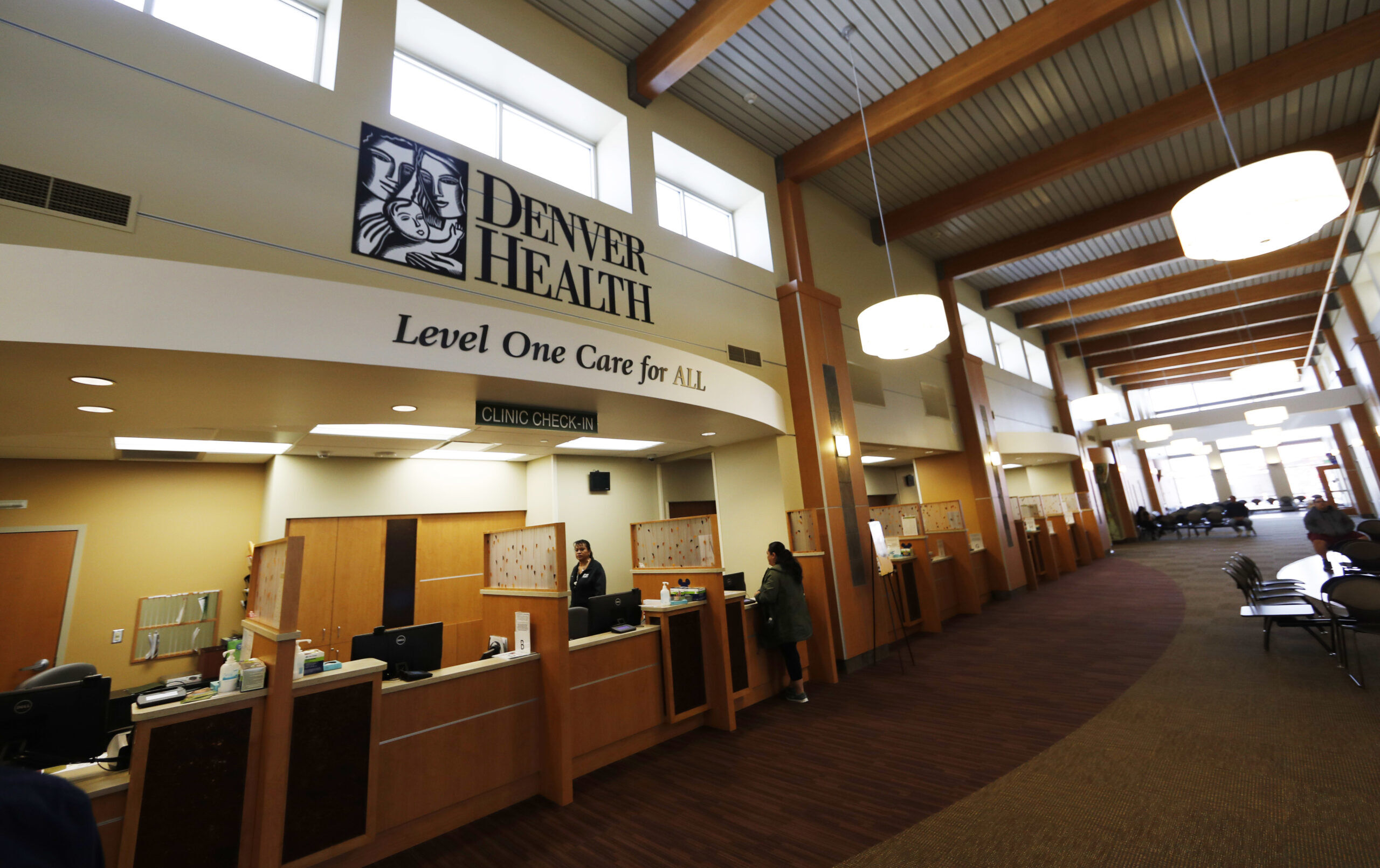
Colorado’s potentially affected hospitals span the Front Range and rural communities, from Denver Health — the region’s primary safety-net provider — to smaller hospitals in places like Leadville, Lamar and Fort Morgan, reflecting the mounting pressure across both urban and rural health systems
‘Mismanaging and overregulating’
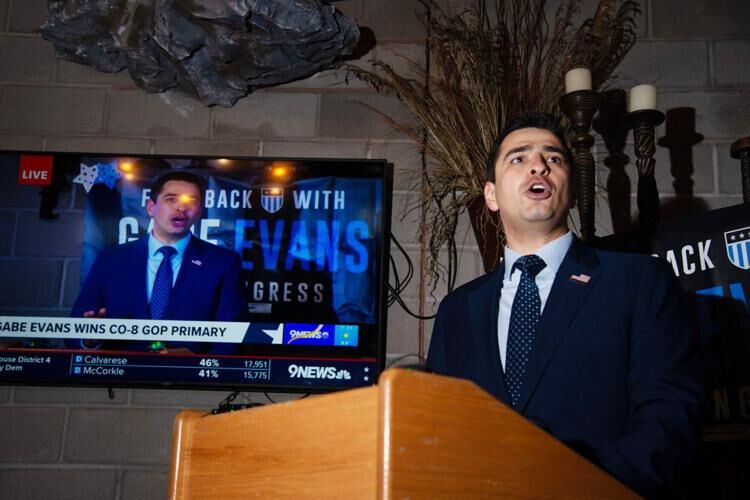
Republican U.S. Rep. Gabe Evans of Colorado’s 8th Congressional District said the reaction to H.R.1 has become an easy political escape hatch, especially for Democrats: blame President Donald Trump and Republicans for the healthcare crisis and ignore that the system’s problems long predate a single federal budget
“Democrats have run the state of Colorado since the 2018 elections, with the trifecta majority in the House, Senate and the governorship,” Evans said. “They have constitutional authority to fight back, but they continue to insist on mismanaging and overregulating these programs here.”
Evans pointed to data showing Colorado’s Medicaid spending has doubled over the past decade, from $8 billion in 2015 to $16 billion in 2025. However, the state’s enrollees in the program saw a minimal increase of around 7%, back to 2015 levels, meaning, Evans maintained, most of the money is spent on administrative costs and additional staffing
State‑approved regulations and expansion of services have also surged in recent years, driving many of the cost pressures now surfacing in the system. Evans pointed to a report from the Common Sense Institute noting that the state legislature has enacted 182 healthcare bills since 2019, adding an estimated $858 million in annual costs
The free-market think tank’s authors argued that the growth is largely the result of increasingly expansive regulatory and policy mandates, rather than enrollment trends or medical inflation alone
Conversely, while not commenting on the impact of increased costs to implement state-level regulations, Denver Health CEO Donna Lynne said during a June roundtable discussion that H.R.1 would saddle hospitals with new regulatory and administrative demands. Nearly half of Denver Health’s patients are on Medicaid, and the hospital has already hired 15 additional staff just to manage the paperwork required to come into compliance with the first phase of H.R. 1, she said
Lynne called the administrative requirements “wasted” money and time
Hospital executives: Colorado lost out on federal dollars
Others also pointed to hundreds of millions of dollars they said Colorado deliberately chose not to take advantage of
After years of losing out on those federal dollars, the state has been approved to tap a well-known Medicaid financing tool called state-directed payments, which is expected to bring more than $450 million to hospitals
Colorado did not pursue the financing tool until more recently, with hospital system executives earlier saying that decision had “set Colorado back.”
Colorado was relatively late to adopt the financing strategy, in part because the state had already built a hospital financing system through the Colorado Healthcare Affordability and Sustainability Enterprise or CHASE
The program generates, on average, $450 million annually and has helped increase Medicaid hospital reimbursement from 54 cents to 79 cents for every dollar of care provided, according to a state report

In a forum earlier this year, Alec Garnett, a former state House speaker and now the vice president for government and regulatory affairs for UCHealth, sharply criticized the state for not immediately pursuing state-directed payments
Garnett added: “If we had done that, like all these other states have done … we would not be in the budget situation that we are now.”
Medicaid drives system freefall
Colorado’s hospital finances have been deteriorating for years, and the numbers show how quickly the ground has given way
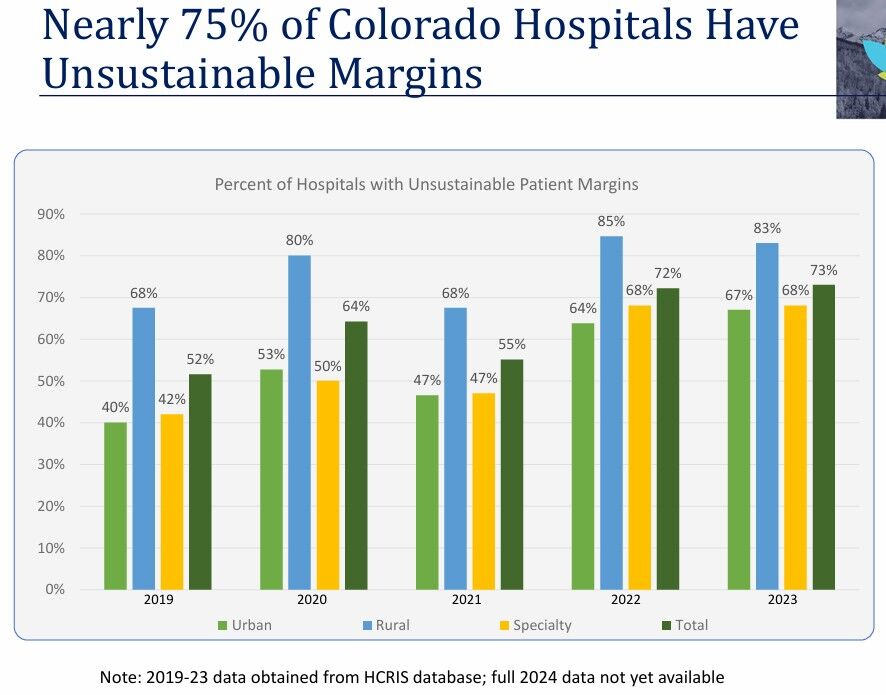
Nearly 75% of hospitals ended 2024 with margins the Colorado Hospital Association considers unsustainable, as operating costs rose faster than revenue. The same trend has continued in 2025 — and in 2026. With Medicare and Medicaid accounting for roughly 60% of the patient mix, Colorado hospitals say they are routinely reimbursed below the actual cost of care, a gap that has widened steadily over the last decade
According to the Colorado Department of Health Care Policy and Financing, the state’s Medicaid program currently provides care for 1.4 million, an average of one in four residents. In 2024, Medicaid paid for 34.9% of Colorado live births, according to the March of Dimes
Critics argue that Medicaid spending should not consume a bigger and bigger share of state and federal budgets — because that crowds out funding for other priorities, such as infrastructure or education. Additionally, they said expanding the program to able-bodied citizens means using finite fiscal and medical reries, such as low-income children, the elderly and people with disabilities
Hospitals receive about 67 cents for every dollar spent caring for Medicaid patients, down from 80 cents five years ago and 85 cents a decade ago. CHA estimated the Medicaid shortfall was about $1.2 billion in 2015; by 2025, it had grown to roughly $2 billion
These financial strains were already in motion long before the federal budget fight
After H.R.1 — the bill that Trump dubbed the One Big Beautiful Bill — passed, U.S. Sen. John Hickenlooper and his Democratic colleagues cited one projection that an estimated 240,000 Colorado residents would lose medical coverage over the next decade, with major impacts starting in 2027
Evans countered that Colorado’s own bureaucracy has long been a barrier, citing hundreds of thousands of people who were dropped from Medicaid due to state mismanagement
Colorado Gov. Jared Polis noted that Medicaid is entirely a federal program, and while states administer it, it’s federally regulated
“Our flexibility is extremely limited,” he said. “We drive efficiency where we can, but we don’t control those programs from the ground up.”
As lawmakers and others argue and point fingers, Delta Health COO Nicholas Colleran said the Delta hospital serves a population of 32,000 and has been operating at a 9% negative margin, adding that changes to qualify for Medicaid assistance will compound the problems
Colleran, however, said the area’s population demographics are shifting toward older residents. Medicare pays slightly better at 72 cents per dollar, though Colorado’s aging population adds pressure to that side of the ledger, as well
Rural health funds added
As hospitals brace for deeper Medicaid cuts, federal officials point to new rural‑health funding as one
Evans said H.R.1 created grants aimed at the most vulnerable facilities, with Colorado’s rural hospitals expected to receive about $200 million a year for the next decade under the Rural Health Transformation Program — roughly $160 million after administrative costs
State officials began mapping out how to use the money late last month. Programs can apply for grants through November, with awards expected by year’s end
Cristen Bates, deputy Medicaid director, said the funding comes with strict limits — it can support only new operations or innovations and only rural‑designated providers qualify
Hospital leaders said the money helps but won’t solve the underlying financial pressures
Joseph Theine, CEO of Southwest Health System in Cortez, said the grants will provide an “infusion of money back into communities,” noting he is glad to have that support
Still, a hospital’s fixed costs are the immovable problem: they stay the same no matter how many patients show up. Whether the ER treats 60 people or half that, Theine said hospitals still have to keep full staffing, services and equipment ready. At Southwest Health System, that means a daily operating cost of $213,000 — even if no patients walk through the door or 100 do
Southwest Health has stayed afloat partly because local voters made a sales‑tax increase permanent, helping the hospital post positive margins the past two years. But Theine said finances had already begun slipping in early 2026, with operating losses emerging
Other rural leaders say the federal support is far from enough
Lincoln Health Community Hospital CEO Kevin Stansbury said the $50 billion rural‑health fund falls well short of the roughly $150 billion in projected nationwide Medicaid‑related losses. He warned that the cuts will ripple through rural economies, where hospitals are often major employers
Several providers at a June roundtable said they hope Congress revises H.R.1 or delays its implementation
As hospitals warn of mounting strain, Polis argued they share responsibility for rising costs
The governor pointed to cases where families receive bills of hundreds or thousands of dollars for minor ER visits or co-pays set by insurance companies, even charges of $2,000 for basic items like Tylenol and a Band‑Aid. Polis called the system “inefficient and costly” and said an overhaul is needed
He noted Colorado has enacted transparency laws requiring itemized bills and has pursued lower drug prices, including partnerships with Canada
In response, Theine said he welcomes Polis and other elected officials to visit rural hospitals and see firsthand how pricing is determined by the formulas they must use based on government programs and insurance company repayment rates
Colorado’s healthcare woes predated federal changes
Colorado Democratic U.S. Rep. Brittany Pettersen argued that healthcare cuts in the federal budget are “deeply concerning” because the real impacts are going to show more in 2027, when she believes rural hospitals will suffer the brunt of the cuts due to added requirements to continue qualifying for government-assisted healthcare programs
“This is going to be a cascading impact,” she said. “It’s absolutely essential that we start flashing red lights about what is happening. People already don’t feel like the healthcare system is working for them, but it is going to get so much worse.”
Theine said a third‑party analysis for Southwest Hospital in Cortez estimated the facility could lose just over $9 million a year over the next decade. He emphasized that the hospital will keep reviewing its operations, make adjustments as needed, continue serving the community and remain transparent with the residents it serves
Josh Hannes, vice president of rural policy and strategy for the Colorado Hospital Association, said the warning signs are impossible to ignore — public payers are raising their rates far more slowly than the actual cost of care and the gap keeps widening as Medicare and Medicaid populations grow
Conditions that will only worsen, he insisted, under H.R.1. The federal budget is expected to trigger major reductions in Medicaid reimbursements to states, leaving state budgets with deep shortfalls
In fact, Colorado entered the H.R.1 era already underwater
The state’s overall budget had logged back‑to‑back deficits exceeding $1 billion in 2025 and 2026, and fiscal analysts have warned that 2027 would not bring meaningful relief. These deficits required even further cuts to the state’s healthcare system
The result, Hannes warned, is that hospitals and medical providers will face increasingly painful decisions: closures, program cutbacks or the elimination of services altogether. His message is blunt — cutting provider rates will further weaken the very system needed to care for the patients those programs are supposed to cover
Given the unknowns of 2027, Colleran said that at Delta hospitals can only plan and prepare as best they can
“Hospitals right now are just trying to build up their finances, build up cash, because they know in 2027, it’s really scary what could happen,” he said. “They know that the Medicaid changes are a huge fear.”
As part of the preparations, Delta has already eliminated its labor and delivery unit and invested in artificial intelligence technology to get ahead of a possible decline in payments from insurance companies due to incorrect paperwork or coding

Affordable Care Act prices also rise
Premiums on Affordable Care Act plans have also been rising and they are expected to climb again. A KFF analysis shows insurers have proposed a median increase of about 14% for 2027, on top of more than a 20% jump in 2026. Insurers cite rising medical costs, higher spending on specialty drugs and the phase‑out of enhanced premium subsidies as the main drivers
Democrats had pitched ACA, commonly known as Obamacare, as the antidote to many of America’s healthcare woes. They said it would insure large swaths of people and bring healthcare costs down — “bend the cost curve down,” as President Barack Obama once put it. The former president also said Obamacare would cut premiums by thousands of dollars
Instead, critics said, premiums kept rising, options on the ACA marketplace dwindled and the cost curve hasn’t bent down
In Colorado, Connect for Health Colorado, the state’s ACA marketplace, had just over 282,000 enrolledin 2025, a 19% increase from 2024. In 2026, enrollment saw a 2% decrease at 277,000
According to the Colorado Health Access Survey, the state’s uninsured rate is around 5.9%
Colorado Democratic state Rep. Manny Rutinel said the cost of enrolling in the ACA “is getting out of control,” noting that a Colorado family of four that once paid roughly $500 a month over a year ago is now facing premiums exceeding $2,000 for the state’s insurance marketplace options
As more people lose Medicaid in 2027, Rutinel said, they will also be unable to afford the rising costs of Obamacare, leaving them with very few options for care
Rutinel, who is challenging incumbent Evans for the competitive 8th Congressional District seat in November, said ongoing cuts to services and tax credits will only deepen the strain on working‑class families
Evans said finding real solutions that stick is hard because Democrats refuse to even come to the table to find answers and compromise
Meanwhile, Polis said the end result for families in Colorado will be “no federal fix.”
“Frankly, there’s only chaos coming federally,” he said
Nico Brambila and The Associated Press contributed to this article
TagsH R 1Healthcare Freefalllocalmedicaidnewsobamacaretop story
Thelma Grimes
Reporter
