


Infrastructure
Hungary puts EV charging on a power diet
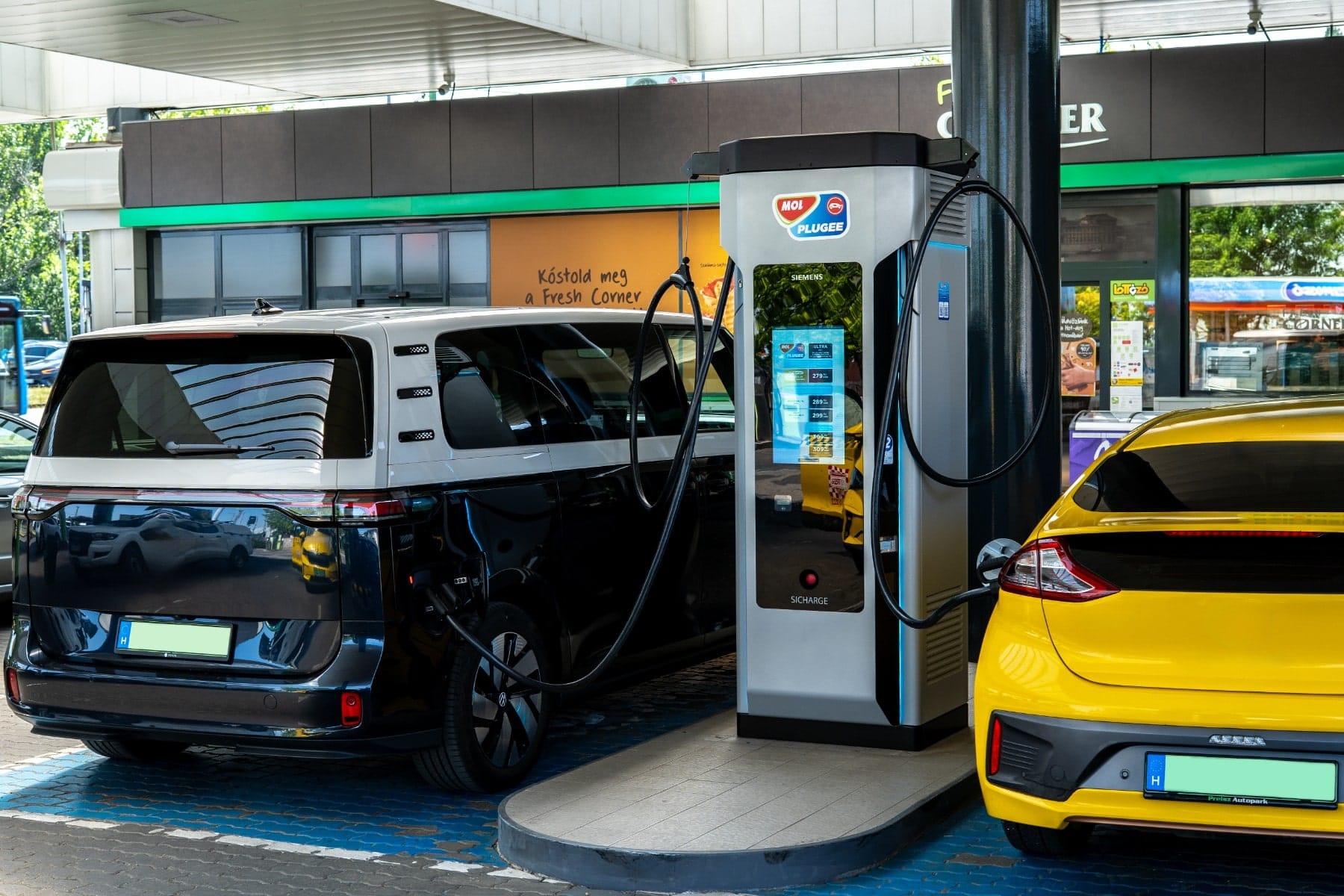
Several charging network operators in Hungary are temporarily restricting their charging services due to high nationwide strain on the power grid. MOL, E.ON, and Shell are reducing the power of their fast chargers during the evening hours, while other providers are opting for higher prices – or temporarily switching off charging points entirely
In Hungary, the recent heatwave and drought have had direct consequences for EV drivers. The country’s only nuclear power plant in Paks is currently operating at a fraction of its capacity due to a lack of cooling water from the Danube. As a result, efforts are being made to reduce electricity consumption, particularly during evening peak times
Against this backdrop, several charging network operators have introduced measures to mitigate peak load between 17:00 and 22:00, when the use of air conditioning drives the country’s electricity consumption to exceptionally high levels. Since the beginning of August, MOL has limited the power output of its MOL Plugee fast chargers – typically rated at least 150 kW – to a maximum of 100 kW during this period. The energy group had previously closed its own car washes and urged its franchise partners to take similar steps. E.ON Drive Infrastructure Hungary has reduced the available power at its fast-charging sites (300 kW and above) by 50 per cent during the same period since 3 August, a move the company says frees up to 10 Mw of grid capacity.
Shell Recharge has taken a more drastic approach by implementing restrictions an hour earlier: since 5 August, the power output of fast chargers at Shell filling stations has been capped at 150 kW per charging station between 16:00 and 22:00. Charging points at Tesco car parks have been temporarily shut down entirely. Meanwhile, Metro has deactivated its charging stations at all its stores
Higher electricity prices lead to shift in charging times
EV.app, operated by EV.analytica, has adopted a financial approach. Instead of reducing charging power, the service uses a clear price signal: for charging sessions initiated during evening peak hours, EV.app temporarily charges 420 forints (approximately €1.16) p/kWh to encourage drivers to shift their charging times
This makes charging infrastructure a short-term tool for grid load management. While the concept of high-power charging sites dynamically adjusting their output to available grid capacity is nothing new, in Hungary, multiple operators are now applying this principle in response to exceptional grid strain
For EV drivers, this initially means longer charging times, higher costs, or simply charging points that are unavailable for several hours. At the same time, the situation vividly illustrates the direction in which a more electrified energy and transport system is evolving: not every kilowatt-hour can be delivered at maximum power at all times
Or, put less technically: when air conditioning, the power grid, and EVs all demand energy urgently at the same time, someone must compromise. In Hungary, it is currently the car. For its owners, this is naturally frustrating. For everyone else, it is the far more comfortable alternative to a grid that would otherwise risk failing entirely
Tags
Also read
Infrastructure
Fastned’s revenue grows – but so does its debt
published 5 hours ago
Infrastructure
BCP to install more than 500 on-street EV chargers
published 10 hours ago

Infrastructure
Togg integrates Electroverse into its Trumore app
12.08.2026
