


Important Steps You Can Take to Protect Brain Health as You Age
04:18
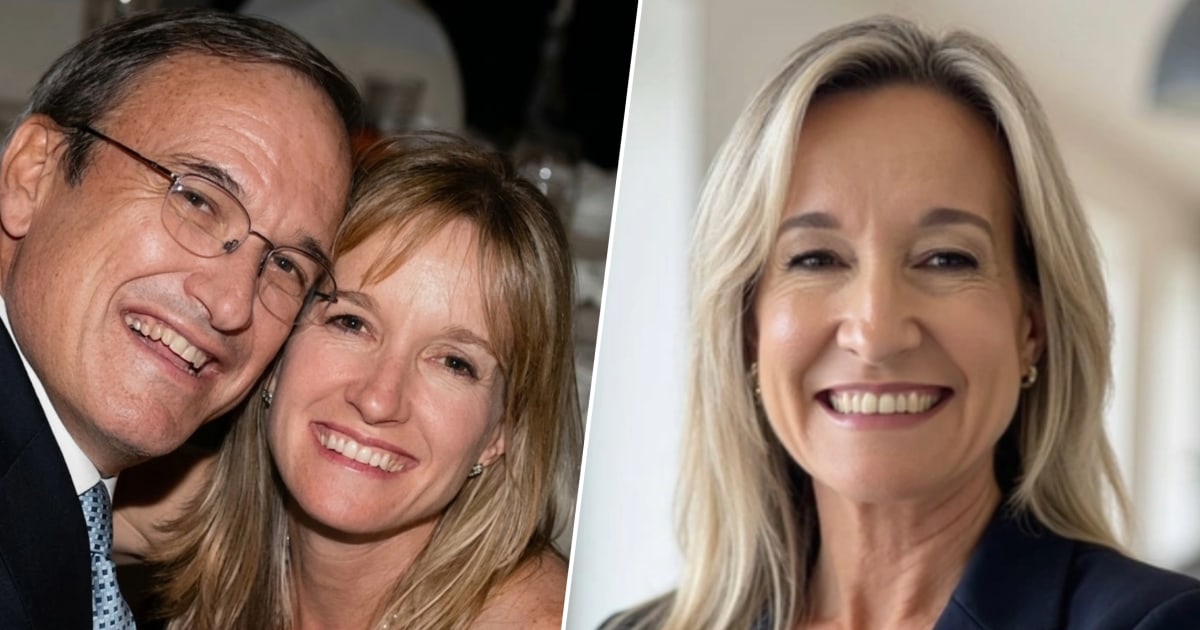
Years before Elena Castellanos, 57, learned about her own risk for Alzheimer’s, she had first-hand experience with the disease
Her father was diagnosed with Alzheimer’s at the age of 68, Castellanos, director of enrollment management at an independent school and a mom of three in Miami, Florida, tells TODAY.com
“My dad and I were very, very close,” she says, “and as the Alzheimer’s continued to progress, I would meet him at least once a week at 6 a.m. at a local deli here for breakfast.”
Although she knew Alzheimer’s meant her father would forget things, she wasn’t sure what exactly to expect since the condition, to her, seemed much less talked about than cancer, for example
She quickly learned how many unknowns are involved in an Alzheimer’s diagnosis. “There’s no timeline. You can progress very quickly or not,” she says, “and living through that with our family was very difficult.”
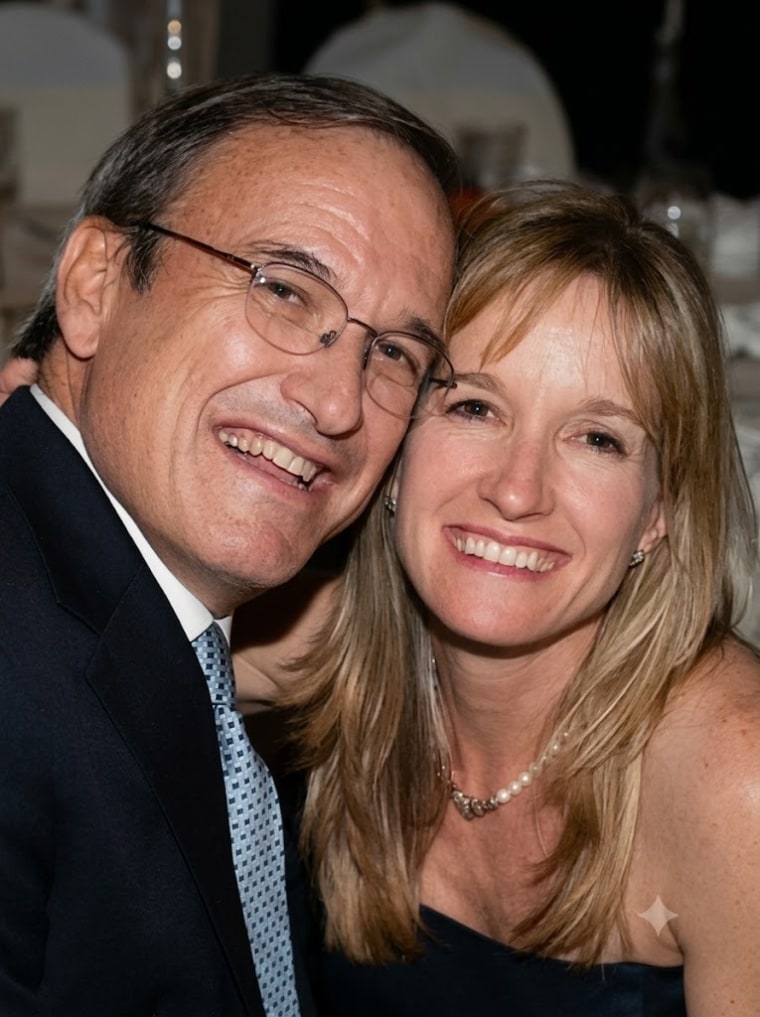
As his disease progressed, “he became a shell of the person that he was, and it was very, very sad,” Castellanos recalls, adding that her mother was his primary caregiver during that time
Her father passed away in 2020, leaving Castellanos to wonder about her own Alzheimer’s risks. In 2024, she took a test and learned that she has a specific and relatively rare genetic risk factor for Alzheimer’s: two copies of a gene called APOE e4
“I just looked at my husband and said, ‘Oh s–t,’” she recalls. “It’s such a scary feeling to see that and to know that there’s not a cure.”
But today, things look very different for her. She’s made major lifestyle changes to support her long-term brain health and wants to be a
“Your genes are not your destiny,” she says. “We can make choices that can really improve our lives and make a big difference.”
A Rare Genetic Risk for Alzheimer’s
The type of genetic risk that Castellanos has is related to the gene that encodes apolipoprotein E, a protein that’s responsible for transporting cholesterol in the blood, Dr. Kellyann Niotis, a preventive neurologist and director of Parkinson’s and Lewy body dementia research at the Institute for Neurodegenerative Diseases, tells TODAY.com
There are three different versions of this gene: APOE e2, APOE e3 and APOE e4. “You get one from your mom and one from your dad, and that makes up somebody’s genotype,” says Niotis, who is also treating Castellanos
The version that Castellanos has is APOE e4, which has been linked to an increased risk for Alzheimer’s disease later in life, the National Institutes of Health explained previously, and is the strongest known genetic risk for the condition
“The APOE e4 variant of this gene is inefficient at transporting cholesterol, so cholesterol gets stuck in places it shouldn’t be,” Niotis says
That leads to plaque buildup in arteries, increasing the risks for strokes and heart attacks. “When cholesterol gets stuck in certain brain cells, it’s toxic,” Niotis explains. “The brain cells can start to die, and that’s part of what contributes to Alzheimer’s disease.”
There’s also emerging research suggesting that this gene may be involved inflammatory processes in the brain, as well as how well the brain clears the hallmark toxic proteins (amyloid and tau) that can contribute to dementia and Alzheimer’s, Niotis says
Specifically, Castellanos has two copies of the APOE e4 gene. While it’s not particularly uncommon to have one copy of the APOE e4 gene, it is rare to have two copies, Niotis says. It’s estimated that about 25% of people have one copy, but only 2-3% have two copies
Recently, more people learned about the link between APOE e4 and Alzheimer’s when actor Chris Hemsworth spoke about having two copies in 2022, Niotis says
Having a single copy can double or triple your risk for Alzheimer’s. And having two copies — inheriting a copy of APOE e4 from both your mom and dad — raises the risk for Alzheimer’s by about 10- to 15-fold. But, even with this genetic risk, it’s not a guarantee that someone will develop a neurodegenerative condition
Lifestyle Changes to Support Brain Health
After learning about her genetic risk, Castellanos met with Niotis in March of 2025 to understand what she could do to preserve her brain health — and, hopefully, prevent Alzheimer’s
The field of preventive neurology is still in its early stages, Niotis says, and Castellanos is taking part in some of Niotis’ research to advance the field
Patients like Castellanos typically receive regular lab work (including tests to look for tau and amyloid proteins in the blood), cognitive tests and annual brain imaging to track progress, Niotis says
Additionally, Niotis says, the focus in her practice is on the modifiable risk factors, particularly the 14 risk factors that experts have identified for preventing dementia. That includes things like physical activity, smoking, alcohol consumption, air pollution and social isolation
However, the tests and appointments can be expensive, and insurance doesn’t cover everything, Castellanos says. In particular, the bloodwork can be very costly, in the range of $900 to $2,000 per test, Niotis says. But insurance often does cover the other tests and treatments Niotis provides for other conditions related to brain health, such as sleep apnea or high cholesterol. (You can also see a primary care provider for these conditions.)
Niotis also recommends patients check out Retain Your Brain, a free app funded by the National Institutes of Health, which provides personalized healthy lifestyle tips to maintain brain health
Castellanos has been able to make some major lifestyle changes, but some were easier than others, she says
Here are the changes she leans on most:
Healthy Food Choices
A healthy diet is one of the foundations of Castellanos’ routine now. “I’m really focused on the Mediterranean diet,” she says. “I eat high-quality olive oil, lots of berries in my breakfast and lots of greens and vegetables.”
Because she’s also prioritizing heart health right now, Castellanos tries to eat a lot of omega-3s from wild salmon and ground flaxseeds. She also now takes medications to help manage her cholesterol levels
Her go-to morning smoothie includes 2 tablespoons of ground flaxseeds along with supplements like whey protein powder, creatine and cocoa flavonols. “I literally chug that,” she says. “It’s delicious and chocolatey.”
A Varied Exercise Routine
Regular physical activity is a great way to support your overall health. And learning new skills is an effective strategy to keep your brain in top shape as you age, as TODAY.com explained previously
That’s exactly what Castellanos does with her new workout regimen, which includes a wide variety of movement types
She’s working on building muscle strength through resistance training, as well as HIIT, jump rope routines, step classes and rowing
“How you move tells us a lot about how your brain is functioning, and exercise is a huge lever to pull when thinking about ways to reduce risk,” Niotis says. “It’s probably the No. 1 thing someone can do to protect their brain.”
Making Good Sleep a Priority
Getting good sleep consistently has been a challenge for Castellanos, partly due to her sleep apnea. Being able to get that under control was a major step forward, Niotis says
She now uses nasal strips and sleeps with her head slightly elevated thanks to a special mattress. Castellanos is also careful to maintain a consistent bedtime routine, which includes limiting screen time at least an hour before bed, as well as waking up and going to sleep at about the same time every day
“I use an eye mask as well and try to get morning sunlight to set my circadian rhythm,” she says
Cutting Out Alcohol
Castellanos cut out alcohol completely, which she describes as “the most challenging thing that I did.”
But she was motivated to do so because she knew that, while alcohol isn’t healthy for anyone, it’s “especially toxic” for those with the APOE e4 gene, she says
Keeping Up With Doctor’s Appointments
While Castellanos didn’t always stay on top of her annual medical appointments in the past, now she is committed to doing so. That includes dentist appointments, eye appointments and hearing tests. She’s now a dedicated flosser, she says, a habit that research has tied to reduced risk of dementia
‘Remarkable Progress’
Working with Niotis over the past year, Castellanos has improved her brain health based on certain brain blood biomarkers
“The most impressive is actually her glial fibrillary acidic protein level, which is a marker of inflammation in the brain,” Niotis says. “In just one year, this decreased by nearly 32%.”
Her amyloid protein numbers also improved by 20%, and an early marker of tau protein improved by 29%. “This is really remarkable progress over one year,” Niotis says
The best way to think about these numbers is something akin to cholesterol numbers, Niotis says. While high cholesterol levels increase the risk for a heart attack, they don’t alone guarantee one. The same is true for these biomarkers: They can predict risk for a disease like Alzheimer’s, but having abnormal levels doesn’t mean you’ll definitely develop the condition
And similar to the way lowering cholesterol reduces your heart attack risk, Niotis says, it’s “likely true” that reducing these biomarkers will also reduce your risk for neurodegenerative diseases
In addition to her brain health progress, Castellanos says her cholesterol numbers have improved, and she recently put on a pound of muscle. Beyond that, she’s regained a sense of hope and control over a future that once felt terrifying, which she wants to share with others who may find themselves in a similar situation
“Going public with this was scary at the beginning because it’s almost like a stigma,” she says. She used to worry that, if friends and co-workers found out about her genetic risk, they would monitor her every move for signs that she might be developing Alzheimer’s
But now, reflecting on her work with Niotis and her faith, “I’ve found purpose in adversity,” she says. “And I would love to be a
