


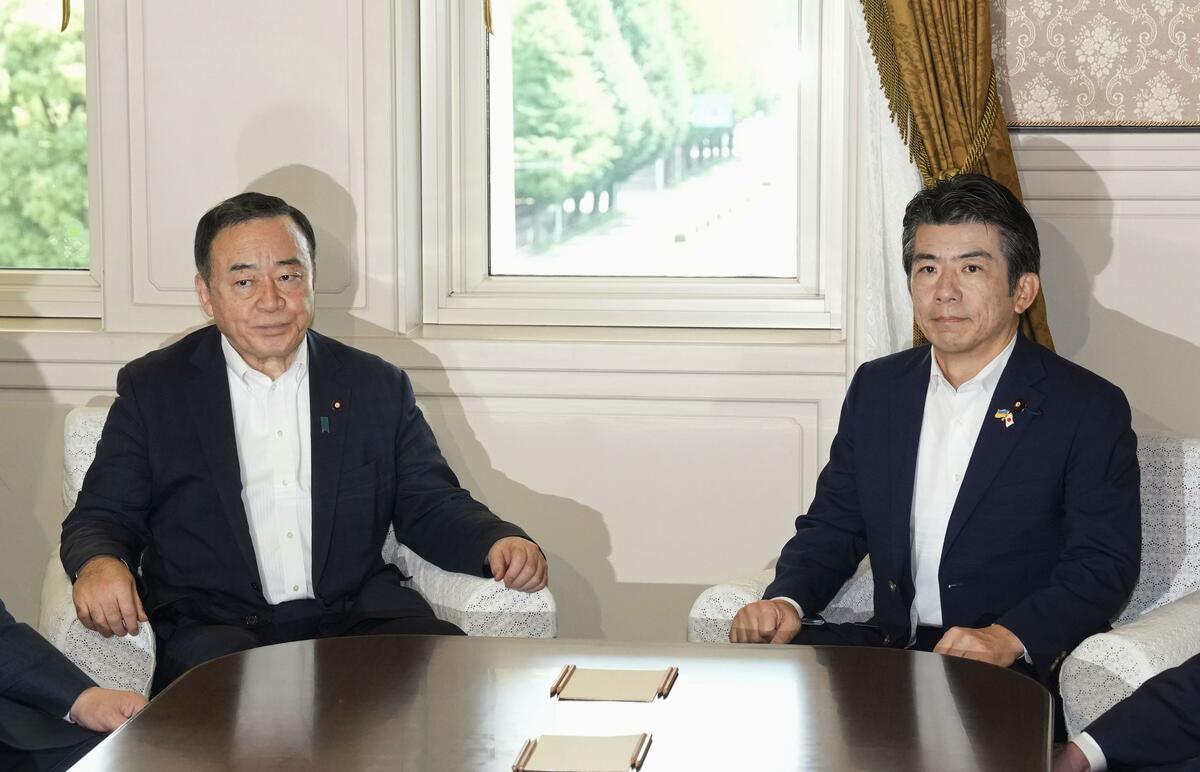
Japan’s ruling Liberal Democratic Party will give up enacting a bill to reduce the number of House of Representatives seats during the ongoing parliamentary session scheduled to end next week, a senior opposition lawmaker who met his LDP counterpart said Wednesday
Kazuhiko Shigetoku, Diet affairs committee head of the Centrist Reform Alliance, told reporters that Hiroshi Kajiyama of the LDP conveyed the party’s intention regarding the bill, which was submitted by the LDP and its junior coalition partner the Japan Innovation Party and has triggered backlash from opposition forces
Instead, Kajiyama sought the opposition bloc’s cooperation for parliamentary debates on bills to set up a “second capital” to back up Tokyo and to revise the law to tackle the dwindling number of imperial family members, both of which the ruling bloc aims to enact before the current session ends on July 17, Shigetoku said
Meanwhile, Kajiyama did not promise to hold an intensive deliberation attended by Prime Minister Sanae Takaichi, the LDP chief, which the opposition bloc called for, just promising “best efforts,” amid allegations that her camp reportedly made online videos smearing her political opponents
Parliament has been gridlocked as the CRA, the main opposition in the lower house, and some other parties have refused to discuss the two bills to decrease lower house members and establish a backup capital until the LDP and JIP retract them
The opposition forces have sought the intensive deliberation and debate sessions between their leaders and Takaichi, demanding she be held accountable over the issue of defamatory videos targeting rival candidates in the LDP’s presidential race last October
The seat-cut bill would automatically eliminate 45 out of 176 proportional representation seats in the 465-member lower chamber if no specific agreement on reducing the seats can be reached in parliament within a year of its implementation
The proposed legislation could favor the ruling bloc over the opposition camp as it does not target 289 single-seat districts of the more powerful lower house, most of which the ruling parties occupy
With Takaichi’s high popularity, the ruling bloc won a landslide victory in a general election in February, securing more than three-quarters of the lower house seats, well above the two-thirds threshold required to override the House of Councillors when pushing through bills
The enactment of the two bills was pledged in the coalition agreement signed on Oct. 20 between the LDP and the Osaka-based JIP, which intends to reorganize the western Japan city into a metropolis like Tokyo by introducing special wards
Forming the coalition largely helped Takaichi win a parliamentary vote to elect prime minister the following day
On Tuesday, Takaichi and JIP leader Hirofumi Yoshimura met in Tokyo to discuss parliamentary affairs. They told reporters after the talks that they did not bring up an extension of the current session to secure enough time for Diet deliberations to pass the key bills
Related coverage:
