


When the world’s at stake, go beyond the headlines
National security. For insiders. By insiders
National security. For insiders. By insiders
Join War on the Rocks and gain access to content trusted by policymakers, military leaders, and strategic thinkers worldwide
BECOME A MEMBER
BECOME A MEMBER
Mental Health Is a Warfighting Readiness Problem for the U.S. Navy
Heath “Hank” Brightman
August 21, 2026
Commentary
Mental Health Is a Warfighting Readiness Problem for the U.S. Navy
#Military Personnel Policy#Navy#Readiness and Training
Heath “Hank” Brightman
August 21, 2026
“You cannot be at mental peace always. You will be worried. So even my family — they are scared all the time, and they were anxiously praying [for] the vessel [to] come out of this area safely.” While Captain Chirag operates a commercial cargo vessel in the Red Sea, his comments in the aftermath of the October 7, 2023 attacks in the Middle East could just as easily be attributed to the hard-charging crew of the guided-missile destroyer USS Carney and other surface combatants fighting Houthi threats, or the experiences of the sailors assigned to Carrier Strike Group Three engaging in sustained tactical operations as part of Operation Epic Fury.
For many sailors (and embarked marines), pre-deployment stress yields mental health challenges that become more pronounced while underway. Indeed, long before sailors arrive on station in a combat theater, there is a robust need for comprehensive resilience support for pre-deploying members. These essential capabilities remain elusive in homeport due to scarcity of providers and likely contribute adversely to sailor health and wellness during deployment, which in turn negatively impacts operational readiness.
The Navy’s decision to redeploy the USS Abraham Lincoln following a purported sailor’s deliberate attempt to go overboard underscores assertions that sailors continue “struggling with exhaustion and declining morale, including reports of suicidal thoughts.” These are detriments to crew efficacy that should have been resourced by mental health professionals both prior to deployment as well as with a more comprehensive shipboard capability. Considered within the context of tactical warfighting in the Red Sea (Operation Prosperity Guardian) or at the operational level of war (Operation Epic Fury), the dearth of mental health resources pre- and post-deployment are troubling. Viewed through the broader strategic aperture of large-scale combat operations against China, they are terrifying.
To mitigate this cycle of vulnerability, this article recommends the U.S. Navy tailor solutions to each specific phase of the deployment cycle (i.e., pre-deployment, at-sea support, and post-deployment in homeport). Specifically, the Navy engaged in a dual-track approach focused on shore-based issues (pre- and post-deployment) and at-sea resilience
Track one would start by working with the Department of Defense to remove the Military OneSource policy restriction that currently precludes qualified clinicians from engaging in trauma recovery techniques with clients. Removing this unnecessary restriction will almost immediately achieve expansion of shore-based preventative care. An additional facet of this first track will be to develop a pilot program in which university grants are linked to localized counselor accreditation shortages, allowing for future expansion of a long-term TRICARE provider pipeline ashore.
Lastly, and perhaps most ambitiously, the second track proposes creating a civilian disaster resilience auxiliary corps. This corps would directly reinforce critically understaffed “triads of care” at sea when the Navy is engaged in national-level, major combat operations. By clearly bifurcating shore-based pre- and post-deployment preventive resilience from underway crisis response, the Navy can begin to systematically patch the cracks in the foundry through which its sailors are currently falling.
BECOME A MEMBER
Shore-Based Bottlenecks
Chief of Naval Operations Adm. Daryl Caudle has prioritized fostering greater sailor resilience in his fighting instructions as a foundry-level issue, emphasizing that the U.S. Navy should “cultivate an environment in which sailors have a strong sense of connectedness and can approach their leadership during times of stress.” Ashore, the U.S. Navy relies on a three-tiered system focused on support via chaplains and military and family life counselors (green tier); fleet and family support centers, independent duty corpsmen, and primary care managers (yellow tier); and immediate care providers such as emergency room physicians, medical treatment facilities, and embedded mental health units (red tier).
Unfortunately, while in homeport, there are policy restrictions on the level of care that a member can receive that counter Caudle’s focus on ensuring mental health remains a foundry-level issue. For example, Military OneSource providers are prohibited from engaging in trauma work with prospective clients, and most clients are referred subsequently to TRICARE providers. This OneSource challenge also impacts Reserve following individual augmentation, particularly when they fall into the vacuum between detaching as an active component member, being returned to a Selected Reserve (i.e., drilling) status, becoming eligible for Veterans Affairs healthcare, or seeking transitional TRICARE coverage.
According to Star Behavioral Health Providers, approximately 60 percent of TRICARE-eligible therapists consist of licensed independent clinical social workers. About 2,100 of them are registered with Star Behavioral Health Providers, meaning they have achieved a significant level of exposure to the challenges sailors and other military members and their families experience throughout the deployment cycle. The remaining 40 percent (i.e., approximately 1,140 clinicians) within this same cohort consists largely of licensed professional clinical counselors, licensed mental health counselors, licensed marriage and family therapists, and other mental health experts. The number of licensed professional mental health clinicians continues to grow at a far faster pace than social workers. Specifically, employment of mental health counselors is projected to grow 17 percent from 2024 to 2034, and employment of social workers is projected to grow 6 percent during that same period, according to the U.S. Bureau of Labor Statistics.
Unfortunately, not all professionals are able to support military members seeking support with pre- or post-deployment mental health assistance. Licensed social workers and similar occupations (e.g., clinical psychologists, psychiatric nurses) can fully meet TRICARE credentialing standards and are not subject to Council for Accreditation of Counseling and Related Educational Programs certification standards. The regulatory bottleneck falls squarely on the counselor pathway
However, mental health counselors are the most rapidly growing percentage of providers, as noted above, and many are barred from providing care due to an existing Department of Defense regulatory requirement that specifically states TRICARE providers must be graduates of clinical mental health programs certified by the Council for Accreditation of Counseling and Related Educational Programs. At present, there is a scarcity in the number of Counselor-accredited programs available to directly support U.S. Navy fleet concentration areas and a possible future fight against China. Norfolk, Virginia, graduates only 4.2 percent of accredited-eligible mental health licensure candidates; 3.7 percent for Mayport, Florida; 2.6 percent for San Diego, California; 1.3 percent for Puget Sound, Washington, and none in Hawaii as there are no active Counseling and Related Educational Program-certified curricula in the state.
This ashore model is unnecessarily overburdened and under-reved as a catalyst for the resilience challenges faced by the crew of the USS Abraham Lincoln
At-Sea Support Stretched Thin
Towards achieving his desired end state of foundry-level support for sailors and their mental health, Adm. Caudle has sought to expand the at-sea “triad of care.” The triad is composed of shipboard psychiatrists and psychologists (and other medical professionals including independent duty corpsmen), civilian deployed resilience counselors, such as social workers and accredited counseling-credentialed clinicians, and U.S. Navy chaplains and religious program specialists. Each member of this triad of care team remains embarked with the crew, including during combat operations. Specific to the deployed resilience counselors, the Navy has about 42 billets (i.e., about two for each amphibious ship and carrier in the U.S. fleet).
As of today, only two triads of care are currently underway in combat operations, supporting the USS Abraham Lincoln and USS George H.W. Bush (both in the Middle East). A third triad of care onboard the USS George Washington is transiting the Strait of Malacca to relieve the USS Abraham Lincoln. Despite Adm. Caudle’s stalwart efforts to generate more robust connectedness and foster a more trusting relationship where sailors feel secure in approaching leadership with their concerns over operational stress, recent incidents involving the USS Abraham Lincoln suggest that among the crew, “almost half complained that they were not receiving adequate help in coping with stress at sea.”
Even when viewed sanguinely, emergent concerns over crews’ mental health and issues of sustained resilience are troubling for America’s Navy, especially when considered in the context of asymmetric and lesser-tier state adversaries (Operation Prosperity Guardian and Operation Epic Fury, respectively). Although trauma has remained a part of the warfighting lexicon throughout American history (i.e., from soldier’s heart experienced in the American Civil War to shell shock in World War I and battle fatigue in World War II), the types and rates of combat exposure differ greatly in the Navy from other services within the Joint Force.
There are distinct contrasts between maritime close-proximity fighting (where one’s berthing is situated directly on the battlefield, contrasted with a rear area or support station), and shore-based tactical engagements. For example, issues of habitability (e.g., constant lack of sleep, continuous exposure to ambient light, etc.) are all factors adversely impacting a sailor’s readiness beyond their combat functions
Despite the short-term rush of adrenaline and cortisol produced when engaged in warfighting, continuous tactical actions are detrimental to the long-term health of service members. Indeed, neurobiological research suggests reduced abilities in executive functioning (i.e., loss of sustained focus, degraded decision-making, and inability to engage in long-term planning) correlate with combat trauma. Moreover, unless treated within six months following trauma exposure, degradation may persist for years.

Making Ready for War: Improving Resilience by Expanding Capabilities
When examined collectively, these factors suggest that the U.S. Navy lacks sufficient mental health and resilience infrastructure, both ashore and at-sea to meet its present foundry needs, a situation that will prove dire when faced with large-scale combat operations against a peer competitor such as China
There is no single silver bullet that wholly resolves the challenges to mental health and resilience that America’s fleet is currently facing (i.e., accreditation fixes cannot de-escalate an underway crisis, and shipboard response teams cannot retroactively fix the absence of pre-deployment mental health resources). Instead, solutions ought to be cleanly mapped to the specific shortages they solve. That said, considered within the context of enhancing warfighting readiness against China, I propose three readily implementable actions that should be considered immediately to improve shore-based and at-sea mental health support capabilities for America’s sailors. The first two recommendations focus on enhancing shore-based capabilities by broadening the pool of mental health clinicians available to support warfighters either prior to deployment or upon their return to homeport.
Specifically, I encourage the Department of Defense to remove the prohibition on Military OneSource clinicians who aspire to provide trauma support to service members in need of care (especially Navy Reserve members who are currently underserved). This will immediately expand access to mental health services for shore-based sailors by allowing mental health providers skilled in neurobiologically sound and evidence-based trauma techniques to support active duty and reserve members in need of these services. Moreover, based on the growth of clinical mental health programs (contrasted with social work programs (i.e., 17 percent compared with 6 percent, respectively)) and other mental health professions with lesser increases in capacity (e.g., clinical psychologists, psychiatric nurses), it behooves the Department of the Navy to take a strategic approach in providing incentive grants to institutions that can provide the support to sailors where it is needed most geographically.
Development of a pilot program where approximately $250,000 to $500,000 in support grants were provided to each university located in a major fleet concentration area would incentivize and expand availability of credentialed counseling and related educational programs. Doing so will ensure a larger percentage of those obtaining mental health graduate degrees will meet the requirements to serve as TRICARE providers. This is particularly important in Hawaii, where there are currently no certified mental health graduate counseling programs. By expanding accredited program availability, overall TRICARE provider capacity will be broadened in aggregate beyond this one professional track.
Expanding access to shore-based mental health re part of Caudle’s concerns by providing greater support for sailors at the foundry level. Indeed, whether America is truly capable of sustained warfighting requires a concerted effort to expand the number of sea-based deployed resilience counselors
Comparable to the Navy’s Inactive Ready Reserve and akin to the U.S. Air Force’s Civil Air Patrol (Title 10 U.S. Code, Section 9494), this approach would expand deployed resilience counselor capacity by creating a 250-member civilian auxiliary corps to support U.S. Naval forces afloat and while in homeport. This auxiliary corps, which could be operational in 18 to 24 months, would be comprised of experienced, patriotic civilian clinicians who are generally in the mid-to-latter part of their careers, as well as military retirees with mental health licenses.
The primary motivations for volunteers would be professional distinction or continuing education units focused on trauma. The program would leverage the existing infrastructure of the fleet and family support centers to host training and synchronization events. The structure would be comparable to the Inactive Ready Reserve’s existing Direct Commission Officer or Merchant Marine-style auxiliary structure, legally binding members to operational service during national emergencies. The model would leverage the skills of fully licensed, experienced civilian mental health practitioners who are willing to serve part-time.
During peacetime, members of the deployed resilience counselor auxiliary, in exchange for maintaining professional currency and training to a notional problem set (i.e., large-scale combat operations against China) would receive a small annual stipend (not to exceed $5,000 per year). Estimated startup costs for this auxiliary force of 250 members would be approximately $3.8 million per year, which, in addition to the stipend, would cover participation in the large-scale combat operations simulation (approximately $1.6 million) and travel and overhead ($1 million).
In the event of a national mobilization in support of major combat operations, these members would assume an active, uniformed auxiliary status and would be granted federal protections (comparable to Uniformed Services Employment and Reemployment Rights Act guarantees), ensuring professional job security while fulfilling their underway obligations as they augment the triad of care. Such an approach is not unprecedented. For example, the Department of the Navy recently introduced the Navy Reserve Innovation Unit as a means to “bridge the gap between the speed of commercial technology and the Fleet’s operational needs.” These units are staffed by Fortune 500-level executives who lend their industry prowess to “serve as a hands-on expert on a distributed, elite team.” Applying a similar construct for deployment resilience counselors would provide a legally protected, operationally ready, at-sea mechanism to enhance the operational wellness of sailors when a surge capability is required.
Combined with the shore-based enhancements discussed previously in this section, America has the opportunity with the aforementioned policy tweaks and minimal additional financial investment to enhance its most decisive advantage, “the United States Navy sailor … our most enduring strategic advantage, our primary weapon system, and the heartbeat of our world-class Navy,” and ensure it remains warfighting ready
Indeed, returning to Adm. Caudle’s remarks delivered just prior to the start of Operation Epic Fury:
There is no time to wait on this. So, as you’re onboard your ships, your installations, your air squadrons — whatever it might be — every single day, every ounce of energy needs to be in making sure that you’re ready to go into conflict
The ability to prepare U.S. naval forces today, at a deckplate level, for the resilience challenges that the large-scale combat operations against a peer-competitor will manifest cannot be overstated
BECOME A MEMBER
Heath “Hank” Brightman is a U.S. Naval War College director, full professor, endowed chair, licensed mental health counselor, and Navy Reserve Captain currently leading in his fifth command tour. As the foreign repatriations air/ground mission commander from 2023 to 2024 in Iraq and Syria during Operation Inherent Resolve, he earned the Bronze Star. He leverages 30 years of law enforcement, academic, and mental health expertise to advise senior leaders on strategic risk and humanitarian response.
The opinions and views expressed are those of the author(s) alone and do not necessarily represent those of the U.S. Government, U.S. Department of Defense, or its components, to include the Department of the Navy or the U.S. Naval War College
**Please note, as a matter of house style, War on the Rocks will not use a different name for the U.S. Department of Defense until and unless the name is changed by statute by the U.S. Congress
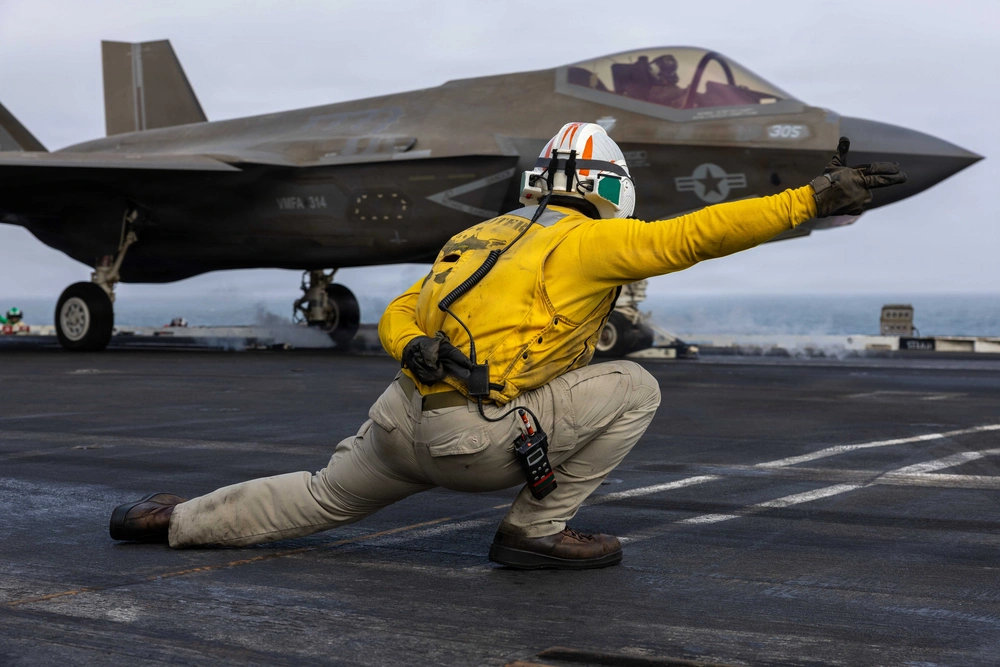
Image: NAVCENT Public Affairs via DVIDS

Get the Briefing from Those Who’ve Been There
Subscribe for sharp analysis and grounded insights from warriors, diplomats, and scholars.
