


What happens to the human body in space may help scientists create new anti-aging therapies
UCF Professor Michal Masternak and his team have identified molecular changes in the liver that happen when space travers experience radiation and microgravity. These changes – that resemble accelerated aging – provide new insight into how prolonged space missions may increase health risks for astronauts and reveal potential targets for therapies that could combat age-related diseases on Earth
“Just 24 hours after radiation exposure, there are many genetic changes in the liver that are remarkably similar to what happens during aging.”
“We focused on the liver because it is one of the major metabolic organs in our body,” says Masternak, leader of the College of Medicine’s aging and space medicine research efforts. “What we found was that just 24 hours after radiation exposure, there are many genetic changes in the liver that are remarkably similar to what happens during aging. We can assume that if someone were in space much longer, the damage could be much greater.”
The findings were recently published in GeroScience
Navigating the Science
For their study, UCF researchers and scientists from the U.S. created a simulated deep space environment in the lab. The team exposed animal models to simulated microgravity for 14 days and galactic cosmic radiation and solar particle events at NASA Space Radiation Laboratory trying to mimic the dosage that astronauts would be exposed to during a trip to Mars
The exposure triggered noticeable and potentially harmful changes in the liver, including increased cellular senescence (aging and decreased cell function), inflammation and fibrosis. Left untreated, these conditions can eventually lead to declining and even failing organ function
The research team then compared their results with data collected from astronaut blood samples taken during the NASA Twins Study and Inspiration4 astronauts. They saw similar genetic changes in blood
“We’ve got this raw data from human studies, and they show that some of these changes are similar,” Masternak says. “That tells us we’re identifying useful molecular targets that one day could help protect astronauts during long-duration space missions.”
They also went a step further to see whether the changes could be treated. They identified a group of molecules known as antagomirs that alter several aging and inflammatory genetic pathways by interacting with the body’s microRNA. This system could pinpoint promising future therapies for space travelers
Understanding Aging in the Space Age
Masternak says the nation’s growing space industry provides a unique opportunity to study aging at an accelerated pace
“Very often when we study different aging processes, it takes time,” he says. “Even in humans, it’s almost impossible because it would take decades. But if we see some acceleration of aging in space, then we can translate it to human studies. We can observe processes happening much faster, understand them better and eventually use that knowledge to improve health for people here on Earth.”
“If we see some acceleration of aging in space, then … we can observe processes happening much faster, understand them better and eventually use that knowledge to improve health for people here on Earth.”
Those discoveries could eventually lead to therapies that slow age-related diseases, preserve organ function and improve quality of life for everyone as they age
“Our understanding of aging is very complex,” Masternak says. “Aging isn’t simply wrinkles or cosmetic changes. It’s the gradual and cascading failure of multiple organs and biological systems that happen at the same time. By understanding what starts that process and where it happens, we have a better chance of preventing many diseases before they develop. That is one of the biggest outstanding questions.”
Students Positioned at the Forefront of Space Medicine
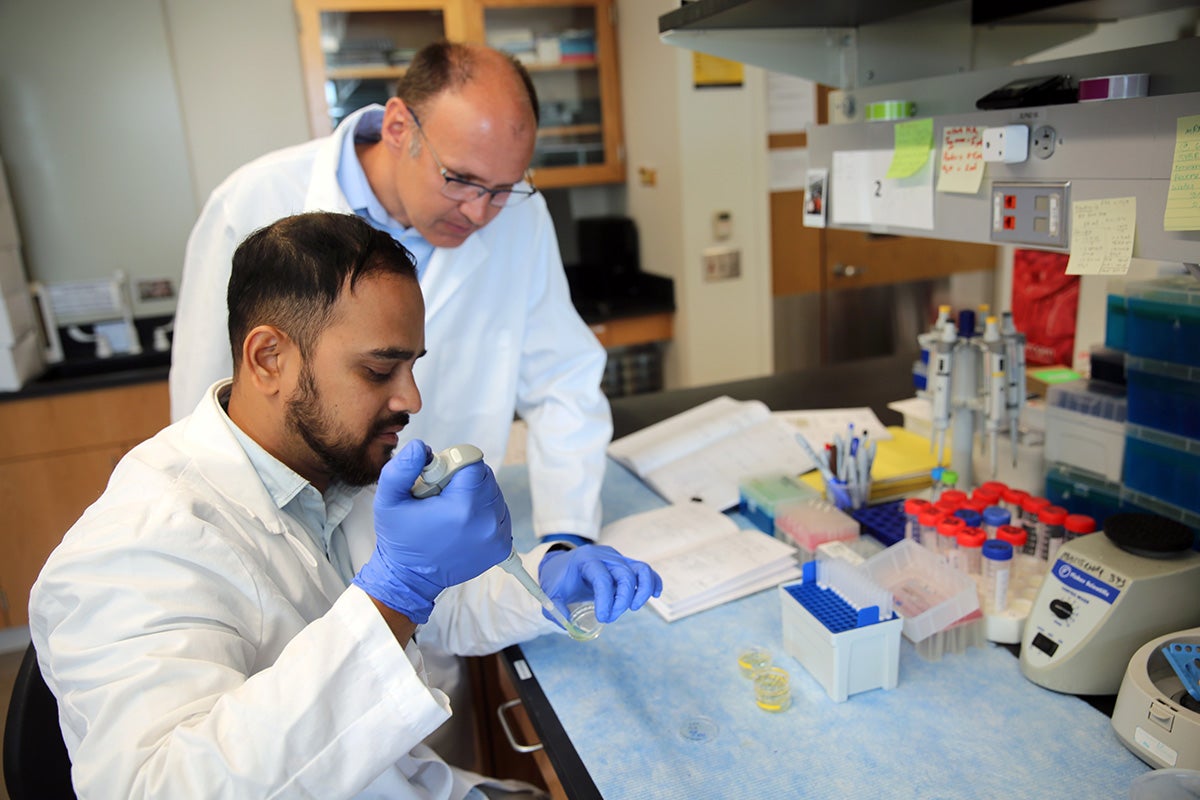
College of Medicine students are also benefitting from space medicine research. Biomedical sciences Ph.D. student Md Tanjim Alam ’25MS joined Masternak’s laboratory during his biotechnology master’s program after initially planning to study cancer in relation to aging biology. Then he was introduced to space medicine, including processing astronaut samples from commercial space travelers to study how extreme environments affect human biology. That research has inspired him
“I want to keep exploring the unknown,” Alam says. “I really want to understand how space travel influences human health, particularly its effects on aging and cancer.”
Biotechnology graduate student Sarah S. Siddiqi ’24 says the interdisciplinary nature of the research attracted her to the space medicine and aging lab
“When people think of aging, they think only about elderly populations,” says Siddiqi, who earned her bachelor’s degree as a Burnett Honors Scholar in biomedical sciences. “But we study aging across different stages of life and different environments, including space. I’ll always be focused on improving quality of life. I want to better understand diseases that are increasingly prevalent and find ways to recognize them earlier, before they progress to later stages.”
Funding and Disclosure:
Representing UCF, Natalie Hayslip ’24 served as first author, while Sarah Ashiqueali ’21MS ’24PhD, Xiang Zhu, Ridwan Hussein ’22 and Mishfak Mansoor also contributed to the research. Researchers from Rensselaer Polytechnic Institute, Weill Cornell Medicine, Universidade Federal de Pelotas, the University of Pittsburgh and the University of North Carolina at Chapel Hill also contributed
This work was supported by the National Science Foundation Award Number (FAIN): 2317758(MMM), Ed and Ethel Moore Alzheimer’s Disease Research Program of the Florida Department of Health, Public Health Research, Biomedical Research Program 24A12 (MMM), and the National Science Centre, Poland UMO-2023/51/B/NZ5/00498 (MMM)
Any opinions, findings, and conclusions or recommendations expressed in this publication are those of the author(s) and do not necessarily reflect the views of the awarding agencies
Pegasus Magazine
Pegasus Magazine Featured Story
Robots in the Real WorldFrom smart-assistant robots that can feed people cereal to Mars-ready rovers built by UCF’s robotics club, the university is developing the minds and machines that will shape our future.
Pegasus Magazine Featured Story
Community CareUCF-HCA Florida Healthcare residency programs are playing a
crucial role in bringing more in-demand physicians to the state.
Pegasus Magazine Featured Story
Stellar HealthUCF researchers are exploring how space travel impacts the human body.
Pegasus Magazine Featured Story
The Rise of SpaceUFounded to help fuel talent for the nearby space industry, UCF continues to build its reputation as SpaceU. Here’s a look at the early days of UCF’s space ties and journey to new frontiers.
