

Close Menu
healthylife7.comhealthylife7.com

    Subscribe to Updates

    Get the latest creative news from FooBar about art, design and business.

    What's Hot

    Tips for Planning the Perfect Summer Getaway

    July 22, 2026

    New York City council speaker blames Mamdani administration as Legionnaires’ death toll rises to 5

    July 22, 2026

    Virginia Tech research links obesity to faster brain aging, memory loss

    July 22, 2026
    Facebook X (Twitter) Instagram
    Trending
    • Tips for Planning the Perfect Summer Getaway
    • New York City council speaker blames Mamdani administration as Legionnaires’ death toll rises to 5
    • Virginia Tech research links obesity to faster brain aging, memory loss
    • Kevin Durant Criticized By Former Teammate Over Viral Workout Clip
    • Ole Miss, Southern Miss work to help school meals meet new nutrition standards
    • Fueling the Warfighter
    • I lost 100 pounds in 7 months: How a smart scale and an Apple Watch helped track my progress
    • The Healing Well Method Launches Chronic Illness Education Initiative to Empower Women with Chronic Illness
    Facebook X (Twitter) Instagram
    healthylife7.comhealthylife7.com
    • Home
    • Fitness
    • Health
    • Nutrition
    • Lifestyle
    • Conditions
    • Mental Health
    • Weight Loss
    • Wellness Tips
    Wednesday, July 22
    healthylife7.comhealthylife7.com
    Home»Conditions»Novel Wireless Sensor Monitors Progression of Soft Tissue Disorders
    Conditions

    Novel Wireless Sensor Monitors Progression of Soft Tissue Disorders

    healthylife7By healthylife7July 22, 2026No Comments5 Mins Read
    Facebook Twitter Pinterest LinkedIn Tumblr Reddit WhatsApp Email
    Novel Wireless Sensor Monitors Progression of Soft Tissue Disorders
    Share
    Facebook Twitter LinkedIn Pinterest WhatsApp Email
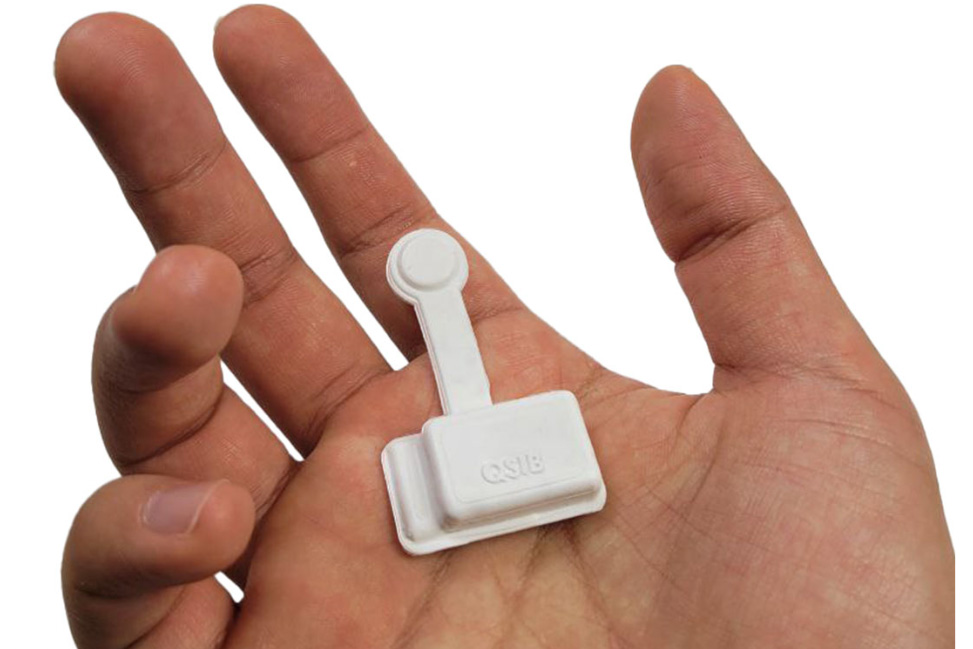
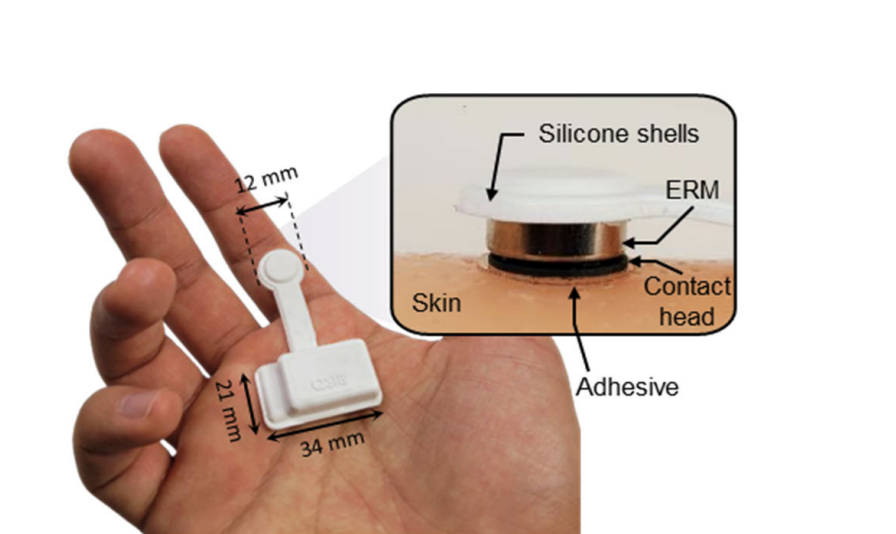
    Photograph of a wireless sensor device on a patient's hand, with an insert showing a side view of the device while attached to the skin.
    Photograph of the device; the inset shows a side view while attached to the skin. Courtesy of Min-Seung Jo, PhD.

    Northwestern scientists have developed a novel wireless sensor device that can continuously monitor skin elasticity in patients with soft tissue disorders including lymphedema and scleroderma, which can support early disease detection and better inform care strategies, as detailed in a study published in Science Advances

    Ann Marie Flores, PT, MSPT, MA, PhD, CLT, FAPTA, associate professor of Physical Therapy and Human Movement Sciences and of Medical Social Sciences in the Division of Implementation Science and director of Cancer Rehabilitation for the Cancer Survivorship Institute of the Robert H. Lurie Comprehensive Cancer Center of Northwestern University.
    Ann Marie Flores, PT, MSPT, MA, PhD, CLT, FAPTA, associate professor of Physical Therapy and Human Movement Sciences and of Medical Social Sciences in the Division of Implementation Science and director of Cancer Rehabilitation for the Cancer Survivorship Institute of the Robert H. Lurie Comprehensive Cancer Center of Northwestern University, was a co-corresponding author of the study published in Science Advances.

    The sensor, which is directly applied to the patient’s skin, can measure a patient’s tissue elasticity and then wirelessly transmit critical disease progression data, enabling remote access of that data by a healthcare provider from the patient’s own home and potentially omitting the need for an in-person clinical examination

    “The great thing about the sensor is it’s small, the potential for home use is tremendous, and for patients who know that they are at risk and know that they need to be constantly monitoring and detecting, this could give them a really good home-based unit that could potentially communicate data directly to their physician. That’s our goal,” said Ann Marie Flores, PT, MSPT, MA, PhD, CLT, FAPTA, associate professor of Physical Therapy and Human Movement Sciences and of Medical Social Sciences in the Division of Implementation Science, who was a co-corresponding author of the study.

    Current diagnostic approaches for lymphedema — chronic tissue swelling caused by damage to lymph vessels resulting from infection, cancer treatment or, in some cases, genetic mutations — include measuring volume of the affected body part, extracellular fluida thorough clinical exam. There is no cure for lymphedema, and continuous monitoring is essential to mitigate disease progression and prevent infection

    John Rogers, PhD, the Louis Simpson and Kimberly Querrey Professor of Materials Science and Engineering, Biomedical Engineering and Neurological Surgery, was a co-corresponding author of the study.

    Skin stiffness that is caused by lymphedema is measured with an indentation test (pressing on the swollen area to measure for fluid buildup), a skin suction test or elastography imaging. While these techniques have shown to be effective, they require the use of bulky instruments, hands-on clinical examination, and are less sensitive as lymphedema progresses

    The new device, which utilizes technology developed by the laboratory of John Rogers, PhD, the Louis Simpson and Kimberly Querrey Professor of Materials Science and Engineering, Biomedical Engineering and Neurological Surgery, is flexible and can be directly applied to the patient’s skin across different parts of the body

    The device emits vibrationsation about the skin’s stiffness, elasticity and resistance to pressure. This data can then be wirelessly transmitted from the device to the patient’s healthcare provider

    “The device can wirelessly transmit the data and then we can directly analyze this vibrating amplitude and frequency to know the skin modulus value,” said Min-Seung Jo, PhD, a postdoctoral fellow in the Rogers laboratory and lead author of the study

    The device was also validated in patients with cancer-related lymphedema and systemic scleroderma, a rare autoimmune disorder in which excess collagen production causes patches of the skin to thicken abnormally. 
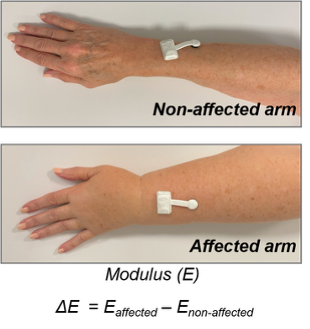
    Photo showing both arms of a lymphedema patient with a wireless sensor placed on each arm.
    Representative photograph showing both arms of a lymphedema patient. Courtesy of Min-Seung Jo, PhD.

    In both studies, the investigators found that the device’s larger contact area enabled deeper tissue monitoring, which improved overall evaluation of disease severity and progression. The device also demonstrated a stronger correlation compared to commercially available clinical devices that use bioimpedance and tissue dielectric constant to detect the presence of early developing lymphedema

    Unlike other methods, particularly bioimpedance spectroscopy, the device was also sensitive enough to distinguish between three different stages of lymphedema. The investigators also found the device’s larger contact area improved the measurement of skin stiffness during muscle movement and relaxation in the patients

    While diagnosis requires clinical expertise to diagnose and stage lymphedema, the new device would allow patients and healthcare providers to monitor a patient’s disease progression while the patient is in their comfort of their own home, improving early detection, accessibility and overall care, according to the authors

    Min-Seung Jo, PhD, a postdoctoral fellow in the Rogers laboratory.
    Min-Seung Jo, PhD, a postdoctoral fellow in the Rogers laboratory, was lead author of the study.

    “Our next steps are to see how we can make this truly home-based, how adherent patients are [with lymphedema monitoring] and to hear what providers want to know,” said Flores, who is also director of Cancer Rehabilitation for the Cancer Survivorship Institute of the Robert H. Lurie Comprehensive Cancer Center of Northwestern University

    Yonggang Huang, PhD, the Achenbach Professor of Mechanical Engineering, Civil and Environmental Engineering, and Materials Science and Engineering at the McCormick School of Engineering, was a co-corresponding author of the study

    Co-authors of the study include Carrie Richardson ‘12 MD, ‘GME, associate professor of Medicine in the Division of Rheumatology; and Jodi Johnson, PhD, research assistant professor of Pathology, of Medical Social Sciences and of Dermatology

    This work was supported by the Institute of Information and Communications Technology Planning and Evaluation (IITP) grant funded by the Korea government (MSIT) (IITP-RS-2025-02214780, Generative Haptics and Fine Response Inference for Flexible Tactile Interfaces) and the Robert H. Lurie Comprehensive Cancer Center of Northwestern University under the Translational Engineering Initiative

    Monitors Novel progression Sensor Wireless
    healthylife7
    • Website

    Related Posts

    New York City council speaker blames Mamdani administration as Legionnaires’ death toll rises to 5

    July 22, 2026

    Colorectal cancer warning signs younger adults should never ignore

    July 22, 2026

    Ask the attorney: Mental health and ROTC enrollment

    July 22, 2026
    Leave A Reply Cancel Reply

    Health
    Lifestyle

    Tips for Planning the Perfect Summer Getaway

    By healthylife7July 22, 20260

    If you’ve been waiting for the right time to plan a getaway, late summer could be your sweet spot. With the busy Fourth of July travel rush behind us and families beginning to shift into back-to-school mode, travel expert Jeanenne Tornatore says travelers can enjoy better deals, fewer crowds, and comfortable weather

    New York City council speaker blames Mamdani administration as Legionnaires’ death toll rises to 5

    July 22, 2026

    Virginia Tech research links obesity to faster brain aging, memory loss

    July 22, 2026

    Kevin Durant Criticized By Former Teammate Over Viral Workout Clip

    July 22, 2026
    Stay In Touch
    • Facebook
    • Twitter
    • Pinterest
    • Instagram
    • YouTube
    • Vimeo
    Fitness

    Opinion: The FDA must put biotech at its center or continue to cede early research to China

    July 6, 2026

    Inside Elevance’s digital chronic disease management strategy

    July 6, 2026

    Best, Worst States For Well

    July 6, 2026

    What do the Middle Ages tell us about mental health then and now? VCU historian Leigh Ann Craig has answers

    July 6, 2026

    Subscribe to Updates

    Get the latest creative news from SmartMag about art & design.

    About Us

    Welcome to HealthyLife7.com, your trusted source for reliable health, wellness, fitness, and lifestyle information. Our mission is to help people make informed decisions about their health by providing clear, practical, and easy-to-understand content.

    At HealthyLife7.com, we believe that good health starts with the right knowledge. Whether you're looking for healthy eating tips, fitness advice, mental wellness strategies, weight management guidance, or information about common health conditions, our goal is to deliver valuable content that supports a healthier lifestyle.

    Fitness

    Tips for Planning the Perfect Summer Getaway

    July 22, 2026

    New York City council speaker blames Mamdani administration as Legionnaires’ death toll rises to 5

    July 22, 2026

    Virginia Tech research links obesity to faster brain aging, memory loss

    July 22, 2026
    Health

    Opinion: The FDA must put biotech at its center or continue to cede early research to China

    July 6, 2026

    Inside Elevance’s digital chronic disease management strategy

    July 6, 2026

    Best, Worst States For Well

    July 6, 2026
    Facebook X (Twitter) Instagram Pinterest
    • About Us
    • Contact us
    • Disclaimer
    • Privacy Policy
    • Terms and Conditions
    © 2026 healthylife7.com. Designed by Pro.

    Type above and press Enter to search. Press Esc to cancel.