


For a young woman whose odds of surviving childhood were slim, Annabelle Green is doing quite well, her mother Jennifer told me recently. Annabelle walks, communicates, enjoys visiting the local hot springs, having books read to her at the library and exploring Idaho
And skiing, says Jennifer. “She’s all about it.”
But how long Annabelle will live is an open question. “I’m always worried about her survival on a daily basis,” Jennifer said
I first wrote about Annabelle more than two decades ago. At the time, Annabelle was a toddler with a rare and highly fatal genetic disorder called Sanfilippo syndrome. As the disease progressed and Annabelle accrued brain damage, Jennifer and her mother, Christine Barrietua, raced to reverse the state’s denial of an experimental stem cell procedure
The state Department of Health and Welfare objected to Medicaid having to pay as much as $1 million for the treatment even if it might have been the only means of saving her life
Jennifer says it took a court to reverse the state’s opposition. At the time, the agency publicly said that the reversal was because the odds of success were higher than originally projected
“Medicaid saved Annabelle’s life but we had to tenaciously advocate day and night with the help of doctors, lawyers, politicians, nonprofits, and community members to make it happen. Annabelle’s grandma was her most fierce advocate,” her mom said
Twenty-two years later, Jennifer and Annabelle’s siblings, Jonah and Maia, continue to vigilantly advocate and educate state and federal policymakers. She and Annabelle were at the Statehouse last legislative session, testifying against budget cuts (which ultimately passed) for the home-based services on which Annabelle depends
In Washington, D.C., Jennifer joined other Sanfilippo syndrome parents and patients, pushing to loosen impossible-to-meet Food and Drug Administration clinical testing requirements. They’re also navigating the federal government’s recent reinterpretation of a 1999 U.S. Supreme Court ruling that set out whether disabled people must receive services in the community or in an institution
Now, if you’ve read this far and you think that Hoffman has decided to embrace government healthcare programs, I want you to consider another possibility
The point is that once a story like Annabelle’s fades from the headlines, patients with rare medical conditions are still left to navigate a torturously difficult system — one that is not designed for complex and costly cases like Annabelle’s
And most cases don’t get public attention. Over my years as a reporter, congressional staffer and think tank president, countless people have relayed their own stories about how Medicaid denied this claim or that, or how the program’s complexity or denials had devastating consequences. These are the cases that don’t make the newspaper, although they really should
A commonality is that they often involve children with severe autism spectrum disorders or perplexing conditions that require expensive treatment and management
Daily headlines, straight to your inboxRead it online first and stay up-to-date, delivered daily at 7 AM
I remember, in particular, parents of an adopted pre-teen son having so much trouble managing his outbursts that the state said the juvenile corrections system’s specialized care was a better alternative to Medicaid
Another parent said her adult son is relegated to a program where he’s essentially tied to the system’s algorithm of care, unable to break free and live more independently than Medicaid allows without being disenrolled
Unfortunately, it is common that the refrain is: “If not for Medicaid, we wouldn’t have any options at all.” This is true, and I would add, it’s true because Medicaid often crowds out alternatives. It’s sort of like saying: “Without a rotary phone, I’d have no way to call home.” In the moment, it’s difficult to imagine that someone might one day carry a smartphone
You might think that Medicaid edge cases are just a natural consequence of running a program intended to address the needs of millions of Americans. I contend the problem runs much deeper than that. Simply put, politics drives everything. Politicians have a singular need — votes. And therefore, it is not as useful for politicians to create a program designed for expensive, unusual medical cases; it’s politically more practical to run a program for millions of people whose medical conditions come with just being alive — high blood pressure, depression, dental and vision problems.
Addressing the former makes for great headlines that quickly fade from the public consciousness. The latter makes a larger number of people dependent on each election and each legislative session for funding and program continuance. The contrast reveals the insidious nature of the present state of affairs
Nowhere is this more the case than with Medicaid expansion, which became law as part of the Affordable Care Act and is still a contested policy in states across the country. Idaho added Medicaid expansion in 2018 by ballot initiative. The program covers able-bodied, working-age adults who have more financial means than traditional Medicaid permits
Indeed, the people covered by Medicaid expansion are, as a matter of dollars and cents, a greater priority to the federal government than people in the traditional system. The federal government pays 90% of the costs for Medicaid expansion but around 50% to 70% for traditional Medicaid. Why? On the surface, because Washington, D.C., needed buy-in — first from Congress, then from the states after the U.S. Supreme Court made expansion optional in 2012 — and 90 cents on the dollar instead of 50 cents is how you turn a no into a yes. And also, cynically, buy-in means each participant and their families become grateful voters with a stake in sustaining the program.
In both political and fiscal value, an able-bodied adult is worth more than an Annabelle
Notice that when Jennifer shows up at the Statehouse to advocate for services for Annabelle, there are fewer people in the room than there are when the issue is repeal of Medicaid expansion. Notice that last session, the programs that Annabelle depends on were cut while Medicaid expansion was left untouched. Consider how twisted that is!
That’s the choice we’ve made by adopting public policies and programs that out that have nothing to do with poverty, neediness or disability
But we could choose a different path — one that demands our attention and our compassion. That’s the kind of world worth wanting for our kids and grandkids. It’s the kind of world that requires no law, no agency, no courts and no appropriation to decide who gets what services and where. We don’t need a program or anyone’s permission to be concerned about the Annabelles among us. We need only our willingness to care, our determination to be interested and involved in the lives of the most vulnerable and most needy. This is the better world I invite this generation to create.
Jennifer told me that it is fulfilling to take care of Annabelle, and this I believe to be true. She says, “I’ve learned so much through advocating for the vulnerable and acceptance of God’s will for us while gracefully maneuvering through each day with an open heart and the willingness to go with the flow.”
Now, imagine what would happen if we would all do this, for Annabelle, for Jennifer and people like them
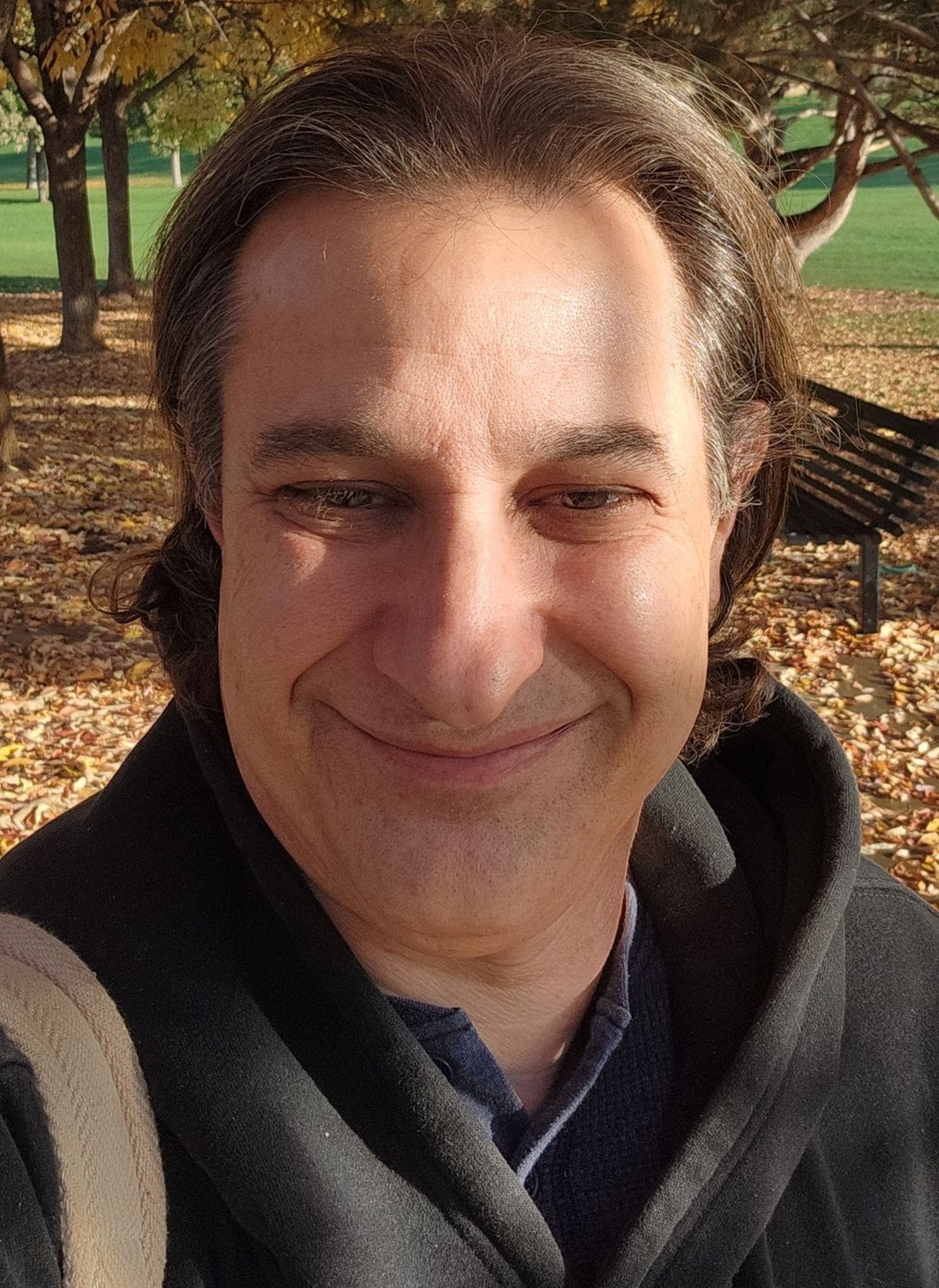
Hoffman, a veteran Idaho reporter, was president of the Idaho Freedom Foundation from 2008 to 2024. His latest book is “Tao of Liberty.” Find him online at leveluphumanity.substack.com
importedId:22620618
