


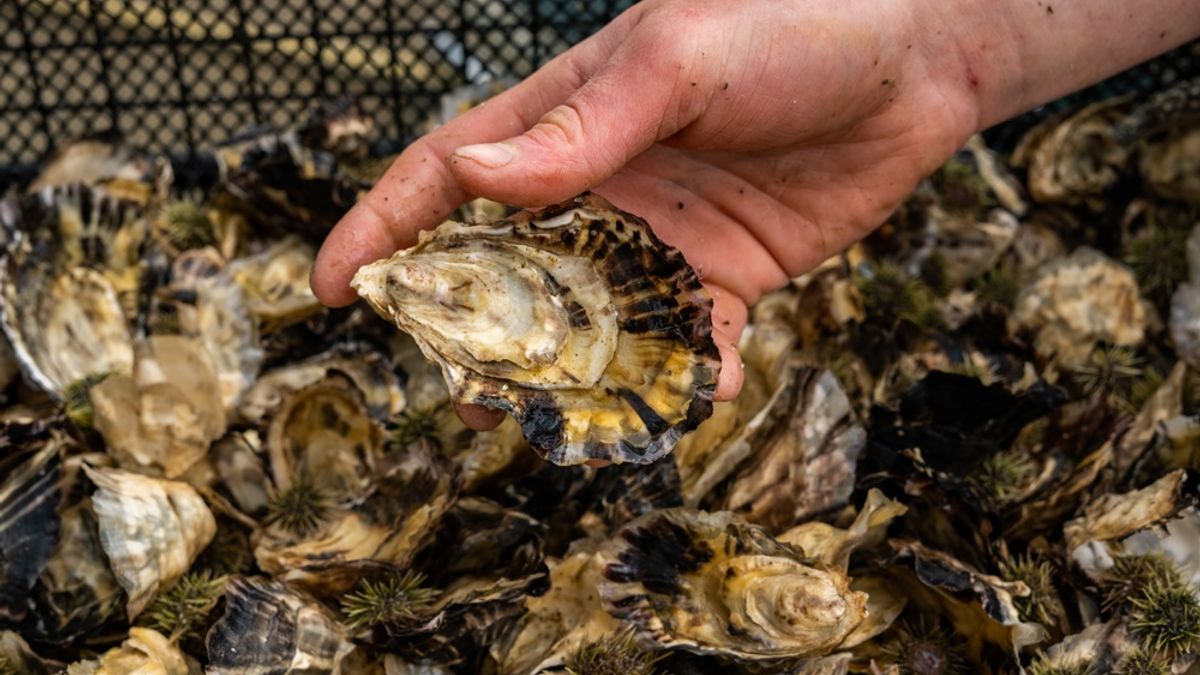
There is a particular pleasure to eating a fresh oyster: the briny taste, the cool slide of it, the way a squeeze of lemon accentuates all the flavors. Most people don’t think about inflammation when they eat one, but researchers in Italy think maybe they should
Along Italy’s Po Delta, between 30 and 40 percent of the annual oyster harvest from the Sacca di Goro, one of the country’s most productive aquaculture areas, ends up as waste. Giulia Trinchera, a Ph.D. student at the University of Ferrara, and her team examined the discarded material and asked whether it might hold a natural remedy for one of medicine’s most persistent problems. Research they presented at the Society for Experimental Biology conference in Florence found that an extract from dried Pacific oyster meat reduced inflammation in human intestinal cells and helped protect the gut’s lining even when inflammatory molecules were present.
“This is, to our knowledge, the first time that oyster tissue has been shown to exert anti-inflammatory effects on intestinal cells,” said Trinchera in a press release. “Our main finding highlights how the oyster extract, at concentrations that are non-toxic to cells, was able to significantly reduce TNF-α-induced intestinal inflammation.”
Oyster Extract May Reduce Gut Inflammation in Human Cells
The team began by mapping the nutritional profile of Pacific oyster soft tissue, cataloging its proteins, lipids, minerals, polyphenols, and carotenoids. They then extracted a compound from dried oyster meat and applied it to human intestinal cells that had been exposed to a molecule the body uses to trigger inflammation
The extract blocked two cellular signaling pathways that drive the inflammatory response and reduced the levels of an enzyme central to that process. Together, those effects helped protect the gut’s epithelial barrier, the lining that separates intestinal contents from the bloodstream
When that barrier is compromised, bacteria and toxins can pass from the intestine into the blood, triggering widespread, ongoing inflammation. The oyster extract appeared to maintain normal barrier function even in the presence of inflammatory conditions, a finding the team confirmed by electron microscopy
Discarded Oyster Meat Could Become a Useful Nutraceutical
Chronic inflammation is an underlying factor in some of the most common serious diseases, including cancer, type 2 diabetes, cardiovascular disease, and inflammatory bowel conditions. Researchers have been searching for low-cost, accessible ways to manage it without relying solely on pharmaceuticals
What makes Trinchera’s approach distinctive is the saltwater bivalve mollusk in the world. The whole-tissue extract requires no purification and can be produced directly from the parts of the harvest that currently have no commercial value
“Given that every year 30 to 40 percent of the oyster production in that area is discarded as waste, we wondered whether this ‘waste’ material could be [utilized] as a nutraceutical ingredient with anti-inflammatory potential, thereby transforming an environmental and economic problem into an opportunity,” said Trinchera
The Findings Are Early and Still Need Human Testing
These experiments were conducted on cells in a lab, not in people, and the team is careful about what can currently be claimed from the results. Clinical trials are still needed to confirm the effects, establish safe dosages, and identify which specific compounds are responsible for the observed effects
“The identification of naturally occurring bioactive substances with anti-inflammatory properties represents a promising therapeutic and preventive strategy for the management of chronic inflammatory diseases and their systemic comorbidities,” said Trinchera in the press release
The oysters piling up as waste each year along the Po Delta have always been a problem to be solved. This research raises the possibility that they might also be part of the answer
This article is not offering medical advice and should be used for informational purposes only
Read More: What Is Inflammation, and Why Is It Sometimes ‘Bad’ for Your Health?
Article Sources
Our writers at Discovermagazine.com use peer-reviewed studies and high-qualitycuracy and editorial standards. Review the
- This article references information from a study published inFood & Function:Pacific oyster (Crassostrea gigas) soft tissue extract attenuates TNF-α induced inflammation in a Caco-2 cell line
