


- Future Perfect
Ozempic is not just a weight-loss story anymore
The real promise of GLP-1 drugs goes far beyond weight loss
byBryan Walsh
Aug 15, 2026, 12:30 PM UTC
Michael Siluk/UCG/Universal Images Group via Getty Images
Bryan Walshis a senior editorial director at Vox, covering AI and other subjects for the Future Perfect section and audio/video, and writing the Good News newsletter. He worked at Time magazine for 15 years as a foreign correspondent in Asia, a climate writer, and an international editor, and he wrote a book on existential risk.
Just last month, I marked my 25th year as a professional journalist, which I guess means my journalistic career is old enough to rent a car, no questions asked. Work in the news for that long, and you’ll occasionally find yourself surprised by things you published in the past. Like, I had all but forgotten that I had written this Time magazine cover story in 2008:
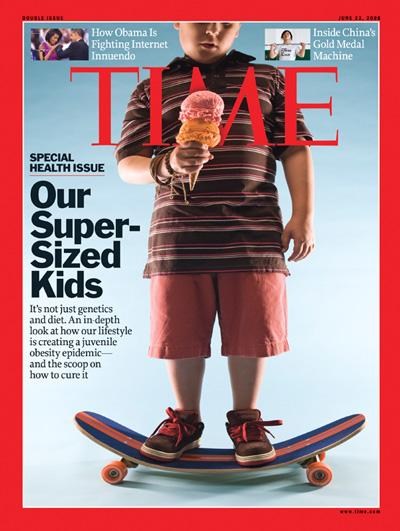
A couple things here. One, as the cover demonstrates, journalistic sensitivity was…less than ideal then, to say the least. And two, over a quarter-century occasionallycovering obesity (both childhood and adult), that story only seemed to go in one direction: worse
It wasn’t for lack of trying. We put calorie counts on menus, taxed soda (well, in some places), built workplace wellness programs, and funded a small library of diet research. We deplored food deserts and promoted farmers’ markets. We told people — again and again — to eat less and move more. But the lines just kept going up
While the question of weight in America is inextricably tied to body image and moralizing, those numbers had a deadly effect. One demographic model estimated that obesity was associated with roughly 18 percent of deaths among Black and white Americans ages 40 to 85 between 1986 and 2006. From diabetes to kidney failure, heart disease to sleep apnea, obesity is the delivery system for other diseases
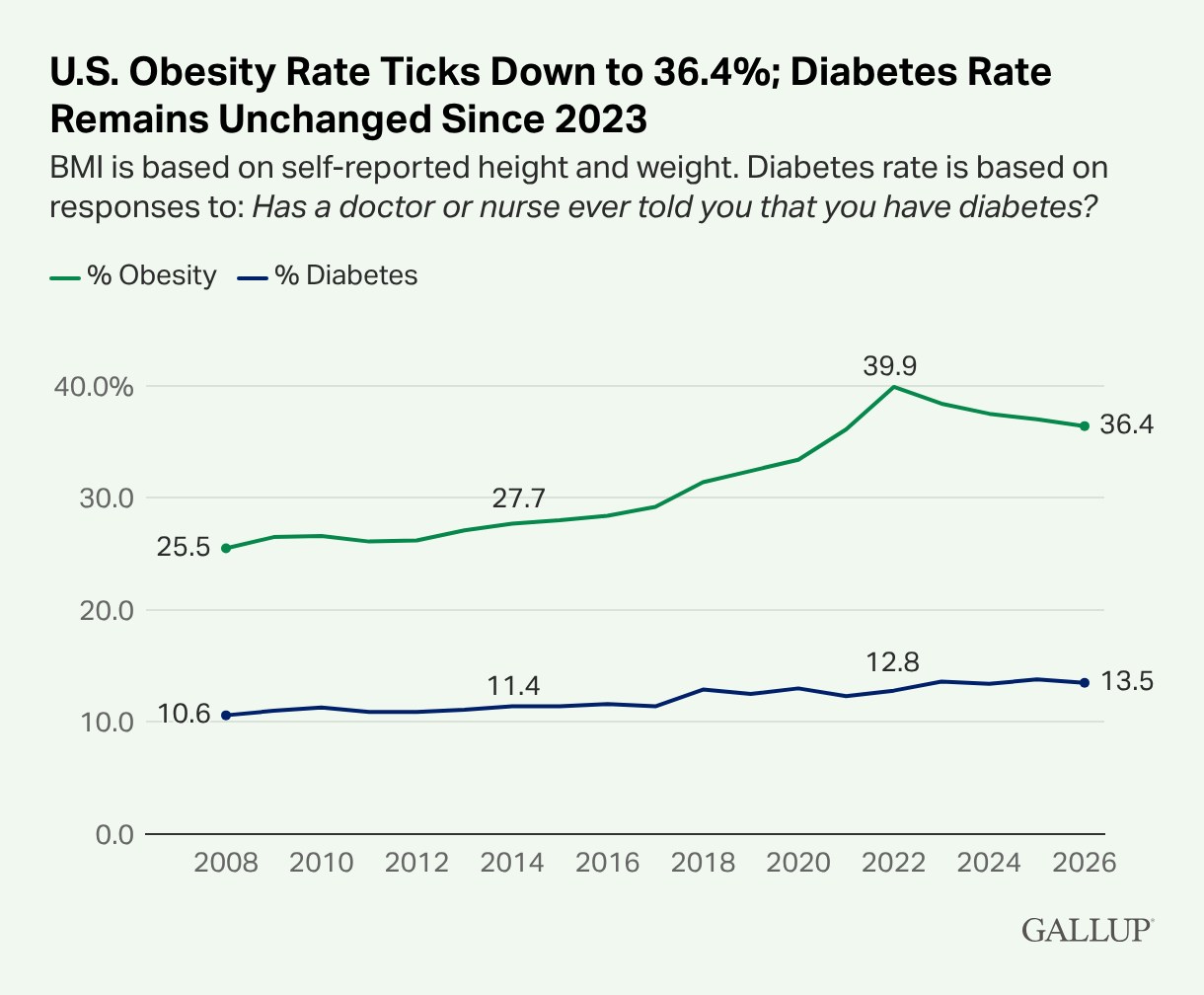
Which is what makes a Gallup report published in July so surprising. In Gallup’s self-reported height-and-weight series, the US adult obesity rate fell to 36.4 percent, down from a peak of 39.9 percent in 2022. Over roughly the same period, the share of adults who said they were currently taking a GLP-1 drug for weight loss rose from 3 percent in 2024 to 11 percent in 2026 — approximately 29 million people. While this only shows correlation, not causation, and Gallup’s self-reported measure should not be compared directly with the CDC’s measured rate, the timing is suggestive to say the least.
And the weight might be the least interesting thing about these drugs
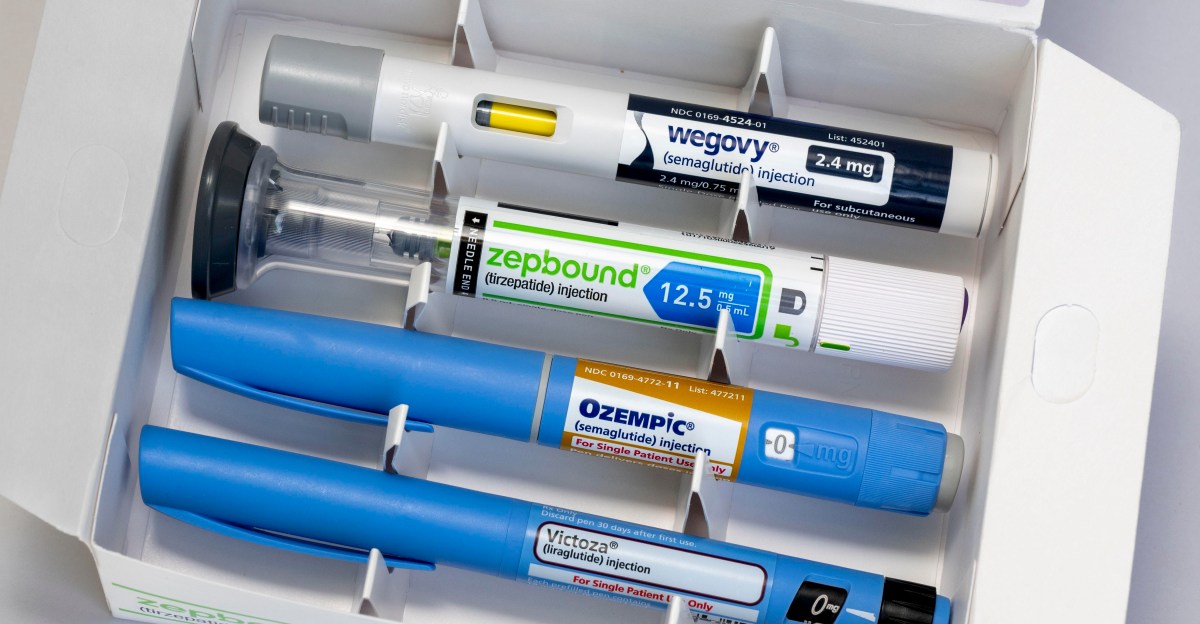
Semaglutide — the molecule sold as Ozempic and Wegovy — was first developed and approved as a treatment for type 2 diabetes, not obesity. It was only after earlier GLP-1 drugs and diabetes trials showed substantial effects on appetite and weight that researchers deliberately tested a higher dose for obesity, resulting in Wegovy in 2021
But as it turns out, the list of things that have been noticed happening on the side with GLP-1s has gotten so long it’s begun to eclipse the main event. The coverage of GLP-1s has barely kept up with this news, because weight loss is what made these drugs famous and what we continually obsess over. But it turns out, weight loss may not be what they’re best at
Side effects may include…
Let’s start with sleep apnea, which, untreated, drives up blood pressure, strains the heart, and raises the risk of stroke. These are people whose breathing stops dozens of times an hour, all night, every night. Two year-long trials put 469 of them on tirzepatide — the drug sold as Mounjaro and Zepbound — and cut those interruptions by more than half. Roughly half the group finished the year with no apnea at all, or with so little left that they stopped being tired all day
Then there are the kidneys. A major trial followed 3,533 people with type 2 diabetes and chronic kidney disease for a median of 3.4 years. Semaglutide reduced the relative risk of a composite of kidney failure, a sustained loss of at least half of kidney function, or death from kidney-related or cardiovascular causes by 24 percent; all-cause mortality was 20 percent lower
And the liver: A trial, still underway, biopsied the livers of 800 people whose organs had grown fatty, inflamed and scarred and randomly assigned them to semaglutide or a placebo. After 72 weeks the inflammation had cleared in nearly 63 percent of those on the drug, with no worsening of the scarring, against 34 percent on placebo
And the knees: In 407 adults with obesity and moderate knee osteoarthritis, pain scores on the 0-100 WOMAC metric fell 41.7 points against 27.5 on placebo
And to top it off, a 17,604-person trial of participants who were overweight or obese but did not have diabetes found a 20 percent drop in major cardiovascular events
These results may not be as grabby as cultural debates over “Ozempic face,” but they deserve far more attention
Medicine’s happy accidents
As GLP-1s — which in part came out of a hormone in Gila monster venom — demonstrate, medicine has long found some of its biggest wins in the margins of drugs ostensibly built to do something else entirely
Sildenafil, better known as Viagra, began life at Pfizer as a candidate treatment for the heart disease angina. It failed at that, and its now-famous use turned up in data as a side effect in what must have been a very interesting trial for its subjects. Minoxidil (Rogaine) was a blood pressure pill that turned out to help patients grow hair. Finasteride (Propecia) was approved for enlarged prostates before anyone thought to sell it for baldness — and then a trial of more than 18,000 men found it cut prostate cancer diagnoses by about 25 percent, a benefit that took 20 years of follow-up to fully vindicate.
Perhaps the most famous example is aspirin, which spent most of a century as a painkiller before a doctor in California named Lawrence Craven noticed that the patients he’d given aspirin gum to after tonsillectomies bled more than they should. He guessed the aspirin thinned the blood, and started handing it out to middle-aged men, who were at higher risk of heart attacks. Craven died in 1957; the trial that ultimately proved that he was onto something— showing that aspirin in heart attack victims cut vascular deaths by a fifth — didn’t run until 1988.
The strange morality of Ozempic
Viewed this way, GLP-1s can seem like miracle drugs — but even miracle drugs can’t cure everything
There had been great hope that GLP-1 might reduce dementia rates, but when Ozempic maker Novo Nordisk ran a proper trial, it didn’t show evidence of slowing clinical progression of Alzheimer’s. Much the same happened with cancer. Observational data had hinted that GLP-1 users developed tumors less often, but when a Harvard team pooled 48 placebo-controlled trials covering 94,245 people, they found the drugs have little to no effect on the risk of thyroid, breast or kidney cancer, though evidence for other cancers was less certain, leading to FDA boxed warnings. One plus: In some early animal studies, high doses of GLP-1 drugs caused thyroid tumors in rodents, but further research largely hasn’t validated the fears that it could be more widespread, though uncertainty about some rare thyroid cancers remains.
For many people, weight loss isn’t the end of what these drugs seem able to do. It’s where the benefits begin
The bigger concerns largely remain the known ones, starting with muscle loss. Across 22 randomized trials, about 25 percent of the weight lost on these drugs turns out to be lean muscle mass. Some of that is simply unavoidable in any weight loss, but too much can mean a great deal, especially if you’re 75
And cost remains a barrier: In a 2025 KFF poll, 56 percent of adults who had ever used a GLP-1 said the drugs were difficult to afford; 27 percent said they had insurance but paid the full cost themselves. In a separate Cleveland Clinic chart review of 288 adults without diabetes who stopped injectable semaglutide or tirzepatide within a year, 47.6 percent stopped because of cost or insurance problems, compared with 14.6 percent because of side effects. (The money, at least, is improving. An oral GLP-1 drug was approved in April, and it starts at $149 a month for people paying cash, while Medicare trial pricing of $50 a month for some GLP-1s went live in July.)
A stickier obstacle is the one that can’t seem to be divorced from questions about weight: judgment. As my colleague Dylan Scott wrote recently, researchers at Rice University found that people rate a GLP-1 user more harshly than someone who never lost weight at all. That makes perfect sense when you consider how contentious weight is in America — and none at all when you think about just how many people have benefited from these drugs in so many different ways
I sometimes wonder how we would view GLP-1s if they could do everything they’ve been shown to do, but somehow not change a person’s appearance
So much of the discourse around these drugs has been shaped by the fact that many of the earliest and most public and apparent users were already thin people, often celebrities, using them to get even thinner. But that framing has become increasingly difficult to square with reality
Two things can be true at once: American culture has a toxic relationship to weight, andmillions of Americans can and are benefiting from these drugs. For many people, weight loss isn’t the end of what these drugs seem able to do. It’s where the benefits begin
A version of this story originally appeared in the Good News newsletter. Sign up here!
See More:
