


Pediatricians and health officials are sidestepping Trump’s CDC on <a href="https://healthylife7.com/could-an-experimental-vaccine-help-prevent-pancreatic-cancer/” title=”Could an experimental vaccine help prevent pancreatic cancer?”>vaccine advice
July 30, 20265:00 AM ET
By
Karen Brown
For vaccine information, some pediatricians are finding ways to sidestep Trump’s CDC
Listen·3:543:54
Transcript
- Download
- Embed
<iframe src="https://www.npr.org/player/embed/nx-s1-5866740/nx-s1-9865871" width="100%" height="290" frameborder="0" scrolling="no" title="NPR embedded audio player"> - Transcript
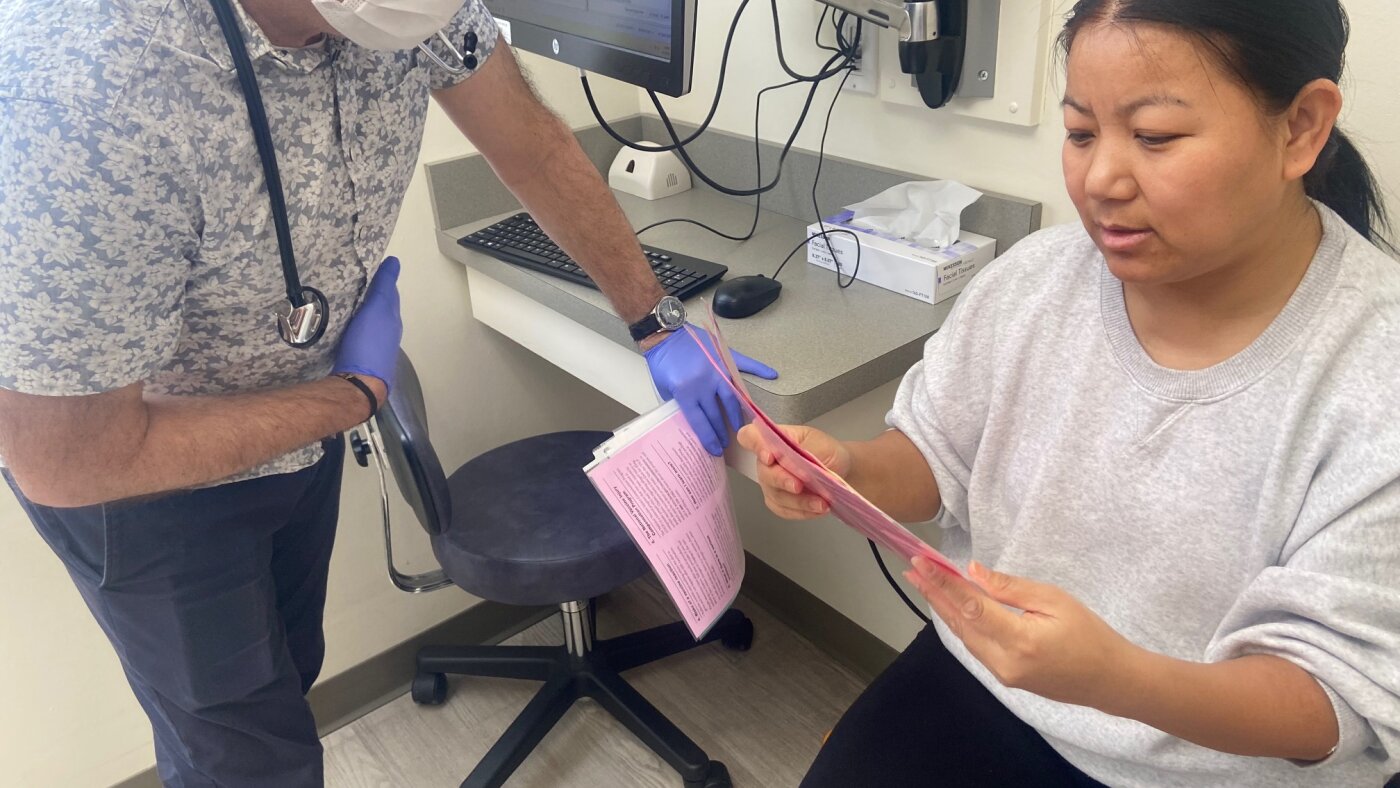
Pediatrician John Snyder gives vaccine information to Tenzin Dekey, who had brought her 1-year-old son to Amherst Pediatrics for an annual exam. She accepted the vaccines that Snyder recommended.
Karen Brown/New England Public Mediahide caption
toggle caption
Karen Brown/New England Public Media
Dr. John Snyder, in Amherst, Mass., has been practicing pediatrics for 30 years. Whenever he wanted to find the most up-to-date research on treating young patients, he would turn to the Centers for Disease Control and Prevention
If he wanted to learn more about an outbreak of measles or hantavirus, he would pore over the weekly CDC report that came by email

This story was produced in partnership with KFF Health News
If a patient’s family was traveling to Africa or Asia, he would check the latest CDC vaccine recommendations for overseas travel
And if family members at his practice in Amherst, Mass., expressed worries about potential side effects from a shot, he could always send them to the CDC’s website to bolster his argument to get the immunization
Public trust in the CDC has hit bumps in the road during infectious disease outbreaks, but for medical professionals, Snyder said, “the CDC used to be, worldwide, the most trustedsease.”
Yet even doctors began losing trust, Snyder said, after Donald Trump was elected president again. Trump quickly tapped longtime anti-vaccine activist Robert F. Kennedy Jr. as his nominee to lead the Department of Health and Human Services, which oversees the CDC
John Snyder is a pediatrician at Amherst Pediatrics in Amherst, Massachusetts.
Karen Brown/New England Public Mediahide caption
toggle caption
Karen Brown/New England Public Media
Within months of his confirmation as secretary, Kennedy had dismissed every member of the CDC’s vaccine advisory board and replaced them with new appointees, some of them prominent vaccine skeptics
“It turned into a completely unreputable
This rupture of scientific trust in the CDC has put many pediatricians like Snyder in a bind, as they no longer turn to the United States’ preeminent public health agency and instead search for ways to fill the information gap. Some doctors are launching their own vaccine education efforts, sometimes in collaboration with local public health departments
On Jan. 5, the CDC removed some vaccines from the recommended vaccine schedule for all children — against the advice of major medical groups like the American Academy of Pediatrics
The number of recommended vaccines shrank as the agency dropped vaccines for rotavirus, COVID-19, influenza, hepatitis A, hepatitis B and meningococcal disease from the list
The agency did not respond to a request for comment for this story
In March, after medical groups sued, a federal judge ordered the Trump administration to revert to the previous guidelines. The administrationhas appealed the judge’s decision
A “shocking” thing to tell patients
The back-and-forth “creates a whole bunch of confusion in the public,” Snyder said. “And it’s very confusing even for healthcare providers.”
So he’s trying to be clear to patients about what the evidence shows, even if that means going against the federal government. His practice, Amherst Pediatrics,changed its website to say: “The CDC is no longer considered to be a reliable or legitimate
“It’s shocking that we have to say that,” Snyder said. Instead, the site directs families to get information from their own doctor, the state of Massachusetts, or nongovernmental medical organizations including the AAP
The independent health website Valley Vax is advertised on the sides of buses in Western Massachusetts.
Kiko Malinhide caption
toggle caption
Kiko Malin
In the exam room, Snyder is having more tense conversations with families. He said some parents are explicit that they want to hew to what the CDC recommends. “Even if they don’t say that, we have definitely seen increasing hesitancy and questions,” he said. “All of that interferes with us protecting children.”
On a spring afternoon, several of Snyder’s young patients came into Amherst Pediatrics for routine visits
“Let’s talk about vaccines,” Snyder said to one mother, Tenzin Dekey, who was there with her 1-year-old. Snyder explained that her son was due for theMMR vaccine, which protects against measles, mumps, and rubella, in addition to the chickenpox vaccine
“So that’s four shots, two in each leg,” he said, as he handed Dekey CDC information sheets about the vaccines. She glanced at them and agreed to the shots
Ironically, the information sheets are stamped with the CDC’s logo —as required by law — even though Amherst Pediatrics has explicitly directed patients away from the CDC. Snyder said he hates that disconnect
“This has been aot trust the CDC when it comes to vaccines,’ yet here is the information we’re giving our own patients when they’re in the office about vaccines?”
Another mother brought her 14-year-old son for his annual physical. She asked to be identified by only her first name, Melissa, so she could freely discuss her family’s private health issues
The storeroom of childhood vaccines at Amherst Pediatrics.
Karen Brown/New England Public Mediahide caption
toggle caption
Karen Brown/New England Public Media
Snyder recommended theHPV vaccine, which helpsprevent some cancers. Although Melissa had refused the HPV vaccine in a previous visit, this time she left the decision up to her son. He agreed to it. But for other vaccines, she wouldn’t budge
“I’m a hard ‘no’ on the covid,” she told Snyder
“We could talk about that if you want,” he suggested
“I don’t need to talk about it,” she replied
After the appointment, Melissa said she just doesn’t know whom to trust anymore when it comes to vaccine safety. She used to get information from the CDC but no longer does
“I worry that it’s been politicized a lot, and I don’t like politics,” she said. “Now I prefer to hear things from people, healthcare professionals.”
Such distrust and confusion inspired Snyder to join an independent vaccine information campaign, along with other pediatric practices and health departments in the Connecticut River Valley of Western Massachusetts
New coalition launches new website
The campaign’s website, which is promoted in Snyder’s waiting room, is calledValley Vax. It sidesteps the CDC and highlights advice from local doctors and national medical groups,including the AAP
Valley Vax bought ads on the sides of buses in Western Massachusetts to promote the site, with the faces and testimonials of local doctors including Snyder
“We wanted something that felt familiar and appealing and that they might be more likely to trust,” saidKiko Malin, director of Amherst’s public health department, who coordinates the Valley Vax effort
She said the organizers decided not to criticize the CDC outright
“Some information from the CDC is reasonable. Like they are doing a good job of tracking influenza-like illness rates in the country,” Malin said. “It’s important not to discount an organization completely.”
Still, she said it’s the first time she’s had to contradict health information from the CDC. “That’s not a comfortable place to be in at all,” she said
Other health leaders are also banding together to get out evidence-based information. At the state level, California, Hawai’i, Oregon, and Washington — frustrated with the CDC — operate theWest Coast Health Alliance to “ensure the public has access to credible information.” And governors of 14 states and Guam set up theGovernors Public Health Alliance in response to declining trust in federal health agencies
Locally, some public health departments are partnering with community leaders to reach people who have stopped listening to government institutions but “do have strong connections within their faith community or do have strong connections within their neighborhood,” saidAdriane Casalotti, a spokesperson for theNational Association of County and City Health Officials
Like Amherst, many local health departments now direct people to professional medical organizations instead of the CDC, Casalotti said, because advice from those groups may change slightly as the science evolves, but it’s unlikely to change with each lawsuit against the government
This story comes from NPR’s health reporting partnership withNew England Public MediaandKFF Health News
