


JULY 9, 2026 18:25
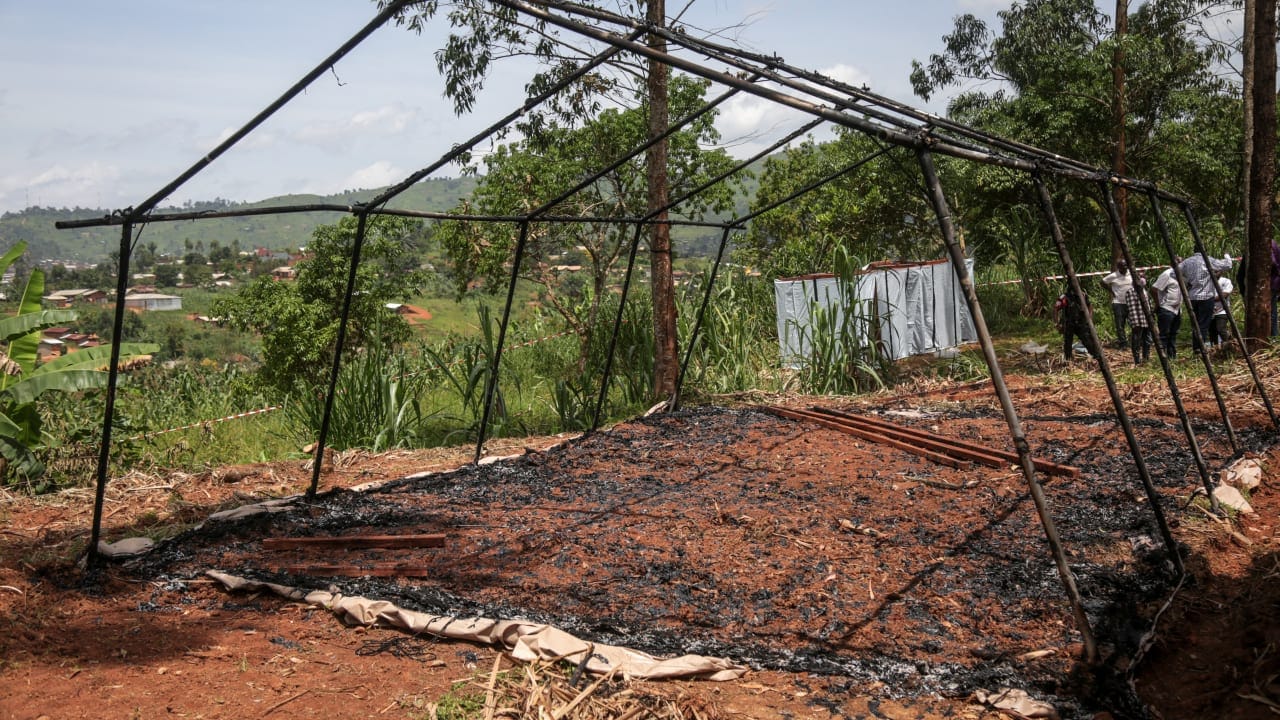
An Ebola treatment center was burned down, and a police officer was killed during clashes over the body of an Ebola victim in Bafwabango, in Ituri province in the Democratic Republic of the Congo on June 1, the latest in a series of community resistance incidents in response to Ebola restrictions.
The Ebola outbreak, which was first confirmed in May, has killed at least 600 people and comp<a href="https://healthylife7.com/as-temperatures-rise-in-dallas-fort-worth-so-do-heat/” title=”As temperatures rise in Dallas-Fort Worth, so do heat”>rises at least 1,759 confirmed cases, and has sparked a wave of misinformation that health officials linked to violent assaults on healthcare workers and attacks on healthcare centers.
Rumors that Ebola is a hoax and fears over healthcare workers killing patients in order to harvest organs or take control over territory have led to attacks on health centers in order to retrieve patients under quarantine and bodies of victims who have died.
Burial practices have been at the center of multiple incidents, including the fire in Bafwabango, the burning of another medical center in the Ituri province, and an attack on Red Cross workers that left four hospitalized
The Ebola virus can be transmitted through bodily fluids, and the bodies of Ebola victims are particularly contagious. The bodies must be completely wrapped before burial, and any contact poses a risk
However, with misinformation spreading, the inability to see, wash, and care for the bodies as is traditional is seen by some as proof of healthcare workers’ sinister intentions
Suspicion of healthcare workers, especially foreign workers, is not necessarily a result of superstition, but may be of “historical neglect,” Dr. Gighinji Gitahi, group chief executive of Amref Health Africa, told the Telegraph.
“When a health system has struggled to address daily emergencies but suddenly scales up for a single disease, communities draw their own conclusions,” Gitahi added
Gitahi pointed to the other medical dangers communities face, including malaria, malnutrition, and maternal complications, explaining that communities grow suspicious when they see a response to the new Ebola outbreak and not to the problems of their daily realities
“You have a very strong base of being very distrustful of anything coming from outside, including the central government,” Dr. Jean-Vivien Mombouli told the BBC
The BBC cited experts as saying that outside interference and competition over gold and coltan contributed heavily to mistrust
Response and community trust are further complicated by the conflict in the DRC
Cases located in territory controlled by the Rwandan-backed rebel group M23 and by the Islamic State-affiliated Allied Democratic Forces are significantly harder to identify and treat.
Ebola has become extremely politicized in the M23-controlled South Kivu province, with the New York Times reporting that medical workers refused to comment for fear of their safety.
One healthcare worker who was willing to comment told the NYT that sharing information, including situation reports which are normally widely shared, was not allowed.
M23 has been accused of using the outbreak as a financial opportunity, the NYT wrote, citing a healthcare worker who said that the rebels were constantly reaching out to health authorities in the area to ask about Ebola funding.
The worker accused M23 of trying to divert money intended for the Ebola response
