


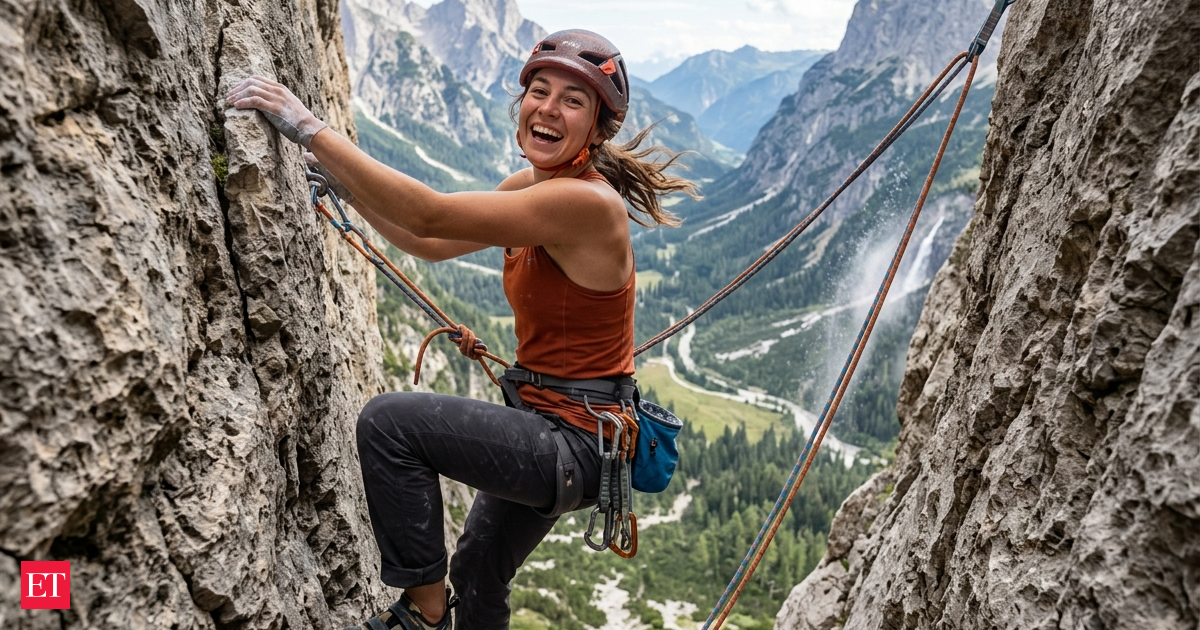
Psychology says people who like adventure activities and are always ready to feel the thrillaren’t simply taking unnecessary risks. Many people enjoy climbing mountains, skydiving, rafting, scuba diving, hiking, racing, or trying new experiences because these activities provide excitement and challenge. Psychology explains that this behavior is often connected with sensation seeking, curiosity, motivation, and personality. Researchers have studied why some people actively search for exciting experiences while others avoid them. Their findings show that thrill-seeking can be part of normal personality differences and does not always mean someone ignores danger or acts without thinking.
Looking beyond the stereotype
Many people believe that anyone who enjoys adventure sports or risky experiences is careless. Psychology does not fully support this belief. Researchers have found that many adventure lovers prepare carefully before participating in such activities. They often learn safety rules, use proper equipment, and understand the risks involved.For many people, the excitement comes from overcoming challenges rather than ignoring danger. They enjoy testing their limits in safe and controlled ways. This explains why experienced climbers, divers, pilots, or hikers often spend many hours practicing before attempting difficult tasks.Psychologists say thrill-seeking exists on a spectrum. Some people naturally enjoy exciting situations more than others. This difference is part of normal human personality.
Psychology says people who like adventure activities and are always ready to feel the thrill aren’t always reckless
Psychology explains this behavior through the idea of sensation seeking. This personality trait was introduced by psychologist Marvin Zuckerman. According to his theory, some individuals naturally seek experiences that are new, exciting, and mentally stimulating.You Might Also Like:

Psychology says people who believe in fairy tales aren’t unrealistic: What this belief reveals?
These people enjoy exploring unfamiliar places, meeting new people, learning new skills, and participating in adventure activities. Their goal is not necessarily to take dangerous risks. Instead, they seek experiences that provide excitement and challenge.Research shows that people with higher sensation-seeking levels often enjoy activities that increase mental engagement and provide strong emotional experiences. However, sensation seeking does not automatically lead to unsafe behavior. Many high sensation seekers also make careful decisions before acting.
What psychology says?
Psychologists believe personality develops through both biological and environmental influences. Brain chemistry also plays a role. Researchers have suggested that some people respond differently to rewarding experiences. New situations may produce stronger feelings of excitement for them. Because of this, they continue searching for fresh experiences.Psychology also shows that adventure activities can increase confidence. Successfully completing difficult tasks helps people believe they can overcome future challenges. Many people also experience satisfaction after completing demanding activities. This feeling encourages them to continue exploring new experiences.You Might Also Like:

Psychology says people who are good with numbers and love mathematics aren’t only analytical thinkers: What this reveals?
What does this mean?
This behavior does not mean someone wants danger for its own sake.Instead, many thrill seekers enjoy:
- Learning new skills
- Testing personal limits
- Solving difficult situations
- Exploring unfamiliar environments
- Building confidence
- Experiencing excitement
- Breaking routine
- Achieving personal goals
You Might Also Like:

Psychology says people who have a special kind of handshake for their friends, children or family aren’t emotionally distant: What this unique ritual reveals
For them, the reward often comes from completing the experience rather than simply taking risks. Psychologists say these motivations differ from acting impulsively without thinking about consequences.
Why is it done?
There are several reasons why people seek adventure. Some enjoy the excitement created by uncertainty. Others like mastering difficult physical or mental tasks. Many people participate because adventure activities help reduce boredom and provide memorable experiences.Adventure sports also encourage teamwork, planning, and decision-making. Some individuals enjoy pushing themselves beyond previous limits. Completing these challenges gives them a sense of achievement that can improve self-confidence. Others simply enjoy exploring nature or experiencing something different from everyday life.
Which psychology theory explains this behaviour?
The most widely known explanation comes from Marvin Zuckerman’s Sensation Seeking Theory. According to this theory, sensation seeking is a personality trait involving the search for experiences that are varied, new, complex, and exciting.People differ in how much stimulation they naturally prefer. High sensation seekers often choose activities such as mountain climbing, skydiving, surfing, racing, trekking, scuba diving, or international travel.Lower sensation seekers may prefer calm hobbies, familiar routines, and predictable environments. Neither personality style is considered better than the other. Psychology recognizes both as normal personality differences.
This psychology study says
One of the best-known researchers in this field is Marvin Zuckerman, who developed the concept of sensation seeking after studying personality differences for many years. His research introduced the Sensation Seeking Scale (SSS), which measures how strongly people seek exciting and novel experiences.Studies using this scale have shown that people scoring higher in sensation seeking often choose adventurous hobbies, travel more frequently, enjoy exploring unfamiliar environments, and participate in activities involving controlled levels of risk.Researchers also found that sensation seeking varies across individuals and is influenced by both biology and life experiences. The findings suggest that thrill-seeking should not automatically be viewed as reckless behavior. Instead, it represents one personality characteristic that influences how people choose experiences and challenges.
What researchers discovered about thrill seekers?
A study by researcher Ralf Buckley, published in the journal Frontiers in Psychology, suggests that people who enjoy high-risk adventure activities can develop a form of behavioral addiction similar to exercise addiction. The study found that many experienced adventure enthusiasts become deeply attached to the excitement they experience, causing them to spend more time, money, and effort pursuing increasingly challenging activities. However, this does not mean they are reckless. Instead, they carefully build their skills while seeking stronger experiences.To reach these findings, Buckley analyzed more than 30,000 hours of ethnographic observations involving participants in activities such as surfing, kiteboarding, hang-gliding, whitewater kayaking, rafting, sailboarding, and helicopter snowboarding. He also conducted single and repeated interviews with 160 intermediate and expert adventure participants. Their behavior was then compared with established psychological criteria for behavioral addiction developed by researchers such as Isaac Marks, Richard I. Brown, and Lichtenstein and colleagues.The study found that experienced adventure enthusiasts showed many signs associated with behavioral addiction. They constantly planned their next adventure, prioritized these activities over other commitments, experienced strong emotional rewards after participation, sought increasingly difficult challenges as their skills improved, and often felt frustration or low mood when prevented from taking part. Based on these findings, the research concluded that the desire for adventure often reflects a powerful psychological drive for excitement and achievement rather than simple carelessness or impulsive risk-taking.
The principle behind it
The central psychological principle is that people differ in their preferred level of stimulation. Some individuals feel comfortable with routine and predictability. Others require greater mental and emotional stimulation to remain interested and engaged.Adventure activities satisfy this need by providing novelty, challenge, learning opportunities, and emotional rewards. Psychologists believe personality differences help explain why people make different lifestyle choices even when living in similar environments. These differences appear throughout life and influence hobbies, careers, travel preferences, and recreational activities.
What to learn from it?
Understanding this behavior encourages people to avoid making quick judgments. Someone who enjoys adventure is not automatically careless. Likewise, someone who prefers quiet activities is not less capable or less confident.Psychology reminds us that personality differences shape how people experience the world. Respecting these differences helps improve understanding between friends, families, workplaces, and communities. It also encourages individuals to choose activities that match their interests while maintaining proper safety measures.
Life lessons from the behavior
Thrill-seeking teaches several useful lessons.
- Growth often comes from stepping outside familiar situations.
- Learning new skills requires effort and practice.
- Confidence develops through experience.
- Planning and preparation remain important before accepting challenges.
- Understanding personal strengths and limits helps people make informed choices.
Finally, psychology reminds us that people experience motivation differently. Some feel happiest exploring the unknown, while others find satisfaction in stability and routine. Both approaches are normal and reflect natural personality variation.You Might Also Like:

Psychology says people who like to visit haunted places or tragedy stricken places aren’t insensitive: What this behavior means and what is dark tourism?
Add 
as a Reliable and Trusted News Source

Add Now!
(You can now subscribe to our Economic Times WhatsApp channel)
Read More News on
Psychology of loving adventureadventure loveradventure activitiesthrill seekingadventure sportsthrill seekersoutdoor adventureadventure travelextreme sportstravel psychology
(Catch all the US News, UK News, Canada News, International Breaking News Events, and Latest News Updates on The Economic Times.)
Download The Economic Times News App to get Daily International News Updates
…moreless
(You can now subscribe to our Economic Times WhatsApp channel)
Read More News on
Psychology of loving adventureadventure loveradventure activitiesthrill seekingadventure sportsthrill seekersoutdoor adventureadventure travelextreme sportstravel psychology
(Catch all the US News, UK News, Canada News, International Breaking News Events, and Latest News Updates on The Economic Times.)
Download The Economic Times News App to get Daily International News Updates
…moreless
