


The Indian apparel group, which still generates 65 percent of its exports in the US, intends to increase Europe’s share from 17 percent to 20–25 percent within two years
Is India looking to leverage its new agreements with London and Brussels to strengthen its position in European supply chains?
The new international trade rules have taken a few months to start impacting the strategies of fashion manufacturers
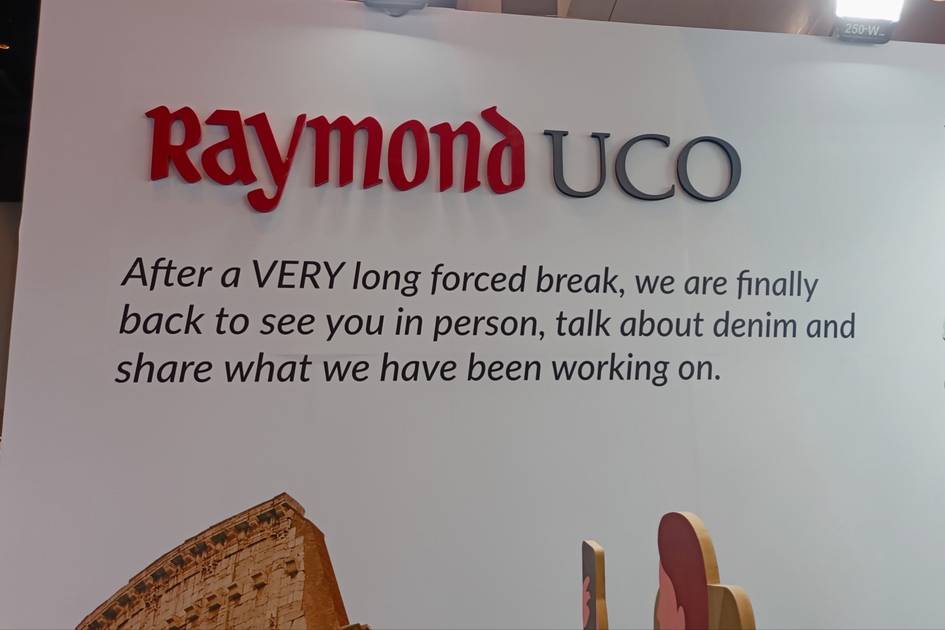
Raymond Lifestyle to increase Europe’s share of exports
At Raymond Lifestyle, this shift is now clearly acknowledged. The Indian group plans to increase Europe’s share of its exports to 20–25 percent over the next two years, up from approximately 17 percent. Simultaneously, the US share, which currently stands at 65 percent, is expected to fall to between 55 and 60 percent
“Europe will grow faster for us,” CEO Satyaki Ghosh told Reuters, estimating that India’s new trade agreements with the UK and the European Union could produce a “double boom” for the business. European demand has seen double-digit growth since the announcement of these agreements. Approximately 30 percent of this is already converting into orders, mainly in the UK, but also in Poland, Germany and France
The shift is significant enough that Raymond is already adapting its industrial facilities. Production at its Ethiopian site is ramping up. Its factory in Andhra Pradesh is set to expand to ten production lines within the next two years, more than tripling its current capacity
Raymond, a more significant player in western fashion than it appears
The Raymond name is particularly well-known in India, where the group owns brands such as Park Avenue and ColorPlus. Its business, however, extends far beyond its own labels. Raymond Lifestyle generated revenues of 6.36 billion rupees in its 2024-2025 financial year, according to the group’s published results
A significant part of this business is based on ‘garmenting’, the manufacturing of clothing for third-party brands. This activity generated approximately 1.1 billion rupees in revenue in 2024-2025 and is one of the main pillars of the group’s business-to-business (B2B) activity. Raymond manufactures items such as jackets, trousers, shirts and other garments for international players
The group already works with western companies. Reuters cites JCPenney and Charles Tyrwhitt among its international clients, while CEO Satyaki Ghosh states that Raymond has recently acquired new clients in Poland, Germany and France
This existing presence gives another dimension to the group’s announced European shift. Exports accounted for approximately 20 percent of Raymond Lifestyle’s revenue in the 2025-2026 financial year, according to Satyaki Ghosh. Before the change in US tariff policy, the US absorbed about 65 percent of the group’s exports, compared to 17 percent for Europe. Raymond is now targeting 20 to 25 percent for Europe within the next two years, while the US share is expected to fall to between 55 and 60 percent.
Europe is therefore not a new market for Raymond. The group already has clients, business relationships and an initial industrial base there. What is changing today is the potential weight these markets could have in its portfolio. For a manufacturer whose primary export market is still the US, shifting several points of volume to Europe is a significant move. It necessarily involves reassessing production capacities, order allocation and exposure to tariff risks
This is precisely what Raymond is beginning to do: production at its Ethiopian site is ramping up, and the Andhra Pradesh factory is set to expand to ten production lines within the next two years, more than tripling its current capacity
London has already opened the door
The trade calendar plays a decisive role here. Since July 15, 2026, the free trade agreement between India and the UK has been officially in effect. The Indian government states that nearly 99 percent of Indian exports now benefit from duty-free access to the British market. Textiles and apparel are among the sectors expected to benefit directly from this liberalisation
For Indian manufacturers, customs duties are a direct component of the price charged to the customer. Eliminating them allows for a reduction in the final price, an improvement in the manufacturer’s margin, or a sharing of the benefit between the manufacturer and its client. In a sector where buyers constantly choose between several production countries, a few cost points can be enough to shift an order
The new agreement does not, of course, guarantee that India will gain market share. Rules of origin remain crucial for benefiting from tariff preferences. It does, however, change the competitive balance between suppliers
Raymond already has a British presence. The UK accounts for approximately 7 percent of the company’s jacket and blazer sales, which equates to around 1.2 billion rupees in exports
The UK therefore represents the most immediately exploitable territory for Raymond
Continental Europe: a larger market, but gains are yet to come
The situation is different on the continent. The free trade agreement between India and the European Union was concluded on January 27, 2026, after several years of negotiations. It still needs to be signed and follow the necessary internal procedures to come into force
Its content, however, already indicates its potential. According to the Indian government, 70.4 percent of tariff lines, covering 90.7 percent of Indian exports to the EU, will benefit from the immediate elimination of duties upon entry into force. Textiles, apparel, leather and footwear are among the sectors explicitly identified as beneficiaries
The potential for Raymond is therefore greater than that of the UK market alone. France, Germany and Poland are already mentioned as countries where the group has gained new clients. France, Italy and Germany are also among its priority markets
The European market is therefore not only larger: it offers Raymond a diverse clientele of brands, specialised distributors and accessible premium players
Why not simply stay in the US?
This question is key to understanding the group’s choice. The US remains, by far, Raymond’s largest market
The company does not plan to leave the US market. Instead, it seeks to reduce its dependency. When 65 percent of a manufacturer’s exports depend on a single market, any tariff or regulatory change in that market has an immediate impact on the income statement. The strategy is therefore less about replacing the US and more about reducing the weight of a risk that has become too concentrated
This logic is also reflected in India’s trade figures. During the 2025-2026 financial year, Indian textile and apparel exports to major European markets increased by 9 percent to 694.45 billion rupees. At the same time, exports to the US fell by 7 percent after reciprocal customs duties came into effect
For a manufacturer like Raymond, the calculation becomes quite concrete: continue to serve the US market, but invest marginal capacity where trade conditions are becoming progressively more favourable
The real trade-off: price, margin, capacity and visibility
The choice between the US and Europe is not, however, simply a matter of customs duties.
A manufacturer must weigh several variables: the price obtained from the client; production costs; transport; import duties; volumes; lead times; regulatory requirements; and demand stability
This is where Raymond’s strategy becomes interesting. The group is not just seeking more European orders. It is adapting its industrial facilities to be able to absorb them
The expansion in Andhra Pradesh and the ramp-up in Ethiopia address this need. Ethiopia can serve as a complementary production base in a geographical diversification strategy, while India retains the advantage of its integrated textile ecosystem and industrial expertise
India wants to move from textiles to higher-value clothing
For Raymond, Europe also offers something more than just an additional market: the opportunity to move upmarket
The group is already working on shifting its mix towards finished and semi-finished garments with higher added value, rather than remaining confined to exporting fabrics. Its annual report highlights the rise in European demand for premium clothing made from Indian fabrics
Indian competitiveness is not based solely on labour costs. It also relies on the depth of its textile industry, its ability to produce fabrics, transform them and progressively move up the value chain
For Raymond, selling more finished jackets, trousers or shirts to a European brand potentially allows it to capture more value than simply supplying raw materials.
Free trade then becomes an accelerator, but not the core of the strategy
A reconfiguration of supply flows
Raymond’s decision comes at a time when major western clients are also reconsidering their industrial geography
For years, the main issue was cost: producing where the total cost was lowest
Today, the logic is more complex. Brands want to simultaneously preserve their margins, secure their supply chains, reduce their exposure to trade tensions and have multiple production hubs
In this new environment, India has an additional advantage. The UK now offers it much more favourable trade access. The European Union has concluded an agreement that provides for significant liberalisation of textiles and apparel, although it has not yet come into force. Tariff tensions with the US automatically make diversification more attractive.
For Raymond, the calculation is therefore less ‘US versus Europe’ and more ‘US plus Europe’
A barometer of a new trade balance
This is precisely what makes the Raymond case interesting beyond the company itself. The group is not leaving the US market; it is seeking to reduce its dependence on it at the very moment when access conditions to the European market are becoming more favourable for Indian exporters. Its goal of increasing Europe’s share of its exports from 17 percent to 20–25 percent in two years is a concrete indicator of how trade agreements are beginning to influence industrial decisions
In London, the agreement with India has already come into force. In Brussels, the agreement concluded with New Delhi still has to go through the final stages before it can be applied. Manufacturers, however, are already beginning to incorporate these prospects into their decision-making
The Raymond case can therefore be read as a barometer of future trade flows between India and Europe. If European orders continue to grow and if the EU–India agreement does indeed come into force under the announced conditions, the movement could extend beyond the apparel sector alone
Conversely, the persistence of a strong US dependency is a reminder of a more prosaic reality. A trade agreement alone does not shift supply chains. It still requires clients, industrial capacity and sufficiently competitive prices
One thing is already clear. As the US toughens its trade policy, Europe and India have a growing interest in strengthening their trade. Raymond, with its portfolio of western clients and its expanding industrial facilities, could well be one of the first thermometers of this rebalancing
European Commission
India
Raymond
Tariffs
US
