


Victoria Schmidt was scrolling through TikTok last July when the advertisement first appeared: a video of a woman promoting patches purporting to contain GLP-1 medication
The woman described herself as a busy working mom — just like Schmidt. She seemed relatable
“It was a great video. It just had a great hook to it,” Schmidt said. “It drew you in because it was like, ‘Have you been trying to lose weight? Are you low in energy?'”
Advertisement
Schmidt had been struggling with her weight loss and energy. “Let me hear her out,” she thought
Schmidt was nearing 50, and years of dieting and exercise had not helped her reach her weight loss goals. She had wanted to take a traditional GLP-1 medication after a friend raved about her own use, but Schmidt was unsure if it would be right for her. She has one functioning kidney, and while most known kidney-related side effects from GLP-1s are mild, she still worries about long-term impacts
Schmidt researched GLP-1 patches and concluded they might have fewer risks. Those patches, which are not FDA approved, don’t contain GLP-1 medications but are often marketed around weight loss. She went back on TikTok and searched for related videos. Accounts quickly popped up showing people — many of them women — pushing products available on TikTok Shop, the app’s shopping portal. Vendors were promoting a monthly subscription of patches for about $40. Schmidt grabbed her credit card and bought a smaller one-time pack through TikTok Shop for about $4 — she wanted to try it out first.
A month later, a package arrived at Schmidt’s home in Texas. She was initially excited, but then felt something was off. The brand she received was different from the one she had ordered. The ingredients didn’t match those on the original product she purchased.
Advertisement
She decided not to try the patches
“I honestly felt really stupid,” Schmidt recalled. “I was like, ‘Oh, I just got scammed.'”
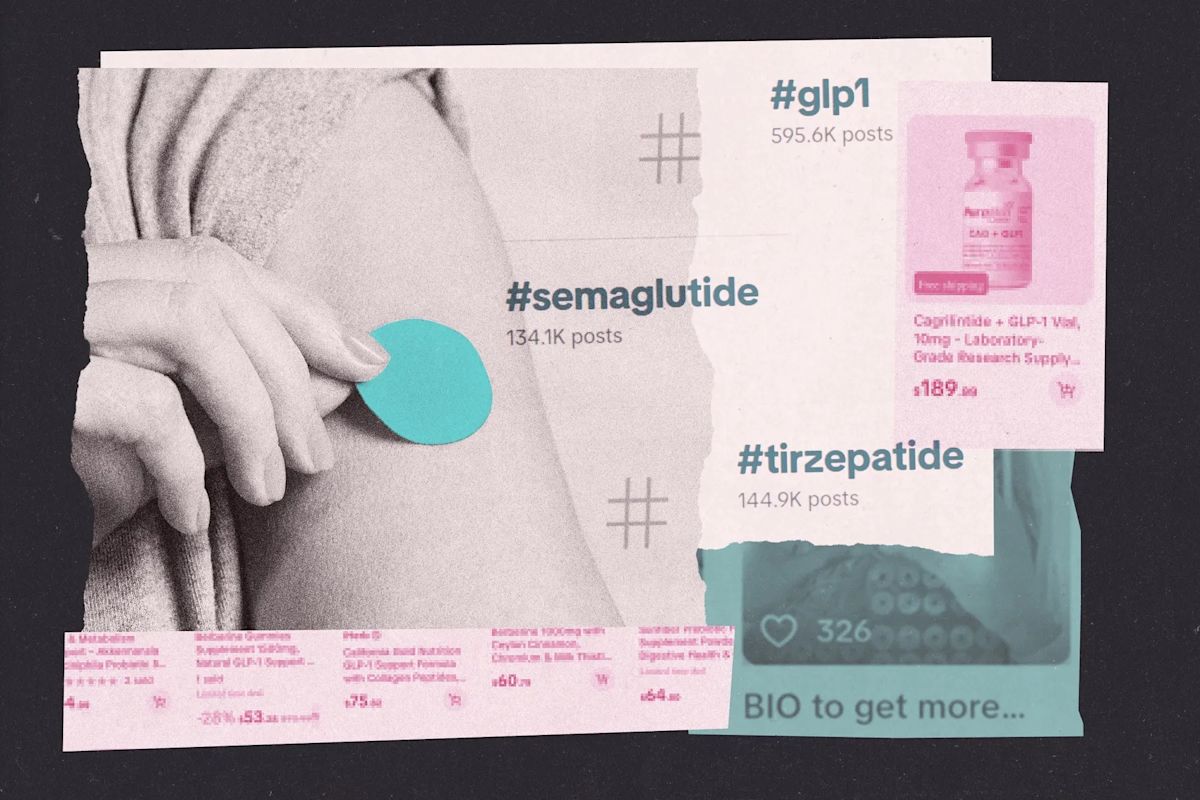
Schmidt’s experience highlights a pattern of deceptive marketing on TikTok that appears to be fueling a gray market for GLP-1 medications — including “research grade” drugs that are often in powder form. Content about such weight loss drugs on TikTok primarily targets women through sexualized images and videos, according to a new report from UltraViolet, the gender equality organization
GLP-1 medications — best known by brand names like Ozempic and Wegovy — have become increasingly popular in recent years to treat conditions like diabetes, high cholesterol and obesity. Women, who have higher rates of chronic health conditions, are more likely than men to say they are currently taking GLP-1 drugs.
Advertisement
But access has been difficult for a variety of reasons, including cost. In the United States, the average monthly list price of a GLP-1 is between $936 and $1,023, and just some large employer health insurance plans cover the drugs for weight loss. When their popularity caused a shortage in 2022, the FDA allowed compounding pharmacies — which prepare customized medications — to sell ready-mixed GLP-1 drugs. The federal government later walked back that approval after shortages ended, reducing access for many more people.
These conditions have allowed the gray market for GLP-1s to flourish online. That visibility, said UltraViolet’s campaign director, Jenna Sherman, is putting pressure on vulnerable women and girls
“Unfortunately, it is not a niche phenomenon,” she said in a statement announcing the report. “If you are a woman on TikTok, especially if you’re middle-aged, it’s likely you have seen this kind of content.”
The group analyzed more than 200 TikTok accounts, in two phases between mid-2025 and early 2026, that promoted the unregulated sale of GLP-1 drugs. All the content was easily findable, including through the platform’s “Discover” feature and hashtags.
Advertisement
The report warns that a gray market and a black market — the former defined generally as the sale of approved drugs through unauthorized channels, the latter involving the illegal sale of unapproved drugs — are indistinguishable here, since at least some of the GLP-1s being promoted on TikTok are untested versions of the medication. They are distributed in powder form and need to be prepared into another dosage
That all leaves room for error and harm. The report highlights the case of an Australian woman who was hospitalized this year for acute liver failure after taking an unregulated GLP-1 product that she learned about on TikTok and Instagram
UltraViolet reported 202 accounts to TikTok that appeared to violate parts of the platform’s community guidelines — which don’t allow the trade, marketing or promotion of regulated, prohibited or high-risk goods and services. (The report notes that TikTok rolled back sections of its guidelines in September 2025 that had explicitly prohibited black and gray markets and discouraged redirection to offsite locations and direct messaging.) According to UltraViolet, TikTok later removed only about 30 percent of the accounts that were flagged. The group said it cannot be sure why the accounts went dark.
Many of the analyzed TikTok accounts purported to be med spas — facilities that offer medical-grade cosmetic treatments — but were instead fake and preyed on women who are not able to access GLP-1s because of barriers to insurance coverage or cost. Consumers who order these drugs after connectingy receive a fake product instead
Advertisement
“The pressure that women feel is absolutely real, and that’s part of the reason why GLP-1s are in such high demand,” said Nicole Regalado, vice president of campaigns for UltraViolet.
The report found gendered promotion. Sixty-five percent of all the accounts reported had women in their profile pictures, including some which appeared to be AI generated. Videos showed women in bikinis or revealing outfits, including in “before and after” photos promoting the alleged use of gray market GLP-1s. Some videos were paired with makeup and “get ready with me” content. Some GLP-1 content presented claims about improving fertility and postpartum health
“To us, it really reflects on where women sit right now in their lives, in this culture, in this political climate,” Regalado said. “They’re really caught between two powerful forces. It’s this broken healthcare system where there are millions of women who are underinsured or uninsured — that in itself can make it very difficult to access medicine, to access healthcare — and then also a culture that is relentlessly telling us that our health and value are tied to the size of our bodies.”
Regalado said UltraViolet — which in the past also tried to pressure TikTok to remove ads promoting the use of GPS trackers for stalking, disproportionately targeting women — sent its findings to TikTok but did not receive a response. TikTok did not respond to a request for comment from The 19th about UltraViolet’s findings
Advertisement
After Schmidt realized she had been scammed, she posted a video on TikTok about her experience. She also reached out to TikTok. According to Schmidt, the company immediately gave her a refund with store credit. Schmidt decided to search again for GLP-1 patches. She took more time to research the products before buying again
Schmidt clicked on a video of a man promoting a sale. But finding the actual sale was confusing, and she ended up spending a little more than her first purchase — about $10. Once again, she went through TikTok Shop and purchased some patches. Once again, she received a package in the mail with the wrong product
Schmidt contacted TikTok again. They did not give her credit back that time
It was just $10, but for Schmidt, every penny counts: She’s paying for her daughter’s college education. She thought about the people out there making repeat small purchases through TikTok who might not be closely checking the products arriving at their home
Advertisement
“I’m not going to fight over $10,” she said. But, Schmidt added: “I wanted people to know that you really need to pay attention to what products you buy. I felt like TikTok should have made sure that the products that they are allowing to be sold on here are real products.”
UltraViolet’s report seeks more accountability from TikTok, with recommendations that include better enforcement of TikTok’s existing policies so that accounts that violate them are suspended and removed. The group also wants the platform to halt search suggestions and hashtags that drive users to gray market content. The report also highlighted that TikTok features tutorial videos on how to prepare drugs in powder form to inject at home. Most traditional GLP-1s that are properly prescribed come pre-filled with auto-injectible pens.
“We’re calling on TikTok company leadership to take urgent action: Stop the GLP-1 gray market, protect women users, and hold accountable dangerous bad actors. TikTok users deserve a social media platform that supports their health, safety, and autonomy — not one that exploits their vulnerabilities and health for profit,” Sherman said
Regalado said UltraViolet is tapping its membership to mount pressure on the company. She encouraged TikTok users to report troubling or predatory content
Advertisement
“We’re going to keep going. We’re going to keep trying because these ads are scams that are specifically targeted toward women,” she said. “These are predatory scams, and our community won’t stand for that.”
A year after her experience, the vendors that Schmidt bought from no longer have active shops. She doesn’t know if they’re truly closed or if they’ve started new accounts
Schmidt later bought patches online from a company that advertises itself as selling wellness products. She has lost some weight, but she attributes that more to lifestyle changes. She stopped using her patches about two months ago. She has no plans to buy more GLP-1s through TikTok — even though she is still getting advertisements featuring happy women talking excitedly about their successful weight loss journeys
Whatever Schmidt does next, she knows this: She plans to go to her doctor first
News that represents you, in your inbox every weekday.Subscribe to our free, daily newsletter
