


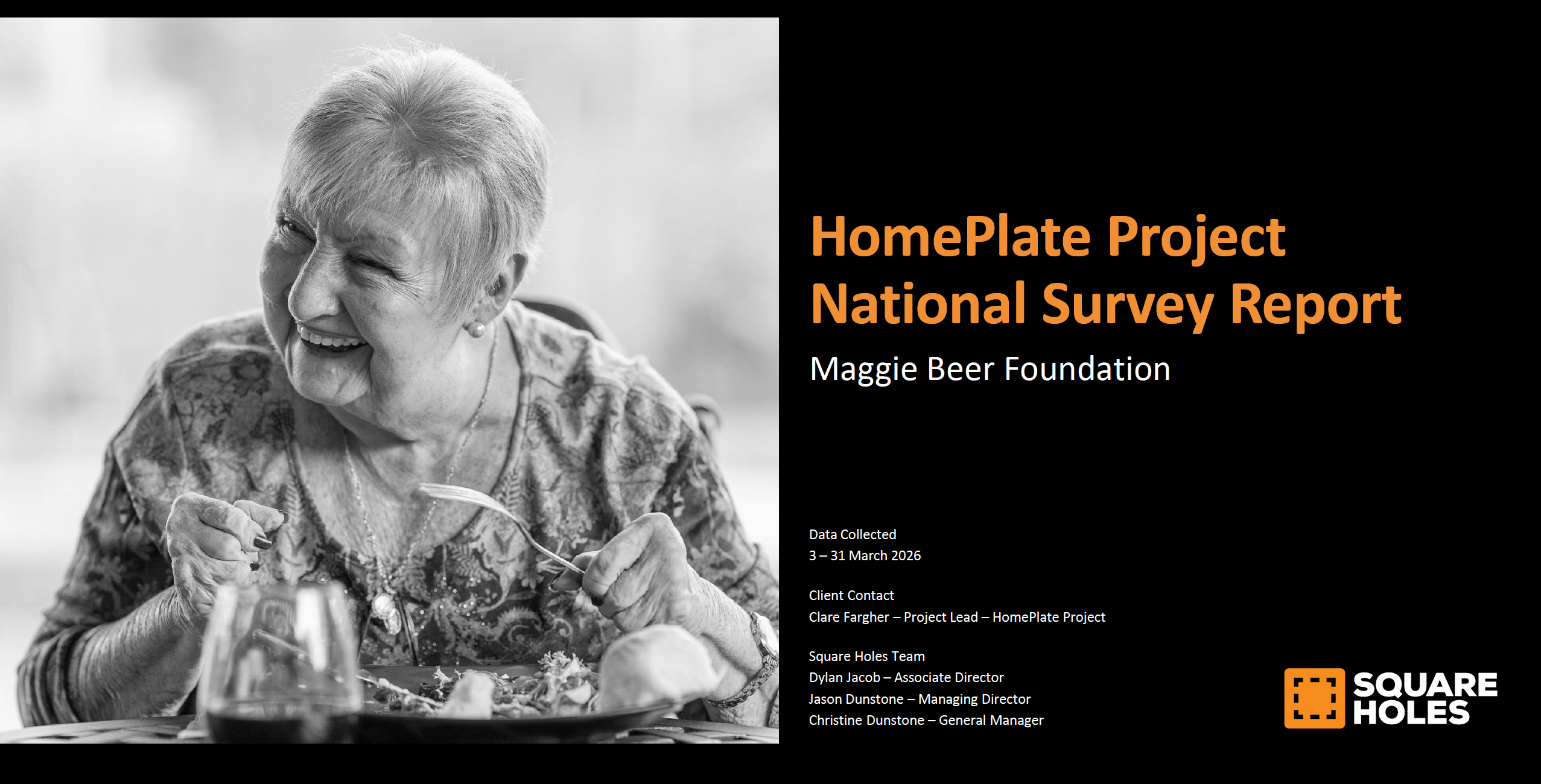
National Survey Report, Maggie Beer Foundation.
A lack of motivation, loneliness and eating alone are emerging as some of the biggest threats to good nutrition for older Australians living independently, according to landmark national research that challenges long-held assumptions about why people struggle to eat well at home
The HomePlate Insights study, led by the Maggie Beer Foundation and funded by the Wicking Trust, found the decline in nutrition among older people is less about access to food and more about losing the motivation to cook, particularly after the loss of a partner or when living alone
Described as the most comprehensive study of its kind in Australia, the research combined a national survey of almost 2,500 older people, in-depth interviews and focus groups involving more than 230 participants across metropolitan and regional Australia, and a literature review conducted by the University of Sydney
The findings reveal one in five older Australians describe their eating as merely “good enough” rather than thriving, with researchers warning that poor nutrition often develops gradually before contributing to falls, infections, delayed wound healing and hospital admissions
Maggie Beer Foundation Chief Executive Officer Jane Mussared said the research highlighted an often-overlooked issue affecting older people who wish to remain living independently
“We want to work with older people, aged care colleagues, foodies, clinicians and others to address the barriers to eating well. We need to understand the opportunities that might help an older person stay well at home before health crises make it too late.”
Among the study’s most striking findings was the impact of living alone on eating habits. Forty per cent of people living alone said cooking for one was unappealing, making it the single biggest barrier to eating well for that group. Nearly one in nine interview participants directly linked declining eating habits to the loss of a spouse
Researchers also found more than one-quarter of older people quietly skip meals, with lunch commonly replaced by little more than a cup of tea and a biscuit
While almost eight in 10 older people rated their eating as “good” or “excellent”, more than half of those respondents already had at least one risk factor that could place their nutrition at risk, including living alone, financial pressure or being aged 85 years or older
The study also found confidence and enjoyment of cooking declined significantly with age. Just 30 per cent of people aged 85 and over said they still enjoyed cooking and felt confident preparing meals, compared with around half of those aged between 65 and 74
Importantly, researchers found motivation outweighed financial barriers. A lack of energy or motivation was more than twice as influential as food costs in predicting poor eating outcomes, while anticipating and enjoying food was almost three times more influential than any other factor associated with positive eating habits
Social connection also emerged as a critical factor
The national survey found 18 per cent of older people rarely or never share a meal with anyone, increasing to more than one-third of those living alone. Almost half of people living alone said they would like to share meals more often
Participants repeatedly described the importance of companionship around meals
“If I’m on my own, I don’t bother,” one participant told researchers during a focus group in Yamba
Another participant from Albury observed, “When you eat with other people, you always eat more,” while a focus group participant in Rochester simply concluded, “It’s the company that matters.”
The research suggests current support systems remain heavily focused on food delivery rather than addressing the underlying social and psychological barriers to eating well. While services such as Meals on Wheels are widely recognised, almost eight in 10 survey respondents could not identify a single initiative that supports cooking confidence, motivation or social connection around food
HomePlate Project Lead Clare Fargher said the findings provide an evidence base for rethinking how nutrition support is delivered to older Australians living at home
“This research gives us something we’ve never had before – a clear, evidence-based picture of what’s really getting in the way of older people eating well at home,” Ms Fargher said
“It tells us that we need to focus on building motivation, confidence in the kitchen and connection at the table. The Maggie Beer Foundation will work with stakeholders in the next stage of the HomePlate Project to explore and address these gaps.”
The Foundation said the findings point to an opportunity to broaden approaches to healthy ageing beyond meal provision alone, with greater emphasis on helping older Australians maintain confidence, purpose and social connection around food before declining nutrition develops into more serious health problems
