


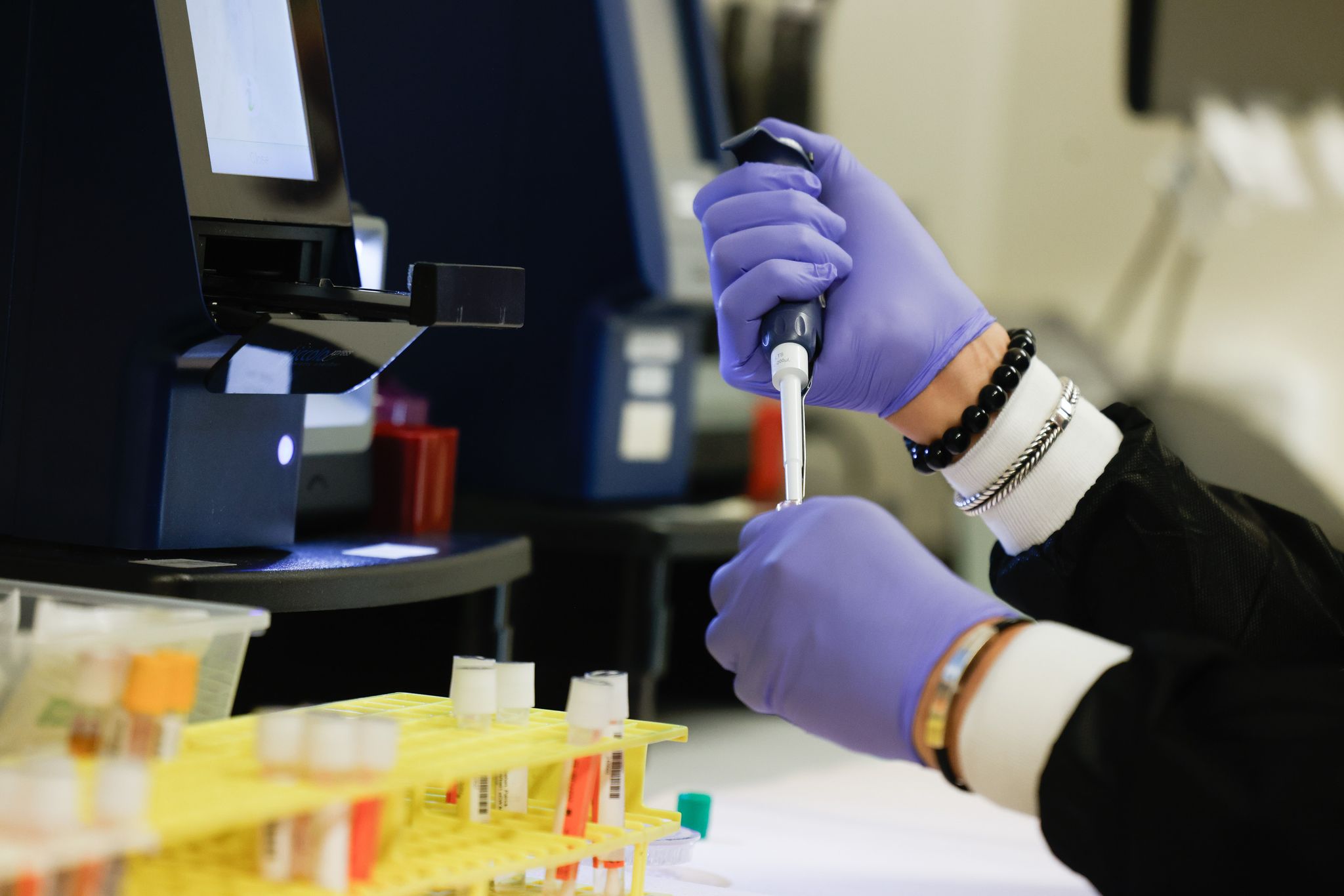
Leaders at San Francisco’s largest HIV clinic said that despite years of tensions with the Trump administration, they were blindsided when they learned federal officials cut off access to millions of dollars in funding critical to their efforts to prevent the spread of the disease
Eleven California clinics fighting the spread of HIV are staring down a loss of $20 million in available federal funds as a result of the unceremonious end of a grant program launched during President Donald Trump’s first term. The Trump administration hasn’t announced the cuts — which span more than $200 million across 96 clinics nationwide over five years — but grantees said they learned through federal employees that the White House’s Office of Management and Budget stepped in to kill the grant program right before applications were expected to open.
“It’s stunning,” said Ernest Hopkins, the San Francisco AIDS Foundation’s director of federal affairs. “I couldn’t even believe it.”
Article continues below this ad
Hopkins and other recipients were preparing for the program’s next five-year cycle to begin soon, based on regular back-and-forth with Centers for Disease Control and Prevention staff. The awards provided recipients about $440,000 annually. The CDC and OMB did not respond to requests for comment.
“We had every expectation that the grants were going to be renewed through federal government staff,” Hopkins said. “They always said they were working on it, working on it and it was all about getting final clearance.”
Make us a Preferred Source to get more of our news when you search.
<a href="https://www.google.com/preferences/source?q=sfchronicle.com” rel=”nofollow noopener” target=”_blank”>Add Preferred Source
There are plenty of grants — especially those focused on minority groups — that HIV advocates expected to lose under Trump. HIV research grants have slowed across the country, and the Trump administration tried in February to cut $600 million in public health dollars for California and other Democratic-led states’ HIV-related programs. A court ultimately blocked the cuts.
But this grant was different, because recipients said they were repeatedly left with the impression the program would continue. The other reason for optimism: The program was launched after Trump said during a State of the Union address in 2019 that he would “defeat AIDS” and end the HIV epidemic by 2030.
Article continues below this ad
“This was a priority of his, and now the mechanism to do it is being decimated,” said Tracey Packer, the San Francisco AIDS Foundation’s director of HIV prevention.
The program’s last cycle was supposed to end on June 30, but the CDC extended funding to its 96 recipients through September. Grantees expected the new awards would be given by the time the extension ended.
Carl Schmid, the executive director of D.C.-based HIV+Hepatitis Policy Institute, said he, too, thought applications would soon open for grantees. He said some community groups had concerns the funding could be jeopardized because of the perception on the right that theirs is a “woke” cause. HIV prevention largely targets the people most susceptible to contracting the disease, which includes minority groups such as gay men, transgender people and the Black community. The focus on those groups conflicted with Trump’s early executive orders restricting federal funding for diversity programs and transgender care.
“But those are the groups on the ground and doing the work,” Schmid said.
On July 14, the CDC sent a letter to cities and counties where grantees were located, saying there was now “supplemental” funding available to provide HIV prevention and testing. The letter encouraged, but did not require, the local health departments to give the money to the community organizations losing the CDC grant
Article continues below this ad
The CDC gave the San Francisco Department of Public Health and others about a week to submit an application to access the funding. The city plans to give the San Francisco AIDS Foundation that money — but it’s only enough to fund the program through next May, Packer said. The local health department did not respond to requests for comment.
Cuts to HIV prevention programs put the city at risk of missing its own goal to eliminate new HIV infections. New HIV diagnoses in San Francisco fell by 55% from 326 in 2014 — when the city first launched its “Getting to Zero” campaign — to 146 cases in 2024.
Schmid, advocates and clinics across the country are now pleading with the CDC to reverse its decision.
The Tri-City Health Center in Fremont and the East Bay AIDS Center in Oakland are the only other Bay Area recipients of the program outside the San Francisco AIDS Foundation. The Alameda County clinics will be forced to rely on the California Department of Health to provide the one-time bridge funding from the CDC.
“I hope this country and people understand that we’ve got to fight hard to move forward and not let Trump and his administration take us so far back that we have to start all over again,” Oakland Mayor Barbara Lee said. “We have a goal of eradicating HIV and AIDS by 2030, and that’s only a few more years.”
Article continues below this ad
Other Bay Area nonprofits are now bracing for more grants to end. Lance Toma, the director of San Francisco Community Health, said he anticipates his group’s $400,000 annual grant under a different CDC program to end once its current cycle finishes at the end of March. The clinic’s grant funds testing and outreach related to HIV prevention focused on young people, people of color and trans people.
San Francisco Community Health and the San Francisco AIDS Foundation were among a group of nine LGBTQ+ health organizations that sued to challenge Trump’s executive order that prohibited grantees from considering “race, color, sex, sexual preference, religion or national origin.” The administration tried to revoke $6.2 million from the health organizations under the order. The funding was eventually restored by the courts after a legal battle.
“For the past year and a half, it feels like we’re operating in the dark,” Toma said. “There continues to be a level of anxiety and consternation because we just don’t know. We feel like our funding could be pulled at any given moment.”
Sophia Bollag contributed to this report.
Article continues below this ad
