


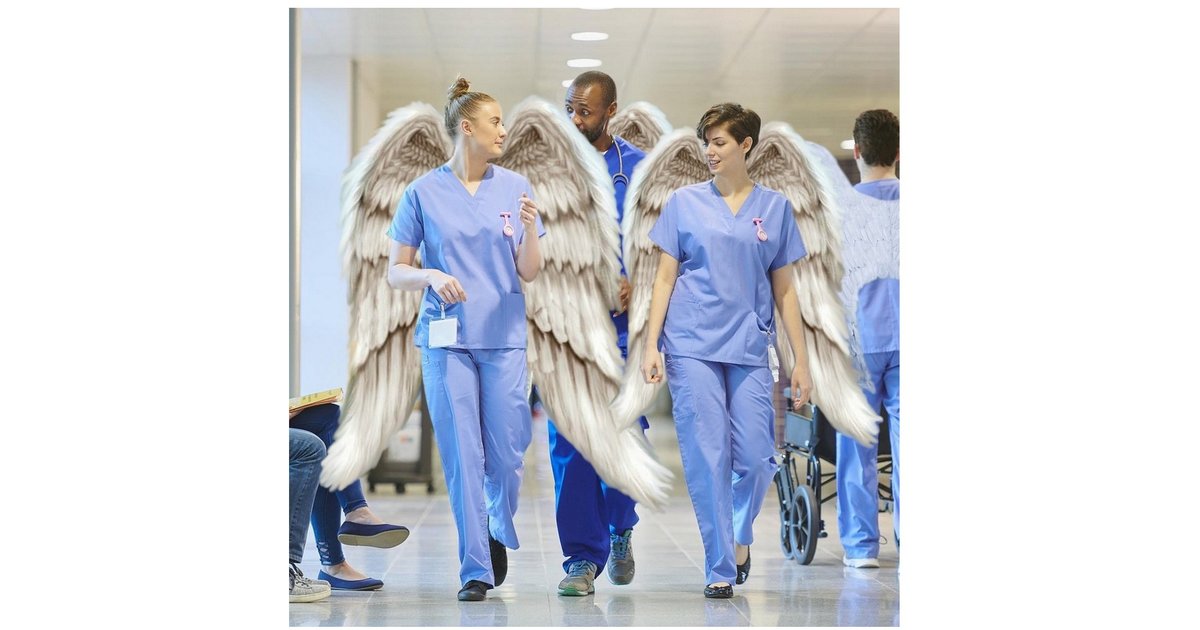
‘Sacred moments’ in healthcare: Not just for the religious among us
Dave Pearson|July 06, 2026|Health Exec|Care Delivery
Brief periods of deeply meaningful connection between clinicians and patients have been shown to benefit both parties. Patients recover faster and more fully. Clinicians have greater job satisfaction and less exhaustion.
In the scientific literature, these intervals have been dubbed “sacred moments.”
The phenomenon is not unique to healthcare, but researchers have been exploring the prevalence and predictability of these experiences in medical settings.
Much credit for the latter application goes to the aptly named Dr. Sanjay Saint of the University of Michigan. He has concertedly harnessed the art and science of sacred moments for the medical field, along the way founding and leading an organization dedicated to promoting the concept.
Saint is corresponding author of a new peer-reviewed paper on the subject at hand. Titled “Sacred Moments in Healthcare: An Evidence-Based Conceptual Model,” the study was published in June by the Journal of General Internal Medicine.
The paper is dotted with insights on and tips for facilitating and encouraging sacred moments in care settings. Here are five standout passages
1. The emotions felt in sacred moments include awe and uplift, which are often associated with spiritual experiences.
“In other words,” Saint and colleagues write, “sacred moments are a marker of strong humanistic connection—perhaps addressing the yearning for holistic and compassionate care in clinicians and patients alike—in which people are seen more fully as spiritual as well as biological, psychological and social beings.”
2. The termsacred momentswas coined by Kenneth Pargament, a clinical psychologist, while observing the work experiences of hospital chaplains
“Empirical and interpretive studies on sacred moments in healthcare, including mental health studies, suggest that they convey benefits for both clinicians and patients,” the researchers note. “For clinicians, sacred moments protect against burnout while promoting meaning in work, wellbeing and prosocial engagement. For patients, sacred moments seem to function as a buffer against stress.”
3. While the termsacredhas religious roots, it encompasses diverse worldviews such as humanist, Indigenous and non-religious perspectives.
“Compared with the adjectives holy and blessed, sacred elicited less theistic and explicitly religious recollections in a sample of U.S. English-speaking adults,” Saint and co-authors report. “Thus, viewed in this manner, the sacred becomes of potential relevance not only to believers but also to nonbelievers. Patients, physicians and [especially] nurses have readily grasped the term.”
4. Prevalence rates of sacred moments in healthcare are estimated at 68% for general internal medicine physicians.
“The study and cultivation of sacred moments aligns with principles of whole health (sometimes referred to as “whole person”), an evidence-based movement that cares for the body, mind and spirit, with salutary outcomes for patients and staff,” the authors remark. “Rooted in psychological theory and inspired by spiritual care staff in hospitals, sacred moments are a promising catalyst for putting the heart and soul back into healthcare.”
5. Healthcare leaders can review prohibitive factors of sacred moments to inform policy and systems transformation.
“[Researchers] have recommended a culture shift from viewing patients in a biomechanical manner to one that is more humanistic,” Saint et al. observe. “Based on our review, clinicians surmise that sacred moments in healthcare are more likely to occur under leadership that promotes reasonable caseloads and adequate staffing while incentivizing clinicians to spend time with patients.”
“The care setting itself can be recognized as a sacred space,” the authors add, “with intentional design and architecture of healthcare environments that incorporate nature, light, music, art and culturally sensitive decor.”
The paper is posted in full for free
Dave Pearson
Dave P. has worked in journalism, marketing and public relations for more than 30 years, frequently concentrating on hospitals, healthcare technology and Catholic communications. He has also specialized in fundraising communications, ghostwriting for CEOs of local, national and global charities, nonprofits and foundations
