


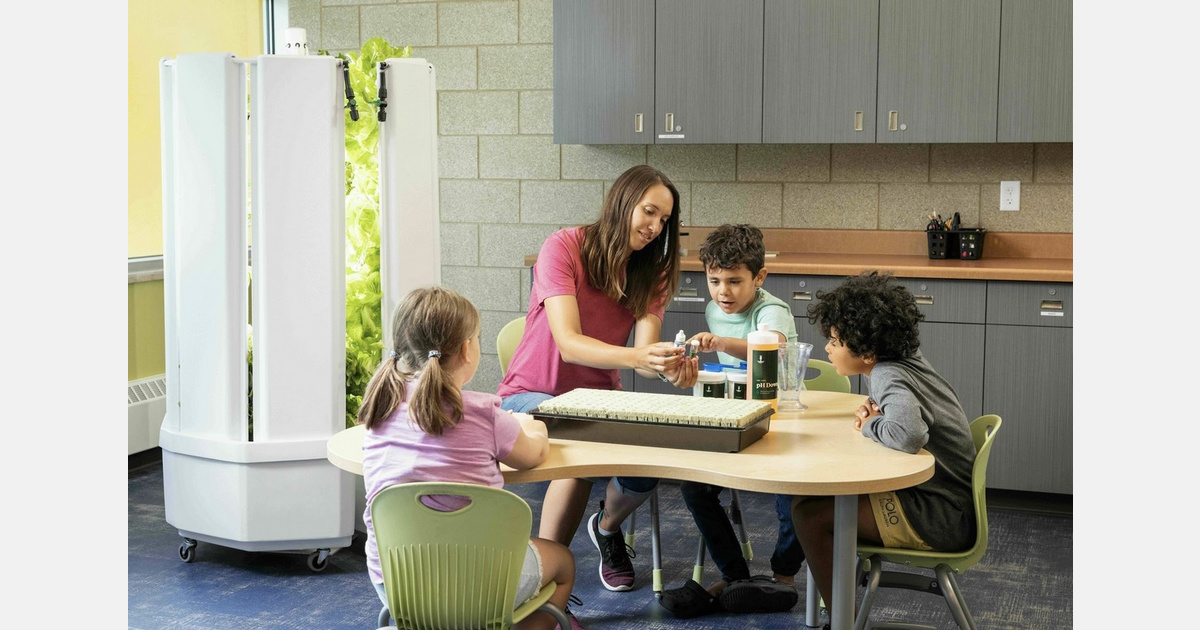
As students return to classrooms this fall, school nutrition professionals are facing a familiar challenge: how to serve fresh, healthy meals while managing rising food costs, supply chain disruptions, inconsistent produce quality, limited budgets, and increasing expectations for scratch cooking
Fork Farms, a food access technology company, is helping schools meet those challenges by bringing food production directly into the school building
Just in time for the start of the new school year, Fork Farms has announced the release of How to Grow Food at School: A Practical Guide for School Administrators, Teachers, and Nutrition Directors, a comprehensive implementation guide designed to help schools launch and sustain indoor hydroponic growing programs that support both school nutrition and classroom learning
“Schools shouldn’t have to choose between serving fresh food and staying within budget,” said Alex Tyink, CEO of Fork Farms. “When schools grow food on-site, they’re not only producing fresh lettuce, they’re creating opportunities for students to connect with where food comes from, supporting healthier meals, and turning classrooms into living laboratories.”
Across the country, schools are using Fork Farms’ indoor hydroponic growing systems, Flex Farm™ units, to produce fresh leafy greens, herbs, and vegetables just steps from where students learn, gather and eat. The result is a reliable, year-roundation, food literacy, sustainability, and student engagement
At Elmbrook Schools in Wisconsin, fresh greens grown on-site are harvested and incorporated into school salad bars, giving students the opportunity to enjoy produce grown in their own district. At Germantown High School, indoor hydroponic farming has helped replace shipped lettuce with fresh, school-grown greens, reducing dependence on traditional supply chains while increasing access to nutritious food
With a Flex Farm, schools can harvest fresh greens minutes before eating them on the cafeteria line, grow more than 394 pounds of produce annually in less than 10 square feet, and provide students with hands-on STEM learning aligned with classroom curriculum. Programs also build food literacy by allowing students to grow, harvest, and eat the food they produce, and create a dependable, year-round
Fork Farms’ new school implementation guide was created to remove the guesswork from starting a school growing program. It walks administrators, teachers, and nutrition teams through every stage of implementation, from setting goals and identifying the right space to engaging students, integrating fresh produce into school meals, and expanding programs over time
In addition to the guide, every Fork Farms partner receives step-by-step implementation support and a comprehensive K–12 curriculum aligned with Next Generation Science Standards. Partners also gain access to Farmative™, Fork Farms’ online community of nearly 5,000 growers, along with food safety rearms team
Growing food at school is also changing how students think about healthy eating. Studies show that when students participate in planting, harvesting, and serving fresh produce, they become more connected to the food on their plates and more willing to try fresh fruits and vegetables
“A Flex Farm is a way to bring nutrition, education, sustainability, and student engagement together in one place,” Tyink added. “As schools begin another year, Fork Farms is excited to help more districts create healthier meals and healthier communities by growing food where students learn.”
For more information:Fork FarmsAlex Tyink, Co-founder and CEO[email protected]www.forkfarms.com
