


them
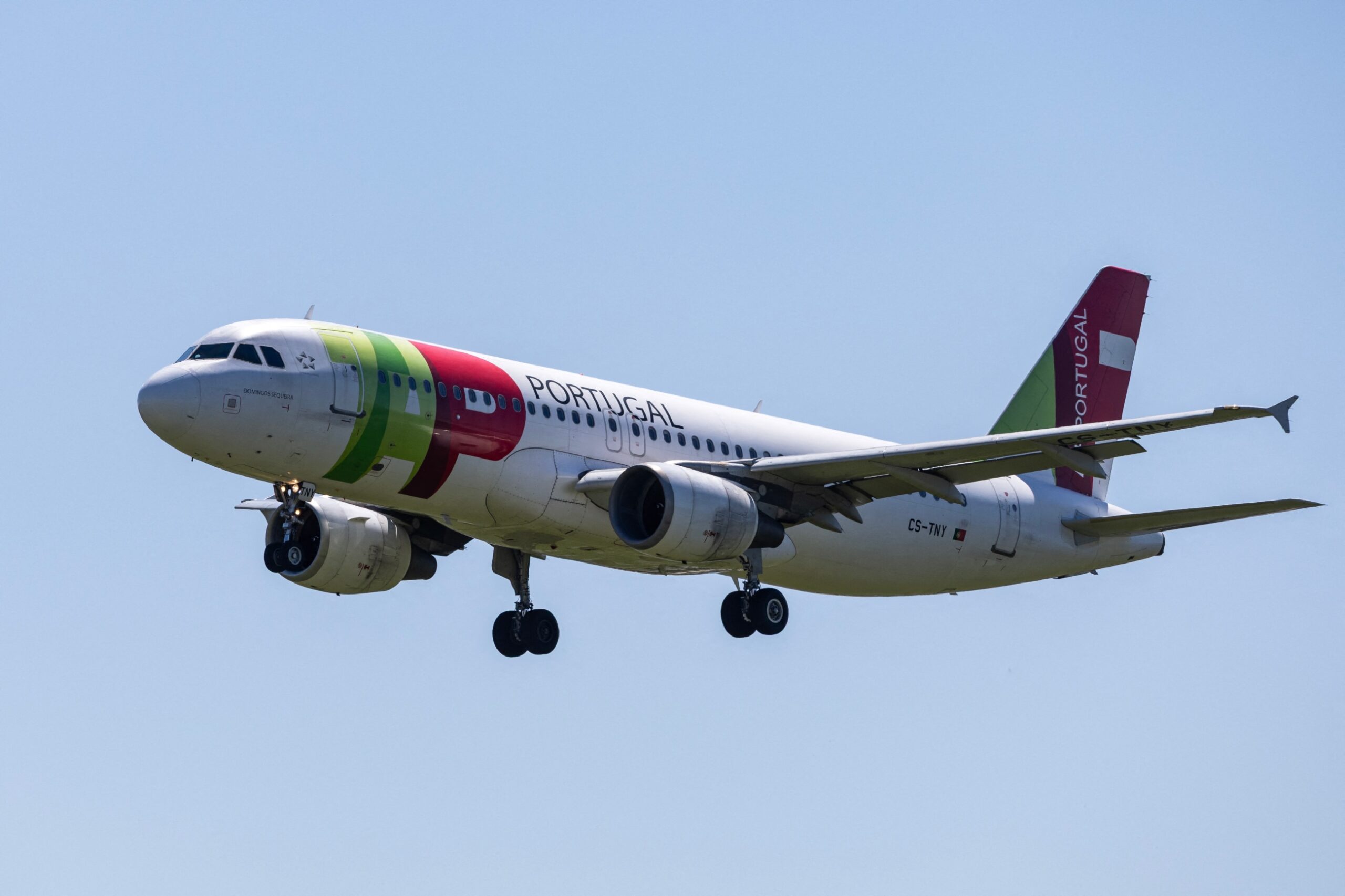
Portugal’s flag carrier announced Tuesday that it is rolling out a reformulated aircraft basecoat across its entire fleet — and the numbers make a strong case that paint has been hiding in plain sight as one of aviation’s most underused efficiency levers. A single-pass application of AkzoNobel Aerospace Coatings’ Aerobase UPD reduced one test aircraft’s weight by 24 kilograms (53 lbs), and the same technology applied fleet-wide is projected to save TAP Air Portugal more than €500,000 (approximately $569,000 USD; exchange rate as of July 28, 2026; conversions are approximate) in annual operating costs while cutting carbon dioxide output by roughly 1,353 metric tonnes (1,491 short tons) per year.
The key is a chemistry change most passengers will never notice: a paint that resists sagging well enough in its wet state that a second basecoat pass is no longer needed
How Sag Resistance Makes One Coat Do the Work of Two
Aircraft exterior painting follows a layered sequence — primer, basecoat, clearcoat topcoat — and the basecoat has traditionally required two application passes. The reason is rheological rather than chemical: wet polyurethane paint applied to a curved vertical surface tends to sag and run before it cures, producing uneven film coverage. A second pass was the industry’s insurance policy against that variability
AkzoNobel’s Aerobase UPD reformulation changes the product’s flow behavior specifically to eliminate that problem. The formulation delivers approximately 40% greater sag resistance compared with the original Aerobase system, as AkzoNobel confirmed in its February 2026 product launch. At rest on the painted surface, the new formula thickens fast enough that wet paint stays in place before curing — while still flowing correctly through spray equipment during application. The practical result is that a validated “cross-coat” pass pattern (horizontal spray followed by vertical in a single application cycle) distributes the paint uniformly enough to meet commercial aviation durability and finish standards without a second pass.
The product is a three-component polyurethane system — base, hardener, and activator — qualified under SAE AMS3095A, the aerospace materials specification for high-gloss exterior paint systems for commercial fleet maintenance, as documented in AkzoNobel’s Aerobase Technical Data Sheet. The isocyanate hardener cross-links with the polyol base to form a durable network with the UV resistance, flexibility under pressure and temperature cycling, and fuel and hydraulic fluid resistance that regulators and original equipment manufacturers require for exterior commercial aircraft surfaces.
What 36% Thinner Basecoat Means at Fleet Scale
Eliminating one coat reduces total basecoat film thickness by 36%. For a narrowbody aircraft like the Airbus A320, with an exterior surface area on the order of 400–500 square meters (roughly 4,300–5,400 sq ft), that translates to a mass reduction of up to 26 kilograms (57 lbs) per aircraft
TAP’s field trial on its first A320 yielded a 24-kilogram (53-lb) reduction in aircraft weight. A second A320 was subsequently painted using the same process before the airline committed to a fleet-wide rollout
Individually, 24 kilograms is roughly the weight of a carry-on bag. Multiplied across approximately 100 aircraft flying multiple segments daily across TAP’s network — the airline operated around 101 mainline Airbus jets in early 2026, with deliveries planned to push that figure toward 104–106 by year-end — the compound effect is substantial. Applied to the full fleet, the lighter coating is projected to save approximately 428.5 metric tonnes (472 short tons) of fuel per year, reduce operating costs by more than €500,000 (approximately $569,000 USD) annually, and cut CO₂ emissions by around 1,353 metric tonnes (1,491 short tons) per year.
To put the CO₂ figure in context, 1,353 metric tonnes is roughly equivalent to the annual carbon footprint of approximately 150 average European citizens. For an airline committed to the International Air Transport Association’s industry-wide net-zero carbon target for 2050, it is exactly the kind of verifiable, annualized saving that belongs in a binding sustainability audit rather than a marketing document
Does a Thinner Coat Stand Up to the Job?
The durability concern is the logical first question. Aircraft exteriors are exposed to UV radiation, jet fuel, hydraulic fluid, deicing chemicals, bird strikes, and extreme thermal cycling between ground temperatures and cruise altitudes where temperatures fall below −55°C (−67°F). The standard for exterior paint systems that has governed the industry for decades is SAE AMS3095A, and the Aerobase system — including the UPD variant — is qualified to that specification. When used with AkzoNobel’s Aviox Clearcoat UVR topcoat, the system is described by the manufacturer as providing a finish that exceeds typical original equipment manufacturer requirements for exterior aircraft performance.
AkzoNobel announced the wider Aerobase product line for MRO facilities in February 2026, confirming certification for immediate worldwide use at that time. OEM testing and formal approval from aircraft manufacturers was noted as still in progress at that stage. The TAP fleet-wide commitment announced Tuesday — covering a mixed fleet of Airbus A320neo, A321LR, and A330-900neo jets for mainline operations, supplemented by Embraer regional jets under the TAP Express brand — implies that approval status is sufficiently advanced to support a commercial rollout across multiple aircraft types.
How Is Paint Weight a Real-World Emissions Lever?
Aeronautical engineers have tracked paint weight as an efficiency variable for decades, but it rarely surfaces in public sustainability discussions dominated by sustainable an paint tends to be overlooked is the same reason it keeps showing up in weight-saving programs: it is unglamorous but immediately deployable
An A320-class aircraft uses approximately 70 US gallons (265 liters) of paint across all layers for a complete livery application. A narrowbody’s total paint load, across primer, basecoat, and topcoat, typically adds between 50 and 150 kilograms (110 to 330 lbs) depending on livery complexity. Reducing the basecoat layer by 36% captures a meaningful slice of that total
Aurore Bournazel, segment manager for OEM, MRO, and airlines at AkzoNobel Aerospace Coatings, noted that pressure on MRO efficiency is structural: “MROs are under constant pressure to improve efficiency without compromising quality. This latest Aerobase development enables a validated single-coat process that simplifies application, improves consistency and delivers measurable performance benefits,” Bournazel said in the February announcement
João Carvalho, a structural engineer at TAP Air Portugal, described the fleet-wide implication in the airline’s announcement: weight reductions that appear small at the individual aircraft level generate significant long-term fuel and emissions savings when applied consistently across an entire fleet and reinforced through every subsequent repainting cycle
Maintenance Gains Beyond Weight
Beyond the mass reduction, eliminating the intermediate drying stage — called “flash-off” — between the first and second basecoat passes changes paint-bay economics in a way airlines and MROs will notice in aircraft availability figures
Flash-off is dead time: the aircraft occupies the bay, cannot be worked on, and nothing productive happens except solvent evaporation. Eliminating it shortens the total time an aircraft spends in the paint shop per maintenance cycle, which directly improves fleet availability and reduces the labor cost of a complete aircraft livery application. AkzoNobel confirmed it is conducting additional trials with two MROs, covering both single-aisle and wide-body aircraft, to extend verified performance data beyond the A320-family aircraft painted in the TAP trials.
Where Lightweight Paint Fits in TAP’s Decarbonization Stack
The Aerobase UPD rollout is one component of a broader operational efficiency program at TAP that already includes lighter cabin trolleys and revised catering loading plans — measures collectively projected to reduce annual consumption by around 1,700 metric tonnes (1,874 short tons) of fuel and avoid approximately 5,350 metric tonnes (5,897 short tons) of CO₂ per year. The airline received IATA Environmental Assessment certification in January 2025, marking a formal commitment to a structured environmental management system.
In its 2024 sustainability disclosures, TAP’s executive committee described the airline’s commitment to contributing to the IATA resolution for net-zero carbon emissions by 2050, and identified SAF adoption under European aviation rules as central to that path. Lightweight paint sits in the operational efficiency category alongside trajectory optimization and weight management — a category that accounts for a smaller share of the total net-zero pathway than SAF but requires no new fuel infrastructure, no new aircraft, and no regulatory framework to deploy.
That distinction matters more than it might appear. SAF is expensive, currently supply-constrained, and requires blending infrastructure at airports. Hydrogen propulsion and electric aircraft remain years from commerciallready certified to an international aerospace standard, and applicable at the next scheduled maintenance interval for any aircraft in any fleet
AkzoNobel’s global rollout of the Aerobase product line is planned throughout 2026, with initial availability in the most commonly used aerospace white colors — the dominant shade for most commercial airline liveries — before expanding to the full color range, according to the company’s February announcement
Frequently Asked Questions
How does lighter aircraft paint actually reduce fuel consumption?
Every kilogram of weight aboard an aircraft requires additional thrust to maintain altitude and airspeed, which means burning more fuel. Reducing each aircraft’s basecoat weight by 24 to 26 kilograms (53 to 57 lbs) through a thinner, single-coat application means less fuel burned on every flight that aircraft makes. Across a fleet of 100 aircraft flying multiple daily segments, those per-flight savings accumulate into the approximately 428.5 metric tonnes (472 short tons) of projected annual fuel reduction TAP Air Portugal cited in Tuesday’s announcement.
What is the technical difference between the new Aerobase UPD formulation and a standard single-coat basecoat?
Earlier single-coat basecoats existed but struggled with sag: wet paint on curved vertical aircraft surfaces would run or drip before curing, requiring a corrective second pass. AkzoNobel’s UPD variant incorporates improved rheology — specifically a roughly 40% increase in sag resistance compared with the prior Aerobase system — that keeps wet paint in position long enough to cure without running. Combined with a validated cross-coat spray pattern (horizontal then vertical passes in one application cycle), the formulation achieves consistent coverage meeting SAE AMS3095A durability specifications without a second coat. The three-component polyurethane chemistry and AMS3095A certification remain unchanged; the improvement is in the flow-behavior additives that make single-pass application repeatable in real-world paint-shop conditions, as AkzoNobel’s February 2026 product launch confirms.
How does this fit into a
Aviation’s industry-wide net-zero target for 2050 depends primarily on sustainable aviation fuel, which is expected to deliver roughly 65% of required emissions reductions. Operational efficiency measures — weight reduction, route optimization, load management — account for a much smaller share of the pathway. But the significance of a technology like Aerobase UPD lies in its scalability: the product is already certified worldwide for MRO use and can be applied at any airline’s next scheduled maintenance cycle without new infrastructure, new aircraft, or regulatory action. If adopted across the roughly 26,000 commercial jets currently in global service, the proportional fuel and CO₂ savings would scale to hundreds of thousands of metric tonnes annually from paint chemistry alone — a category the industry has historically overlooked in favor of more visible technologies.
What happens to durability when a coat of paint is removed from the process?
The concern is reasonable: aircraft paint must withstand UV radiation, jet fuel, hydraulic fluid, deicing chemicals, and repeated thermal shock between ground temperatures and cruise altitudes approaching −55°C (−67°F). The Aerobase system — including the UPD variant — is qualified under SAE AMS3095A, the aerospace industry’s governing specification for high-gloss exterior paint for commercial fleet maintenance. When paired with AkzoNobel’s Aviox Clearcoat UVR topcoat, the system is certified to meet or exceed typical original equipment manufacturer requirements for exterior performance. The 36% reduction in basecoat film thickness does not reduce the clearcoat layer, which provides the primary UV and chemical protection; the basecoat’s role is color coverage and adhesion between primer and clearcoat, as confirmed in AkzoNobel’s Technical Data Sheet.
ⓒ 2026 TECHTIMES.com All rights reserved. Do not reproduce without permission
Tags:AviationSustainabilityAircraftFuel efficiencyEmissions
