


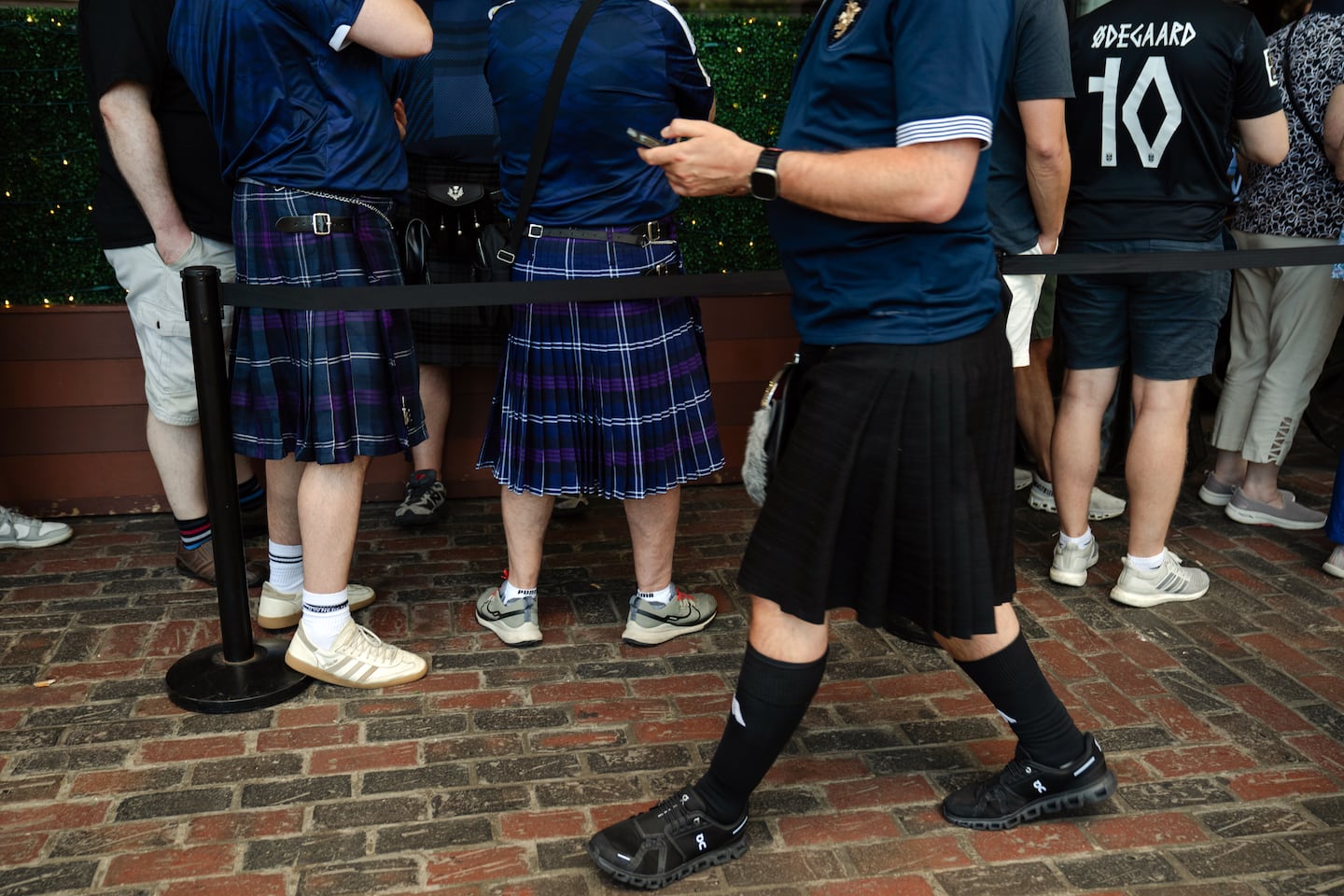
In a relief to concerned public health officials, the World Cup matches that brought millions of visitors to Massachusetts did not inundate hospital emergency departments. But there was a “noticeable” jump in alcohol-related visits around games that landed on weekends
The Department of Public Health monitored cities and towns that embraced extended alcohol service hours surrounding the tournament, said Deirdre Calvert, director of the Bureau of Substance Addiction Services
A law that Governor Maura Healey signed on June 8 allowed restaurants and bars to serve alcohol until 3 a.m. through July 31, and gave municipalities the option to designate areas for public alcohol consumption. The law coincided with other major tourist events around July 4 and Sail Boston
“We worked really closely with our surveillance partners to track community-level consumption patterns and assess the public health impact of extended service hours. And what we saw: There was some spikes during some weekend matches,” Calvert told the Public Health Council Wednesday
Calvert said surveillance data “recorded noticeable spikes in alcohol-related emergency department visits during the weekend match days, especially June 13, which was Haiti versus Scotland; June 19, Scotland versus Morocco; and June 26, Norway versus France.”
The increases were on par with “baseline spikes” typically seen during holiday weekends like July 4, Calvert said. Health officials are still diving into the data to understand the exact impact from the World Cup, said Katherine Fillo, DPH’s chief clinical officer and director of health care strategy and planning
“We want to be cautious about drawing any conclusions that the World Cup activities and alcohol are related, and hope to dig in further in future analyses,” Fillo said. “More generally, again, the volume that we saw did not overwhelm our emergency medical services, our urgent care clinics and our hospital settings.”
Healey last month voiced support for keeping late-night alcohol service at bars and restaurants
“I used World Cup as an experience, as an opportunity to say we should extend bar hours, which we did, and I was glad to see that, so I’d like that to continue,” the governor said on WEEI sports radio
Roughly 100 DPH staff supported preparedness and response operations throughout the World Cup, said Kerin Milesky, director of the Office of Preparedness and Emergency Management. Beyond the seven matches at “Boston Stadium” in Foxborough, officials monitored Boston Fan Fest at City Hall Plaza that spanned 15 days and about 50 large watch parties with more than 1,000 participants
State health officials coordinated with acute care hospitals, the Boston Public Health Commission, ambulance services, the Rhode Island Department of Public Health, the Boston 2026 host committee, and a bevy of other local, state, and federal entities, Milesky said
DPH kept tabs on emergency department and urgent care volumes, ambulance trips, environmental health concerns like heat waves and poor air quality, the potential spread of infectious diseases and foodborne illnesses, and human trafficking and sexual assaults
Across all games, Milesky said there were a total of 107 ambulance transports from Boston Stadium to 14 different hospitals. About half of transports went to nearby Sturdy Memorial Hospital in Attleboro
Ambulance strike teams, consisting of five ambulances, were also situated in the “transportation corridor” between South Station and Foxborough in order to respond to a potential mass casualty incident or sudden patient surge, Milesky said. The ambulances were intended to function as “surge capacity” and a “pressure relief valve,” she said
There was also a total of 32 ambulance transports from Fan Fest to Boston-area hospitals, which Milesky said “really highlights the importance of maintaining EMS coverage not only at the stadium, but also at ancillary venues boosting large crowds.”
Milesky credited the lack of major public health incidents to the “dedication, collaboration, and professionalism of everyone involved.”
“The lessons learned and relationships strengthened during the 2026 FIFA World Cup will continue to enhance our preparedness for future mass gatherings and emergency response,” she said
DPH used the World Cup as an opportunity to promote a foodborne illness reporting tool, called “Report My Meal,” that launched in December, said foodborne and water illness coordinator Johanna Vostok. The system has received 45 monthly reports on average, with the majority filed by Massachusetts residents
“With large gatherings, visitors, restaurants, events, and shared food settings taking center stage, we wanted to make sure people had a clear and accessible way to report foodborne illness quickly,” Vostok said. “To support that, a flyer was created that was translated into 10 languages to reach both residents and visitors alike.”
DPH did not get any reports about foodborne illness outbreaks tied to the World Cup, Vostok said
